
Horses have fascinated humans for thousands of years, and the more you learn about them, the more incredible they become. Here are amazing facts about horses that even experienced equestrians might not know.
Amazing Physical Facts
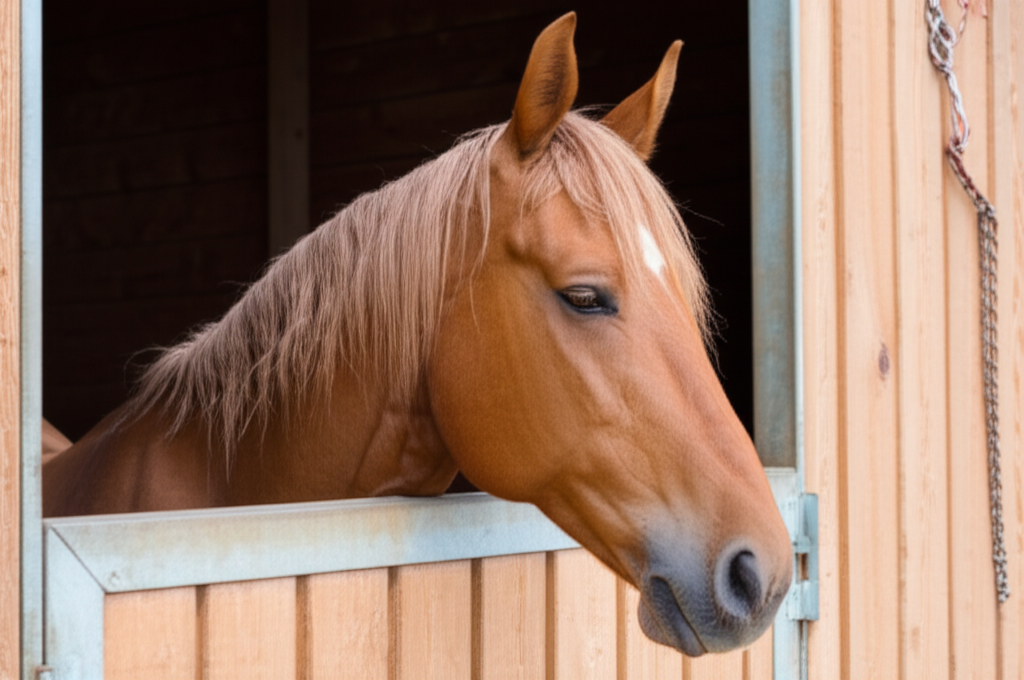
Horses Can Sleep Standing Up
Thanks to a “stay apparatus”—a system of tendons and ligaments that lock their legs in place—horses can doze while standing. However, they need to lie down for REM sleep, which they do for short periods (usually 30 minutes to 2 hours per day).
The Largest Horse Ever Recorded
Sampson (later renamed Mammoth), a Shire horse born in 1846 in England, stood 21.25 hands (7 feet 2.5 inches) tall and weighed an estimated 3,360 pounds. Modern draft horses still regularly exceed 18 hands.
Horses Can’t Breathe Through Their Mouths
Unlike humans, horses can only breathe through their noses. Their soft palate separates the oral and nasal cavities. This is why respiratory health is so critical in horses—their only airway is their nose.
Horse Teeth Never Stop Growing
Well, almost. Horses’ teeth continue to erupt throughout their lives to compensate for wear from grinding hay and grass. An experienced person can estimate a horse’s age by examining their teeth—hence “don’t look a gift horse in the mouth.”
The Horse Heart
- Average horse heart weighs 8-10 pounds
- Secretariat’s heart weighed an estimated 22 pounds
- A horse’s heart can pump 10+ gallons of blood per minute during exercise
Vision & Senses
Near 360-Degree Vision
Horses have the largest eyes of any land mammal. Their eyes are positioned on the sides of their head, giving them nearly 360-degree vision with two small blind spots—directly in front of their nose and directly behind them.
They See Differently Than Humans
- Color vision: Horses see blue and green well, but red appears yellow/green
- Night vision: Better than humans due to a reflective layer (tapetum lucidum)
- Motion detection: Excellent—evolved to spot predators
Super-Powered Hearing
Horses can rotate their ears 180 degrees and hear frequencies from 14 Hz to 25,000 Hz (humans hear 20 Hz to 20,000 Hz). They can hear sounds from up to 2.5 miles away.
Behavior & Intelligence
Horses Recognize Human Emotions
Research shows horses can read human facial expressions and remember them. They also distinguish between happy and angry photographs of humans, and their heart rate changes based on perceived human emotion.
Excellent Memory
Horses have remarkable long-term memory. They can remember people, horses, and places for years—even decades. They also remember both positive and negative experiences, which is why training matters so much.
They Form Strong Friendships
Horses develop deep bonds with specific herd members. Research shows horses have “best friends” and their stress hormones increase when separated from their preferred companions.
Horses Grieve
When a companion dies, horses often show signs of mourning—standing at the spot where the horse was last seen, calling out, loss of appetite, and behavioral changes that can last weeks or months.
Historical Facts
Horses Were Domesticated ~4000 BCE
The Botai culture in Kazakhstan is credited with first domesticating horses. Initially used for meat and milk, horses eventually became partners in transportation, warfare, and agriculture.
The Horse Changed Warfare Forever
The chariot (around 2000 BCE) and later mounted cavalry transformed military strategy. Mounted warriors dominated battlefields for nearly 4,000 years until mechanized warfare in the 20th century.
The Pony Express Lasted Only 18 Months
This iconic American institution (April 1860 – October 1861) used 400+ horses and 180 stations across 1,900 miles. It was made obsolete by the transcontinental telegraph.
Speed & Athletic Abilities
Fastest Recorded Speed
Winning Brew holds the Guinness record at 43.97 mph (70.76 km/h) over two furlongs. Thoroughbreds can sustain 35-40 mph for short distances.
Incredible Jumpers
The highest jump on record is 8 feet 1.25 inches by Huaso (Chile, 1949). The longest jump was 28 feet 1.5 inches by Something (South Africa, 1975).
Marathon Ability
In endurance racing, horses cover 50-100 miles in a day. The Tevis Cup (100 miles across the Sierra Nevada) must be completed in 24 hours.
Reproduction Facts
Pregnancy
- Gestation: 11-12 months (average 340 days)
- Twins are rare and often problematic
- Foals can stand within 1-2 hours of birth
- Foals can run within hours of birth
Lifespan
- Average: 25-30 years
- Oldest recorded: Old Billy (62 years, England, 1760-1822)
- Modern record: Shayne (51 years, died 2013)
Breed-Specific Facts
There Are Over 300 Horse Breeds
From the tiny Falabella (under 30 inches) to massive Shires (over 18 hands), horses have been bred for every conceivable purpose.
Arabian Horses Have Different Anatomy
Purebred Arabians typically have 17 ribs, 5 lumbar vertebrae, and 16 tail vertebrae—one fewer of each than other horses. This contributes to their distinctive look and compact body.
Friesians Are Always Black
True Friesians are exclusively black. Any white markings larger than a small star disqualify them from the breed registry.
Cultural Facts
Horses in Language
Hundreds of phrases come from horses: “hold your horses,” “straight from the horse’s mouth,” “dark horse,” “one-trick pony,” “horsepower,” “get off your high horse,” and many more.
Horses in Different Cultures
- Mongolian: More horses than people (3.5 million horses, 3.3 million people)
- Iceland: Once a horse leaves, it can never return (disease prevention)
- USA: Nevada is the true “Horse State” (more horses per capita than any state)
The Bottom Line
Every fact about horses reveals something remarkable about these animals that have shaped human civilization. From their incredible physical abilities to their emotional intelligence, horses continue to amaze scientists and horse lovers alike. The more we learn about them, the more we appreciate why humans and horses have been partners for over 6,000 years.
Sources: Proceedings of the National Academy of Sciences, Applied Animal Behaviour Science, Guinness World Records, AAEP



Leave a Reply