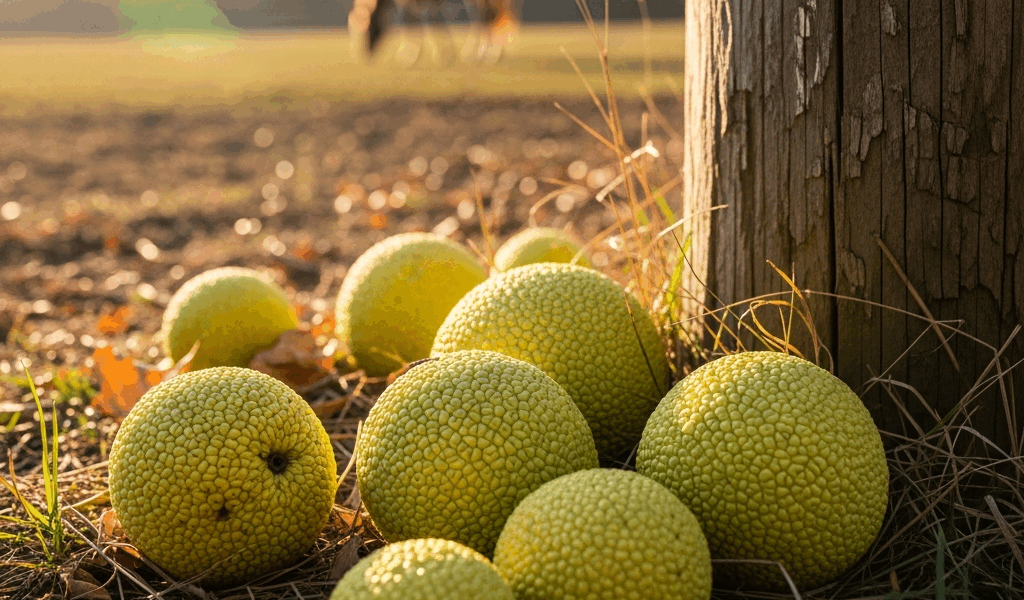
Hedge apples — those lumpy green fruits that fall from Osage orange trees — are not poisonous to horses. That part is settled. But “not poisonous” doesn’t mean “safe to eat freely,” and the reason has nothing to do with toxins.
Are Hedge Apples Poisonous to Horses?
No. Hedge apples (Maclura pomifera — also called Osage orange) are not toxic to horses. No harmful compounds, no reaction from contact or ingestion. If your horse got into some and you’re reading this in a panic, you can set that concern aside.
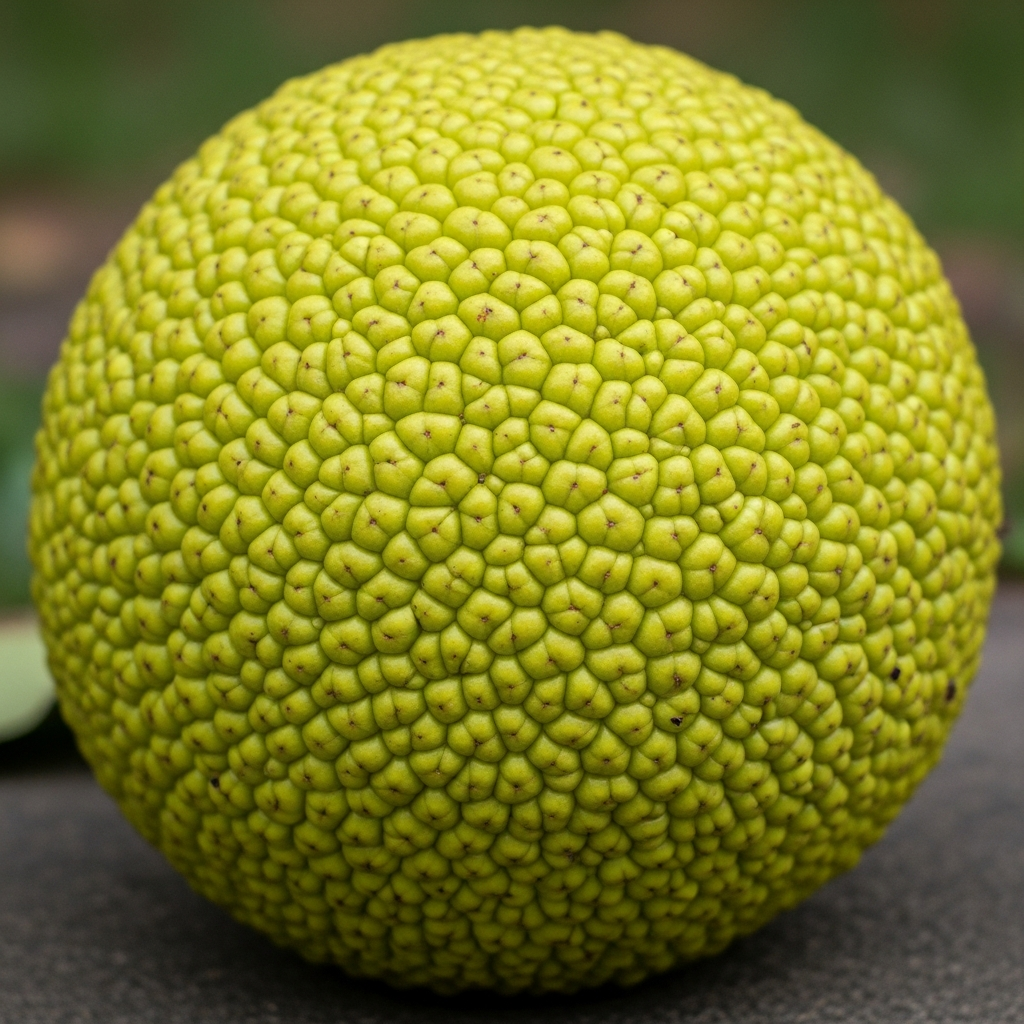
The confusion is understandable. “Horse apple” is a regional nickname for hedge apples, which makes them sound like they were made for horses. They weren’t — it’s just a name. And the fruit looks alarming: waxy, dense, the size of a softball, with a strange bumpy surface. It looks like it should be toxic. It isn’t.
The actual danger is something most people don’t think about.
The Real Risk — Why Hedge Apples Are Still Dangerous
Hedge apples are dense, firm, and large. A horse that tries to eat one whole — which forage-hungry or curious horses will sometimes attempt — faces a real choking risk. The fruit can lodge in the esophagus before the horse can chew it down, causing a blockage. Kentucky Equine Research specifically flags this as the reason to keep horses away from fallen hedge apples: not toxicity, but esophageal obstruction.
This happens more often in cattle than horses, but horses aren’t immune to it. The problem is the size and firmness. A hedge apple doesn’t compress the way a regular apple does — a horse trying to swallow one whole is attempting something their anatomy isn’t built to handle.
Mold Is the Other Concern
Fresh hedge apples that just dropped from the tree are one thing. Hedge apples that have been sitting in grass or mud for a week are another. Fallen fruit develops mold quickly, and moldy hedge apples can cause digestive problems if a horse eats them.
If you have Osage orange trees along your fence line and you’re not clearing the drops, the accumulation in fall can be significant. Horses that root around in fallen fruit are more likely to find the older, moldy ones than the fresh ones.
What to Do If Your Pasture Has Osage Orange Trees
Most horses will leave hedge apples alone — they’re bitter and not appealing. But bored horses, young horses, and horses with limited forage will sometimes investigate and try to eat them. A few things worth doing:
- Clear fallen fruit during drop season (September–November). You don’t need to remove the trees — just keep the ground clear. That’s enough to eliminate most of the risk.
- Check fence lines specifically. Osage orange was historically planted as a hedgerow. The most common place you’ll find it is right along the fence where horses stand.
- Watch horses with limited grazing. A horse with plenty of good pasture won’t bother with hedge apples. One working through sparse grass in late fall is more likely to explore.
- Treat choking as an emergency. If a horse does choke on a hedge apple, call your vet immediately. Esophageal obstruction doesn’t resolve on its own — it needs intervention.
The short version: hedge apples around a horse pasture are manageable. Keep the fallen ones cleared and you’ve handled the main risk. The toxicity concern isn’t the issue — size and choking is.




Leave a Reply