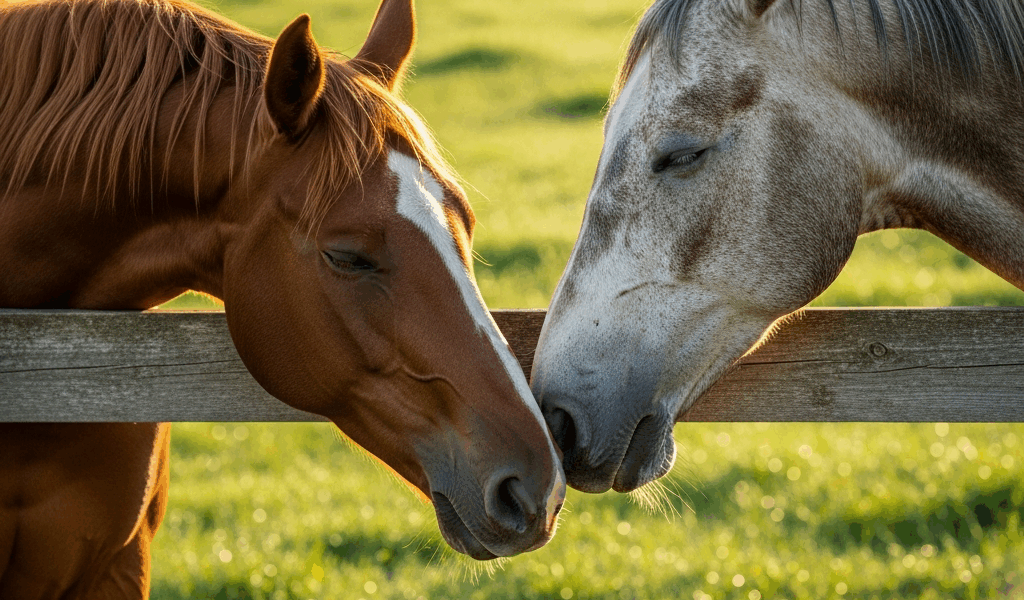
Bringing a new horse home is exciting right up until the moment you realize you need to turn them out with a horse who has owned that pasture for the last three years and has strong opinions about sharing. Herd introductions go wrong when they are rushed. They go well when you give the horses time to sort things out on their terms, in a space where no one gets cornered.
Here is the process, day by day, from the trailer pulling in to the point where everyone is grazing together like old friends.
Before the New Horse Arrives
Set up a quarantine space before the horse arrives. Ideally, the new horse stays in a separate paddock or stall for at least two weeks while you watch for any signs of illness — coughing, nasal discharge, fever, or skin conditions that could spread to your existing horses. Even if the horse comes with a clean vet check, respiratory viruses can be incubating without visible symptoms.
The quarantine paddock should share a fence line with the main pasture if possible. This lets the horses see each other, smell each other, and start establishing a relationship before they share space. A solid fence with a strand of hot wire on top is ideal — no barbed wire, no sagging t-posts, nothing a horse can get a leg through if they start playing or posturing over the fence.
Walk the introduction area and remove anything that could cause injury. Hay feeders with narrow openings can trap a head. Water troughs in corners create dead ends where a submissive horse can get pinned. Open spaces with multiple exit routes are what you want. Think about where you would run if you were a horse being chased — every corner should have an escape path.
Days 1-3 Over the Fence
For the first few days, the horses interact only over the shared fence line. You will see squealing, striking, and dramatic nostril flaring. This is normal. Horses greet each other by exchanging breath, then establishing who moves whose feet. The dominant horse will pin ears and make threatening gestures. The subordinate horse will step back. This conversation needs to happen, and it needs to happen at a safe distance where no one can kick through the fence.
Feed both horses at the same time, placing hay on opposite sides of the shared fence. This creates a positive association — the new horse arrives and food appears. Over two to three days, you should see the posturing decrease. The horses may start standing near each other along the fence, grazing or resting in proximity. That is the signal that they are ready for the next step.
If one horse is still charging the fence and the other is staying at the far end of the paddock after three days, give it more time. There is no deadline. Horses who are forced together before they are ready escalate faster and fight harder than horses who are allowed to negotiate at their own pace.
First Turnout Together
Pick a day when you can watch them for at least two to three hours. Do the introduction in the morning so you have the full day to monitor. Choose the largest available space — a big pasture gives the subordinate horse room to move away, which is the single most important safety factor. Small paddocks force confrontation because there is nowhere to retreat.
Remove hay piles and anything that creates a resource to guard. Two horses fighting over one hay pile is more dangerous than two horses figuring out who is boss in an open field. Put out extra water sources spread far apart — at least one more water trough than the number of horses.
Open the gate rather than leading the new horse in by hand. You do not want to be holding a lead rope when two horses are sorting out their hierarchy. Let the new horse walk in on their own terms. There will be running, squealing, and probably some kicking. Stay outside the fence and watch.
Normal introduction behavior: ears pinned, squealing, striking at the air, chasing for short bursts, kicking out (but not connecting with force). The dominant horse establishes position, the subordinate horse yields, and within twenty to thirty minutes the intensity drops significantly.
Dangerous behavior that warrants separating them: sustained chasing without breaks, repeated direct kicks or bites that connect, one horse cornered and unable to escape, visible injuries (blood, swelling). If you see these, do not walk between the horses. Use a loud noise — bang a feed bucket, honk a truck horn — to break the pattern, then separate them and try again in a few days.
The First Two Weeks
Herd hierarchy takes one to two weeks to fully settle. During this period, check the horses at least twice daily. Look for new bite marks, kick injuries, or signs that one horse is being kept away from food and water. A horse that is losing weight during the introduction period is being bullied off feed, and you need to intervene — either by feeding separately or by providing more feeding stations spread further apart.
Good signs: both horses grazing within a few body lengths of each other. Mutual grooming (standing head to tail and nibbling each other’s withers). Resting near each other. Walking to water together. These are signals that the relationship has stabilized and both horses have accepted their positions in the hierarchy.
By the end of week two, the dramatic posturing should be over. There will still be occasional ear-pinning when one horse gets too close to the other’s food, but the chasing and aggressive displays should be done. If they are not — if one horse is still being aggressively pursued after two weeks — the pairing may not work, and you will need to consider alternatives.
When Things Go Wrong
Some horses never integrate with a specific herd mate. Personality clashes between horses are real, and no amount of fence-line introduction will fix a genuinely incompatible pair. A dominant mare who resource-guards aggressively may never accept a submissive gelding in her space. Two stallions should never share turnout. Some horses who were kept in isolation for years struggle with any social situation.
Options when integration fails: try a different turnout group (the new horse may be fine with a different companion), use a buddy system where the horses share a fence line but never share space, or set up solo turnout with visual contact so the horse gets fresh air and movement without the social stress.
Call the vet if you see serious injuries — deep lacerations, severe swelling, lameness after a kick, or signs of shock (rapid breathing, trembling, refusal to move). These are emergencies, not normal introduction bumps. The goal is always a peaceful herd, but safety comes first, and there is no shame in admitting that two specific horses should not live together.

Leave a Reply