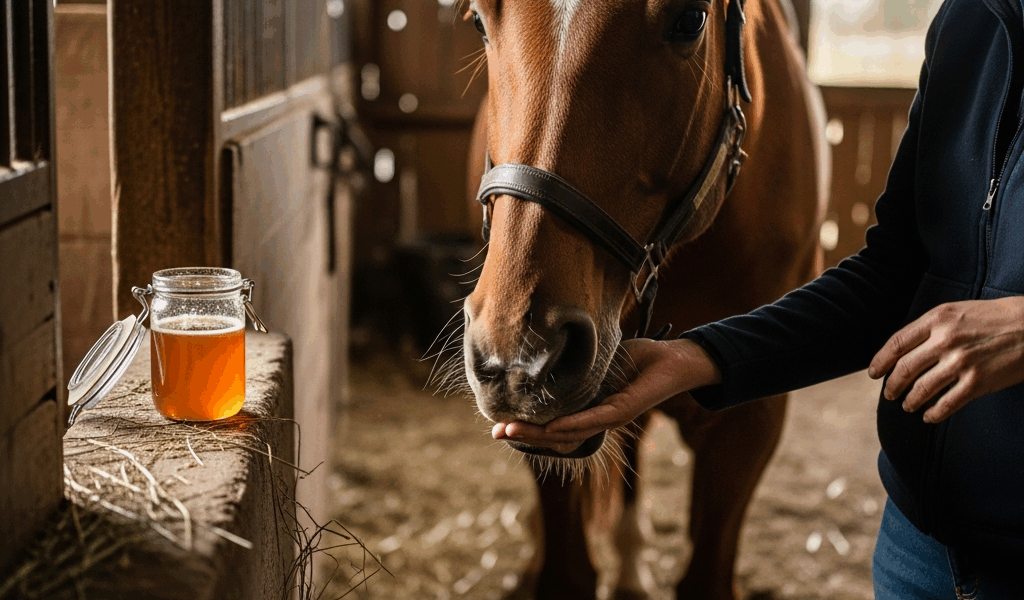
Your horse just watched you eat a granola bar with honey and now they are nudging your pocket looking for a share. Good news — yes, adult horses can eat honey. It is not toxic, most horses love the taste, and in small amounts it can actually be useful. But there are two important safety rules you need to know before you start drizzling it on their grain.
The Short Answer
Adult horses can safely eat one to two tablespoons of raw honey per day. Honey is a natural source of simple sugars, trace minerals, and antioxidants. Many horse owners mix a small amount into grain to encourage picky eaters, drizzle it on hay for horses recovering from illness, or use it to coat pills when they need to administer oral medication. Most horses accept honey eagerly — it is sweet and aromatic, and horses have a well-documented preference for sweet flavors.
Some owners keep a jar of honey in the tack room as a treat alternative to sugar cubes or peppermints. A fingertip dipped in honey and offered to a horse after a good training session works as a reward that does not come in a crinkly wrapper that terrifies half the horses on the property.
Never Feed Honey to Foals
This is the most important thing in this article. Honey can contain spores of Clostridium botulinum, the bacterium that causes botulism. An adult horse’s mature digestive system handles these spores without issue — the gut bacteria and stomach acid destroy them before they can cause problems. A foal’s immature digestive system cannot.
Botulism in foals is serious and can be fatal. The spores germinate in the foal’s gut, produce toxin, and cause progressive muscle weakness that can lead to respiratory failure. This is the same reason pediatricians tell parents not to feed honey to human infants under one year old. The risk is the same for young horses.
The safest rule: no honey for any horse under 12 months old. Period. No exceptions for “just a taste” or “just a tiny bit.” The botulism spores are invisible and undetectable by smell or taste. You cannot know whether any given jar of honey contains them. Do not take the chance.
How Much Is Too Much
One tablespoon of honey contains roughly 17 grams of sugar. A healthy adult horse’s recommended daily sugar intake from treats and supplements is somewhere between 40 and 100 grams, depending on size and workload. Two tablespoons of honey — 34 grams of sugar — eats up a significant chunk of that daily budget.
This means honey should be treated as a concentrated supplement, not a snack you offer freely. Two tablespoons per day is the practical ceiling for most horses. More than that pushes the sugar load into territory where digestive upset becomes a realistic concern — loose stool, changes in gut bacteria, and in sensitive horses, the first stages of laminitis risk.
If your horse also gets carrots, apples, and commercial treats throughout the day, factor those sugars in. An apple contains about 19 grams of sugar. A large carrot has about 5 grams. Add two tablespoons of honey and you are at 58 grams of treat sugar alone — already past the halfway mark for many horses’ daily allowance.
Horses That Should Never Have Honey
Honey is off the table for horses with any metabolic condition. Equine Metabolic Syndrome (EMS), insulin resistance, Cushing’s disease (PPID), or any horse with a history of laminitis should not be eating honey under any circumstances. These horses cannot process sugar normally, and even small amounts can trigger dangerous insulin spikes that lead to laminitic episodes.
Obese horses are also a no. Even if they have not been diagnosed with a metabolic condition, excess body weight indicates they are already consuming more calories than they need. Adding honey — which is essentially concentrated sugar — works against every weight management effort you are making.
If you are not sure whether your horse has a metabolic condition, ask your vet to run an insulin and glucose test at the next wellness check. Many horses with early EMS show no obvious symptoms beyond a slightly thick crest and difficulty maintaining weight on a reasonable diet. The blood work tells you what the eye cannot see.
Best Ways to Feed Honey to Your Horse
Mixed into grain for picky eaters. A tablespoon of honey stirred into the grain bucket makes the entire meal more appealing. This works particularly well with senior horses who are losing interest in their feed or horses recovering from illness who need encouragement to eat.
Drizzled on hay during illness. A sick horse that has gone off feed will sometimes start picking at hay that has a light coating of honey. The sweetness sparks interest and the act of eating helps restore normal gut motility. This is a short-term trick, not a permanent feeding strategy.
Coating pills for easier medication. If your horse needs oral medication and refuses to eat it in their grain, try rolling the pills in a sticky glob of honey. The sweetness masks the bitter taste and the stickiness keeps the pills from falling out of the horse’s mouth while they chew.
What kind of honey to use. Raw, unprocessed honey from a reputable source. Avoid anything labeled “honey blend” or “honey product” — these often contain corn syrup, artificial sweeteners, or other additives that a horse’s digestive system is not equipped to handle. If the ingredient list has more than one item on it, it is not real honey. The good stuff has one ingredient: honey.


Leave a Reply