![Can Horses Eat Celery? Low-Sugar Treat Guide [2026]](https://horsebesties.com/wp-content/uploads/sites/115/2026/01/horse-celery-680x600.png)
Whether horses can eat celery has gotten complicated with all the online debates about stringy vegetables and choking risks.
I started offering celery when my vet told me my mare needed to lose weight and I had to cut back on the apple and carrot treats she loved. I needed something crunchy and satisfying that wouldn’t pile on the calories. Celery turned out to be the perfect solution.
Is Celery Safe for Horses?
Celery is completely safe. Both the stalks and the leaves are non-toxic and easy on the digestive system.
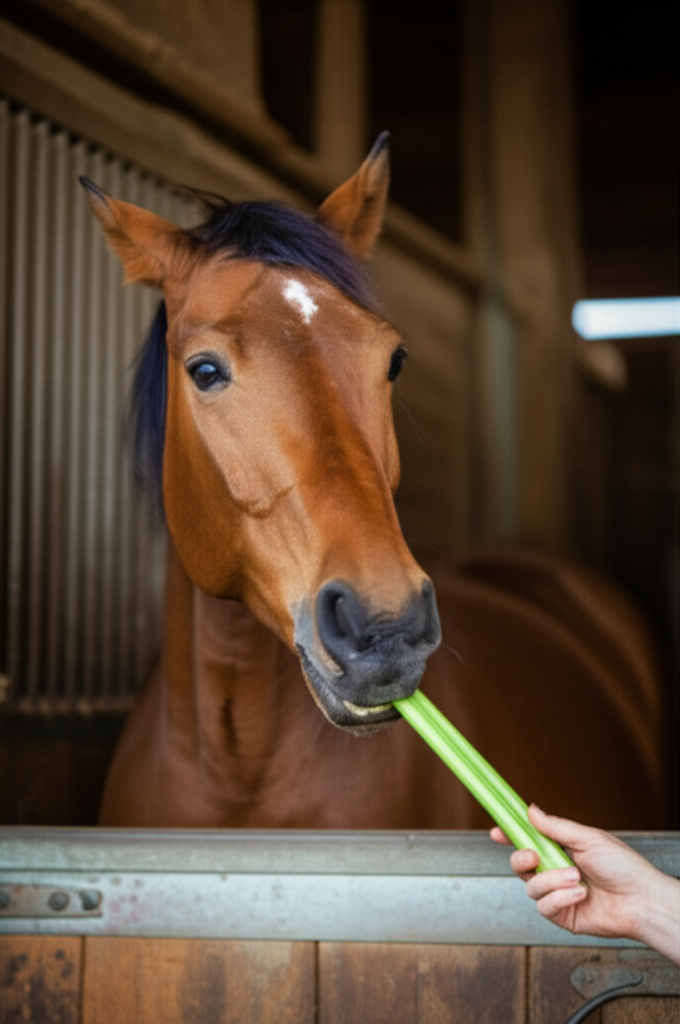
According to Kentucky Equine Research, celery is in the safe treat category for horses. Its remarkably low sugar content and high water percentage make it one of the best options for horses who need to watch their intake.
What makes it safe:
- Zero toxic compounds in either stalks or leaves
- Very low in sugar — practically nothing compared to fruits
- About 95% water, so it’s basically crunchy hydration
- Good fiber content for digestive support
- Easy to digest and gentle on the gut
Nutritional Benefits of Celery for Horses
Celery isn’t going to win any nutritional awards, but it has some genuine advantages over other treat options.
Hydration
That 95% water content is really something. That’s what makes celery endearing to us owners of picky drinkers — it’s a sneaky way to get extra hydration into a horse that doesn’t drink enough.
- Excellent for hot weather treating
- Helps horses who are stingy about their water intake
- Great post-exercise refreshment
Low Calorie, Low Sugar
Probably should have led with this section, honestly, because this is the real reason celery deserves a spot in your treat bag:
- Only about 6 calories per stalk. Six. That’s practically nothing.
- Minimal glycemic impact, which means it barely affects blood sugar
- Ideal for overweight horses who still deserve treats
- One of the safest options for metabolic horses (always check with your vet)

Fiber Content
Both soluble and insoluble fiber. The stringy texture that makes celery annoying to eat for humans is actually fiber doing its job. For horses, this supports healthy gut function.
Vitamins and Minerals
- Vitamin K: Supports proper blood clotting
- Vitamin C: Antioxidant benefits, though horses make their own
- Potassium: Important for muscle function
- Folate: Supports cell function and growth
How Much Celery Can a Horse Eat?
Celery is one of the more forgiving treats in terms of quantity, but let’s not go crazy.
What works for me:
- Occasional treat: 2-4 stalks at a time
- Daily treating: 1-2 stalks, which is what I give my dieting mare
- Maximum: About a pound per day for a full-sized horse
Why moderation still matters:
- All that water content can cause loose manure if you really overdo it
- The fibrous strings deserve some attention (more on that below)
- It should supplement the regular diet, not replace any part of it
How to Prepare Celery for Horses
Cutting for Safety
Those fibrous strings that run along celery stalks can theoretically cause issues, so a little prep goes a long way:
What I do:
- Cut into 2-3 inch pieces: Shortens the string length and makes each piece easy to chew and swallow
- Cut lengthwise then crosswise: Creates even smaller, safer pieces for training treats
- Strip outer strings: Optional, but I do this for my older horse who doesn’t chew as thoroughly
Whole stalks: Honestly fine for horses that chew well. I’ve given whole stalks plenty of times without any issue. But I do watch until they’ve finished chewing.
Preparation Tips
- Wash thoroughly — celery is on the “dirty dozen” list for pesticide residue
- Organic is worth the extra cost if you can find it
- Toss any brown, wilted, or slimy parts
- The leaves are fair game — most horses enjoy them

Can Horses Eat Celery Leaves?
Absolutely. The leaves are safe and many horses actually prefer them to the stalks. Here’s the neat part: celery leaves are more nutrient-dense than the stalks, packing higher concentrations of vitamins and minerals into those little green tops. Don’t throw them away.
Celery for Horses with Metabolic Conditions
This is where celery really shines. It’s one of the most commonly recommended treat options for horses dealing with:
- Equine Metabolic Syndrome (EMS)
- Insulin resistance
- Cushing’s disease (PPID)
- Laminitis history
- Weight management needs
The sugar content is so low that celery is safer than most fruits and even some other vegetables. My vet specifically recommended it when we had to get strict about my mare’s diet. That said, always run treat choices by your veterinarian for horses with health conditions. What works for my horse may not work for yours.
Celery vs. Other Low-Sugar Treats
| Treat | Sugar | Water | Best For |
|---|---|---|---|
| Celery | Very Low | 95% | Metabolic horses, weight management, daily treating |
| Cucumber | Very Low | 95% | Similar benefits, different texture |
| Carrots | Low-Medium | 88% | General treating, universally loved |
| Apples | Medium-High | 86% | Special occasions only for metabolic horses |
Creative Ways to Feed Celery
Training Treats
Cut celery into small cubes for low-calorie training rewards. The crunch gives the horse a satisfying sensory response, and at 6 calories per stalk, you can be generous during a training session without guilt.
Stuffed Celery
For a special-occasion treat, fill celery stalks with a thin layer of unsweetened peanut butter or mashed banana. My horses think this is the greatest invention of all time.
Mixed into Feed
Chop celery and toss it into regular feed for added texture and hydration. Good way to make a meal more interesting for a horse that’s bored with their diet.
Frozen Treats
Freeze celery pieces for a cooling summer snack. Takes longer to eat, which means extended enrichment time.
Signs of Overconsumption
Keep an eye out for:
- Loose manure — the most likely sign you’ve given too much of any high-water treat
- Decreased interest in regular feed
- Rarely: celery strings caught in teeth (check after feeding if your horse seems uncomfortable)
Frequently Asked Questions
Can foals eat celery?
Yes, once they’re eating solid food. Cut into very small pieces. Young horses don’t chew as efficiently.
Is organic celery necessary?
Conventional celery is one of the most heavily sprayed crops. Organic is genuinely worth it here, or at minimum, wash it very thoroughly.
Can horses eat celery every day?
Yes, and that’s one of celery’s biggest advantages. Its low sugar content makes it one of the few treats you can offer daily without nutritional guilt.
My horse doesn’t like celery — is that normal?
Totally normal. Some horses aren’t fans of the flavor or the texture. Try cucumber instead — similar nutritional profile, different taste.
The Bottom Line
Celery might be the most underrated horse treat out there. Almost no sugar, tons of water, satisfying crunch, and safe enough to offer daily. If you’ve got a horse on a diet, a horse with metabolic issues, or just want a guilt-free way to reward your best friend, celery deserves a permanent spot in your treat rotation.
Sources: Kentucky Equine Research, American Association of Equine Practitioners, Penn State Extension


Leave a Reply