![Can Horses Eat Oranges? Citrus Safety Guide [2026]](https://horsebesties.com/wp-content/uploads/sites/115/2026/01/horse-orange-1024x600.png)
Whether horses can eat oranges has gotten complicated with all the conflicting advice about citrus and horses online.
The short answer is yes, horses can absolutely eat oranges. My mare practically mugs me for them now. But there are some things worth knowing before you start tossing citrus into your horse’s feed bucket.
Are Oranges Safe for Horses?
Oranges are completely safe for healthy horses. And here’s the thing that surprised me — every part of the orange is non-toxic. The flesh, the peel, the pith (that white spongy layer), even the seeds. All safe.
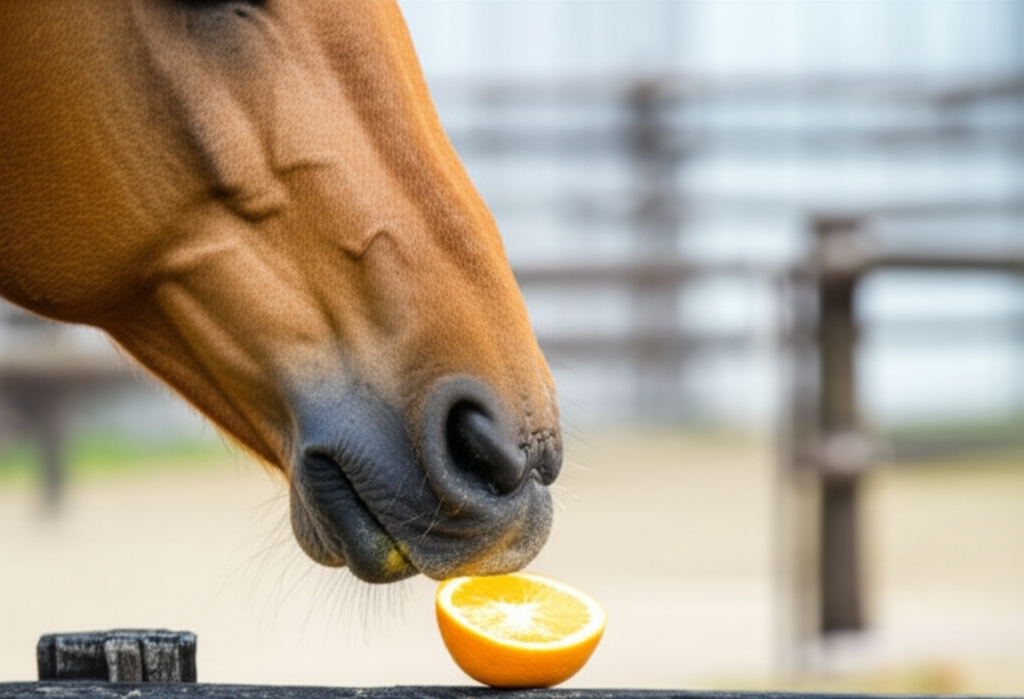
According to Kentucky Equine Research, citrus fruits including oranges are in the safe category for occasional horse treats.
What makes them safe:
- No toxic compounds anywhere in the fruit
- Seeds are small and harmless — no need to pick them out
- Even the peel is safe, though not every horse appreciates the bitter taste
- It’s a natural, whole food with nothing weird in it
Nutritional Benefits of Oranges for Horses
Vitamin C
Oranges are loaded with vitamin C, which you probably already knew. Now, horses actually produce their own vitamin C, so they don’t strictly need it from food. But extra antioxidant support can genuinely benefit:
- Senior horses whose natural production may decline
- Horses dealing with stress from travel, competition, or environment changes
- Horses recovering from illness or injury
- Performance horses under heavy training loads
Hydration
Oranges are about 87% water. On a hot day, that’s a juicy, hydrating treat that does double duty. I started offering cold orange segments during summer heat waves and my horses loved it.

Other Nutrients
- Fiber: Supports digestive health, especially in the peel and pith
- Potassium: Important for muscle function, particularly relevant for working horses
- Thiamine (B1): Supports energy metabolism
- Folate: Supports cell function
- Flavonoids: Antioxidant compounds that support overall health
How Many Oranges Can a Horse Eat?
Probably should have led with this section, honestly, because moderation is the key word with oranges. They’re higher in sugar and acidity than, say, celery or cucumber.
What I stick to:
- Occasional treat: 1 whole orange or equivalent in segments
- Regular treating: Half an orange, 2-3 times per week
- Maximum per day: 2 oranges for an average-sized horse
Why you should limit them:
- Higher sugar content compared to some other treat options
- The citric acid can cause mouth sensitivity in some horses
- Too many at once can cause loose manure — learned that one the hard way
Can Horses Eat Orange Peels?
Yes, they can. I was skeptical about this at first, but the peels are completely safe. Here’s what to know:
- Wash thoroughly: Conventional oranges have pesticide residue and wax coatings. A good scrub is essential.
- Cut into pieces: Makes them easier and safer to eat
- Bitter taste: My mare will eat peels happily. My gelding spits them out every single time. Horses have preferences.
- Extra fiber: Peels actually have more fiber than the flesh, which is a nutritional bonus
- Essential oils: The aromatic citrus oils in the peel are safe for horses
Fun fact: some racehorse trainers feed orange peels as a pre-race treat, believing the citrus oils have a calming or focusing effect. Probably not scientifically proven, but it’s an interesting tradition.
How to Feed Oranges to Horses
Preparation Options
Peeled segments: The most common and easiest approach. Just peel and hand over.
Whole orange with peel: Some horses enjoy biting into a whole orange like it’s an apple. It’s entertaining to watch.
Sliced rounds: Easy to portion and offer one at a time.
Quartered: A good balance between easy eating and making the treat last.
Feeding Tips
- Wash the outside thoroughly if you’re leaving the peel on
- Peel off any produce stickers — horses don’t need to eat those
- Don’t bother removing seeds, they’re perfectly safe
- Introduce gradually if your horse has never had citrus before
- Watch for any signs of mouth discomfort — lip curling or head shaking after eating
Horses Who Should Limit Oranges
Metabolic Conditions
Because of the sugar content, go easy or skip oranges entirely for horses with:
- Equine Metabolic Syndrome (EMS)
- Insulin resistance
- Cushing’s disease (PPID)
- Any history of laminitis
Sensitive Mouths
That’s what makes citric acid tricky for us horse owners — most horses handle it fine, but some really don’t. Limit oranges for horses with:
- Mouth sores or ulcers
- Dental problems or recent dental work
- Naturally sensitive lips or gums
If your horse tries an orange and then avoids them afterward, take the hint. The acidity is probably bothering them.
Other Citrus Fruits: Are They Safe?
| Citrus | Safe? | Notes |
|---|---|---|
| Oranges | Yes | All parts safe, most horses enjoy them |
| Tangerines/Mandarins | Yes | Smaller and sweeter, easy to peel |
| Grapefruit | Yes (caution) | More acidic and bitter; most horses won’t touch it |
| Lemons/Limes | Yes (rare) | Way too sour; nearly all horses refuse them |
Signs of Orange Overconsumption
Watch for these:
- Loose manure or actual diarrhea — the most common sign you went overboard
- Reluctance to eat more oranges, which might mean mouth discomfort from the acid
- Decreased appetite for regular feed
Creative Ways to Use Oranges
Hot Weather Refreshment
Refrigerate orange segments for a cooling summer treat. My horses get visibly excited when I show up with cold orange slices on a hot day.
Frozen Orange Treats
Dilute fresh orange juice with water and freeze in ice cube trays. A citrus-flavored ice treat that keeps them busy.
Medication Masking
The strong citrus flavor can overpower the taste of bitter medications. Not as effective as peanut butter for this purpose, but worth trying if your horse loves oranges.
Frequently Asked Questions
Can foals eat oranges?
Yes, once they’re eating solid food. Start with small peeled segments and watch for any reaction.
Will oranges give my horse diarrhea?
In reasonable amounts, no. Go overboard and you might see loose manure from the sugar and acid combo.
Can horses drink orange juice?
Small amounts of pure orange juice are technically safe, but it’s concentrated sugar. Fresh oranges are always the better option.
My horse won’t eat oranges — should I worry?
Not at all. Some horses just don’t like the tartness. It’s a preference, not a problem. Offer something else and move on.
The Bottom Line
Oranges are a safe, tasty treat that plenty of horses genuinely enjoy. They’re higher in sugar than some alternatives, so keep them occasional, but the vitamin C and hydration benefits are real bonuses. Feed in moderation, watch for any sensitivity to the acidity, and your horse can happily enjoy citrus as part of a varied treat rotation.
Sources: Kentucky Equine Research, American Association of Equine Practitioners, University of Minnesota Extension




Leave a Reply