![Can Horses Eat Cucumber? Safe Treat Guide [2026]](https://horsebesties.com/wp-content/uploads/sites/115/2026/01/horse-cucumber-1024x600.png)
Yes, horses can eat cucumber! This refreshing, low-calorie vegetable is one of the safest treats you can offer, especially during hot summer months. With its high water content and minimal sugar, cucumber is an excellent choice for horses of all types—including those with metabolic concerns.
This guide covers everything you need to know about feeding cucumber to horses.
Is Cucumber Safe for Horses?
Cucumber is completely safe for horses. The flesh, skin, and seeds are all non-toxic and easily digestible.
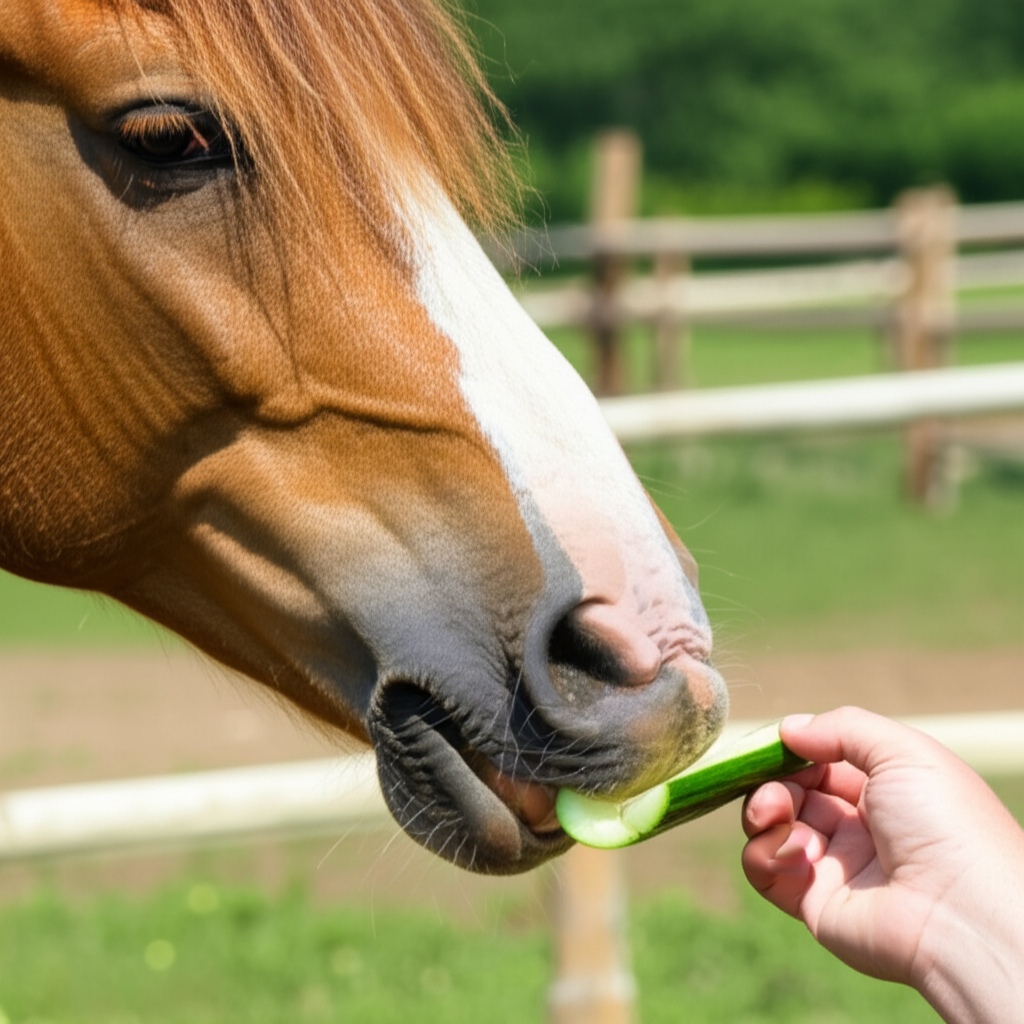
According to Kentucky Equine Research, cucumber is among the safest treat options for horses, particularly valued for horses on restricted diets.
What makes cucumber safe:
- No toxic compounds
- Very low in sugar (less than 2%)
- High water content (about 95%)
- Seeds are soft and safe
- Easy to digest
Nutritional Benefits of Cucumber
Superior Hydration
Cucumber is approximately 95% water—one of the highest water contents of any vegetable. This makes it perfect for:
- Hot weather refreshment
- Encouraging hydration
- Post-exercise cooling
- Horses who don’t drink enough
Extremely Low Sugar
With less than 2% sugar content, cucumber is one of the safest treats for sugar-sensitive horses.
Vitamins and Minerals
- Vitamin K: Supports blood health
- Vitamin C: Antioxidant benefits
- Potassium: Supports muscle function
- Magnesium: Nerve and muscle health
How Much Cucumber Can a Horse Eat?
Cucumber is one of the most forgiving treats in terms of quantity.
Recommended amounts:
- Occasional treat: 1 whole cucumber
- Regular treating: Half a cucumber daily
- Maximum: 2-3 cucumbers per day
Why some moderation is still wise:
- High water content can cause loose manure if overfed
- Should complement, not replace, regular diet
How to Prepare Cucumber
Preparation options:
- Sliced rounds: Easy to feed, good for training
- Spears: Easy for horses to bite
- Whole: Safe for horses who chew well
- Chunks: Mixed with feed
Tips:
- Wash thoroughly to remove pesticides
- Skin is safe—no need to peel
- Seeds are soft and safe
- Organic cucumbers reduce pesticide concerns
Cucumber for Metabolic Horses
Cucumber is often recommended as an ideal treat for horses with:
- Equine Metabolic Syndrome (EMS)
- Insulin resistance
- Cushing’s disease (PPID)
- Laminitis history
- Weight management needs
Its extremely low sugar content makes it safer than virtually any other treat option.

Cucumber vs. Other Low-Sugar Treats
| Treat | Sugar | Water | Calories |
|---|---|---|---|
| Cucumber | ~1.7% | 95% | Very Low |
| Celery | ~1.8% | 95% | Very Low |
| Carrots | ~4.7% | 88% | Low |
| Apples | ~10% | 86% | Medium |
Creative Ways to Use Cucumber
Frozen Cucumber Treats
Freeze cucumber slices for an extra-cooling summer snack.
Cucumber Water
Add cucumber slices to water buckets to encourage drinking.
Training Rewards
Small cucumber cubes make excellent low-calorie training treats.
Frequently Asked Questions
Can foals eat cucumber?
Yes, once eating solid food. Start with small, thin slices.
Can horses eat pickles?
No, pickles contain salt, vinegar, and spices that aren’t appropriate for horses. Stick to fresh cucumber.
My horse won’t eat cucumber—is that normal?
Yes, some horses don’t like the mild flavor or watery texture. Try other low-sugar options like celery.
The Bottom Line
Cucumber is one of the safest, most hydrating treats you can offer your horse. Its extremely low sugar content makes it ideal for horses with metabolic concerns, while its refreshing nature makes it a perfect summer treat for any horse. Keep cucumber in your treat rotation for a guilt-free way to reward your equine friend.
Sources: Kentucky Equine Research, American Association of Equine Practitioners, Penn State Extension



Leave a Reply