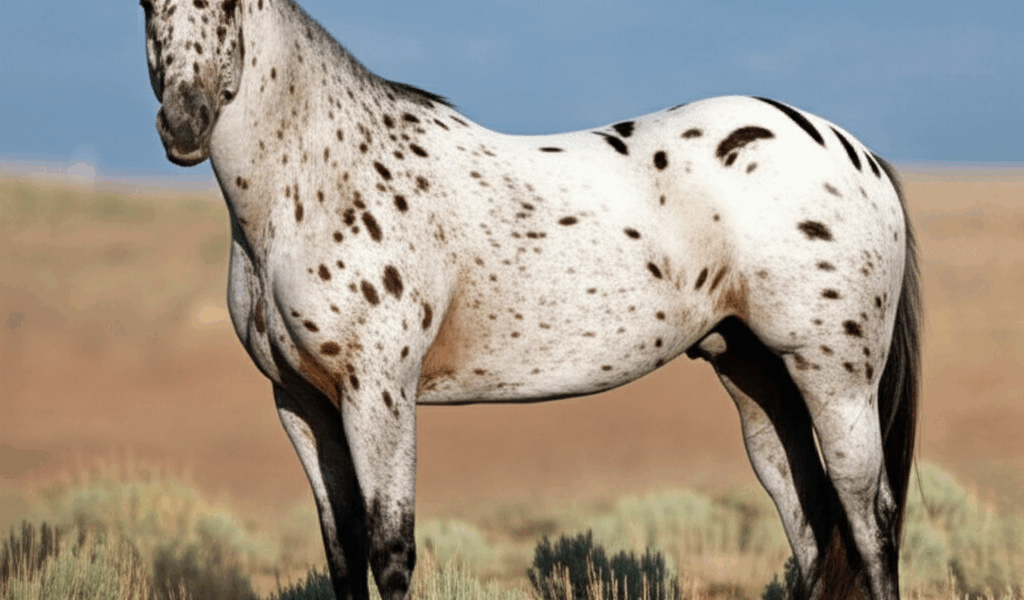
How much does an Appaloosa horse cost? In a summer 2026 snapshot of publicly priced Appaloosa listings on DreamHorse, visible asking examples ranged from $3,000 for a young prospect to $55,000 for a high-priced gelding. Many examples on the page clustered around $6,000–$15,500. These were advertised prices, not completed sales or a national average.
Appaloosa listings can include registered ApHC horses, unregistered spotted horses and crosses. Confirm exactly what is being sold before comparing prices. Color alone does not establish pedigree, registration, training or value.
2026 Appaloosa Asking-Price Snapshot
| Visible listing example | Public asking price | Context |
|---|---|---|
| 2025 registered Appaloosa colt | $3,000 | A young prospect still needs years of care and training. |
| 2014 broodmare-marketed Appaloosa | $6,000 | Verify breeding, reproductive and health history. |
| 2020 Appaloosa gelding | $6,500 | See the horse perform the intended job. |
| 2016 Appaloosa mare | $7,500 | Age, soundness, training and location affect value. |
| 2019 Appaloosa gelding | $10,000 | Verify registration and advertised experience. |
| 2017 ranch-marketed gelding | $12,500 | Test the claimed ranch or trail skills in person. |
| 2020 Appaloosa gelding | $15,500 | A higher asking example among the ordinary listings reviewed. |
| 2021 high-priced gelding | $55,000 | An outlier asking price, not a benchmark for the breed. |
Marketplace advertisements change quickly, and the final negotiated prices are generally private. Use this dated snapshot to understand the breadth of the market, then compare current horses of similar age, registration, training, health, location and discipline.
What Changes an Appaloosa’s Price?
Proven training, temperament and soundness usually matter more than the amount of visible spotting. A reliable ranch, trail, youth, show or sport horse may command more because it has demonstrated a useful job. A young horse with an attractive pattern may still require substantial professional training.
Registration, competition records, breeding history, age, location and seller urgency also affect asking price. See the horse caught, handled, loaded and ridden. Ask for unedited video and observe the exact work advertised. An independent trainer can help determine whether the horse fits your experience and goals.
Verify ApHC Registration and Transfer Documents
The Appaloosa Horse Club explains that its Certificate of Registration documents a horse’s registered identity and includes identifying information and photographs. Its transfer form says the certificate should list the person selling the horse as owner. A registered-horse premium should be based on verifiable documents, not spots or a seller’s statement.
Before paying:
- match the registered name, number, markings and certificate photographs to the horse;
- confirm that the seller is the owner shown on the certificate;
- review the original certificate and completed Transfer of Ownership Report;
- verify advertised show, breeding and pedigree records; and
- contact ApHC before purchase if the certificate is missing or ownership is inconsistent.
LP, Night Vision and Genetic Testing
The leopard complex spotting gene is commonly abbreviated LP. UC Davis researchers report that horses with two copies of LP are affected by congenital stationary night blindness (CSNB), a non-progressive condition present from birth. Visual coat pattern alone is not a substitute for a laboratory result.
If breeding is possible, request the actual report and confirm the tested horse’s identity. Discuss LP, PATN1 and any discipline- or pedigree-relevant testing with a veterinarian or qualified genetics professional. Genetic testing does not replace a veterinary pre-purchase examination, and a single result does not determine a horse’s overall suitability or value.
Use an Independent Pre-Purchase Examination
Choose a veterinarian working for you and explain the intended use. Review health, lameness, medication, dental and farrier history. Depending on the horse and price, discuss imaging, laboratory work, ophthalmic evaluation or other targeted tests. No examination can guarantee future health, but it can clarify risk before money changes hands.
Budget Beyond the Purchase Price
Collect local quotes for board or forage, routine veterinary care, dentistry, farrier work, training, tack, transportation, insurance and emergencies. Recurring ownership costs can exceed the purchase price. Start with our horse ownership cost worksheet and replace every estimate with local figures.
Appaloosa Buying Checklist
- Define the intended job and rider experience level.
- Compare current horses with similar training and registration.
- Verify ApHC identity, ownership and transfer paperwork.
- See the horse perform the advertised work.
- Use an independent trainer and veterinarian.
- Review actual genetic reports when breeding or night vision is relevant.
- Use a written sale agreement that identifies the horse and seller representations.
Appaloosa Cost FAQ
What is the average Appaloosa price?
No authoritative national average covers every age, training level and use. The 2026 asking examples reviewed here ranged from $3,000 to $55,000, with many visible listings around $6,000–$15,500. That is a marketplace snapshot, not a valuation formula.
Is every spotted horse a registered Appaloosa?
No. Verify the original ApHC certificate and identifying photographs. Spotted coloring can occur in unregistered horses and other breeds or crosses.
Does every Appaloosa have night blindness?
No. UC Davis associates CSNB with horses carrying two copies of LP. Use a validated genetic test and professional guidance rather than guessing from coat pattern.

Leave a Reply