![Every Horse Coat Color Explained [2026]](https://horsebesties.com/wp-content/uploads/sites/115/2026/01/ai_26d30a74_20260126_074701-1024x600.png)
Understanding horse colors can be confusing—there are dozens of color names, patterns, and markings. This complete guide breaks down every horse color you’ll encounter, from common bay to rare champagne.
Horse Colors at a Glance
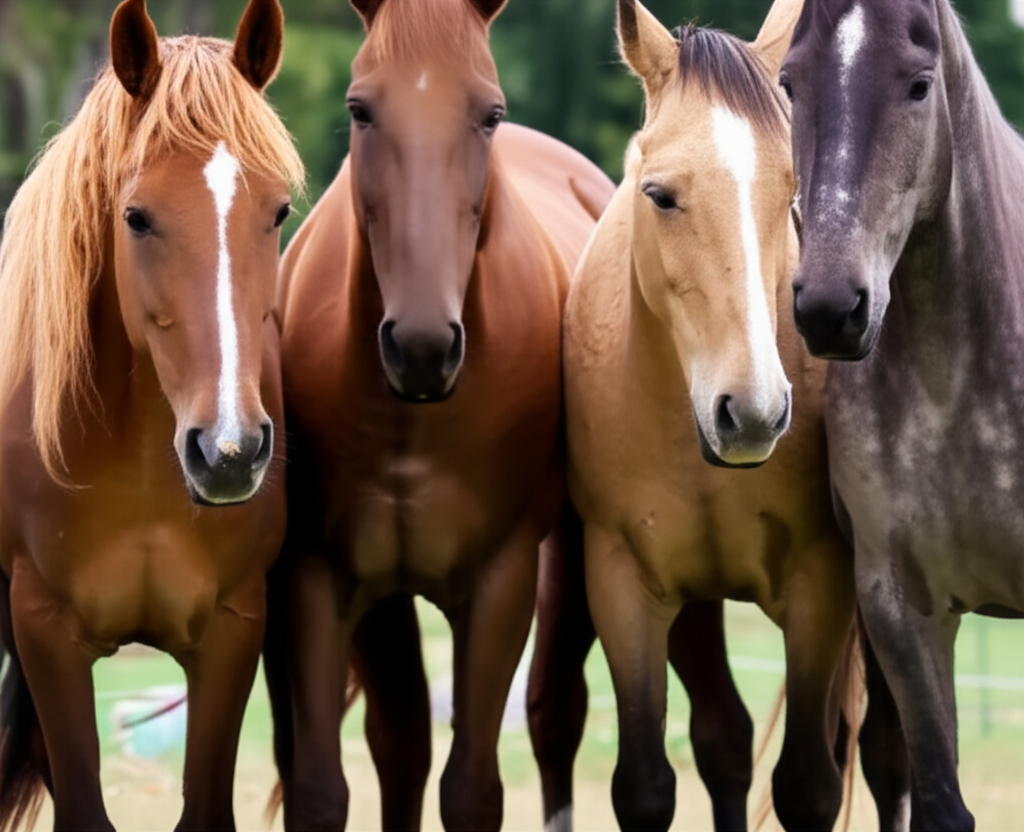
The Basic Colors
All horse colors come from two base pigments: black and red. Every color you see is some variation of these two pigments, modified by various genes.
Bay
- Appearance: Brown body with black mane, tail, and lower legs (points)
- Variations: Blood bay (bright red-brown), dark bay, light bay, mahogany bay
- Common in: Thoroughbreds, Warmbloods, most breeds
- Prevalence: Most common horse color worldwide
Black
- Appearance: Solid black body, mane, and tail—no brown hairs
- True black: Doesn’t fade in sunlight (rare)
- Fading black: Turns brown/rusty in sun
- Common in: Friesians (exclusively), Fell Ponies, some Morgans
Chestnut (Sorrel)
- Appearance: Reddish-brown body, mane, and tail (same color or lighter)
- Variations: Liver chestnut (dark), flaxen chestnut (blonde mane/tail), light chestnut
- Note: “Sorrel” is Western term, “chestnut” is English term—same color
- Common in: Belgians, Haflingers (always flaxen), Quarter Horses
Gray
- Appearance: Born dark, progressively lightens to white
- Stages: Steel gray → dapple gray → flea-bitten gray → white
- Important: Gray horses have dark skin (true white horses have pink skin)
- Common in: Lipizzans (born dark, turn white), Andalusians, Percherons
Dilution Colors
These colors occur when genes dilute the base colors (bay, black, or chestnut).
Palomino
- Appearance: Golden body with white or cream mane and tail
- Base color: Chestnut + cream dilution gene
- Shades: Light (creamy) to dark (chocolate) palomino
- Ideal: Color of a newly minted gold coin
- Common in: Quarter Horses, Tennessee Walkers
Buckskin
- Appearance: Tan/golden body with black mane, tail, and points
- Base color: Bay + cream dilution gene
- vs. Dun: Buckskins lack primitive markings (dorsal stripe)
- Common in: Quarter Horses, Spanish breeds
Cremello & Perlino
- Appearance: Cream-colored body with pink skin, blue eyes
- Cremello: Double-diluted chestnut
- Perlino: Double-diluted bay (slightly darker mane/tail)
- Often confused with: White horses (different genetics)
Champagne
- Appearance: Metallic sheen, amber/green eyes, mottled skin
- Variations: Gold champagne, amber champagne, classic champagne
- Rare: Found mainly in Tennessee Walkers, some other breeds
Dun Colors
Duns have primitive markings—dorsal stripe, leg barring, sometimes shoulder stripe.
Classic Dun (Bay Dun)
- Appearance: Tan body, black points, dorsal stripe
- Primitive markings: Dorsal stripe, leg barring, sometimes “zebra” stripes
- Common in: Norwegian Fjords, Mustangs, Quarter Horses
Red Dun
- Appearance: Peachy/red body with red dorsal stripe
- Base color: Chestnut + dun gene
Grulla (Grullo)
- Appearance: Mouse-gray/slate body with black points and dorsal stripe
- Base color: Black + dun gene
- Rare: Highly sought after in some breeds
Roan Colors
Roans have white hairs intermixed evenly throughout the body (not the head or legs).
Blue Roan
- Appearance: Black base with white hairs = bluish appearance
- Head/legs: Remain solid black
Red Roan (Strawberry Roan)
- Appearance: Chestnut base with white hairs = pinkish appearance
Bay Roan
- Appearance: Bay base with white hairs, black points remain
Patterns & Markings
Paint/Pinto Patterns
- Tobiano: White crosses the back, legs usually white, head solid
- Overo: White doesn’t cross back, often jagged edges, blue eyes common
- Tovero: Mix of both tobiano and overo characteristics
Appaloosa Patterns
- Blanket: White over hips, with or without spots
- Leopard: White body covered in dark spots
- Snowflake: White spots on dark body
- Roan blanket: Roaning concentrated over hips
- Characteristics: Mottled skin, striped hooves, white sclera
Face Markings
| Marking | Description |
|---|---|
| Star | White mark on forehead |
| Stripe | Narrow white down face |
| Snip | White on muzzle/nose |
| Blaze | Wide white down face |
| Bald face | White covers most of face |
Leg Markings
| Marking | Description |
|---|---|
| Coronet | White just above hoof |
| Pastern | White to fetlock |
| Sock | White halfway up cannon |
| Stocking | White to or past knee/hock |
Rare & Unusual Colors
Brindle
- Appearance: Tiger-like stripes
- Extremely rare: Genetic mutation or chimera
Rabicano
- Appearance: White hairs at tail base and flanks
Sabino
- Appearance: High white on legs, belly spots, chin white
- Extreme: Can produce nearly all-white horses
The Bottom Line
Horse colors are more complex than they first appear—genetics determine not just the base color but also dilutions, patterns, and markings. Understanding color genetics helps breeders predict foal colors and helps buyers describe exactly what they’re looking for. Whether you prefer a classic bay or a flashy palomino pinto, the variety of horse colors is one of many things that makes these animals so beautiful.
Sources: UC Davis Veterinary Genetics Lab, AQHA, APHA, Appaloosa Horse Club

Leave a Reply