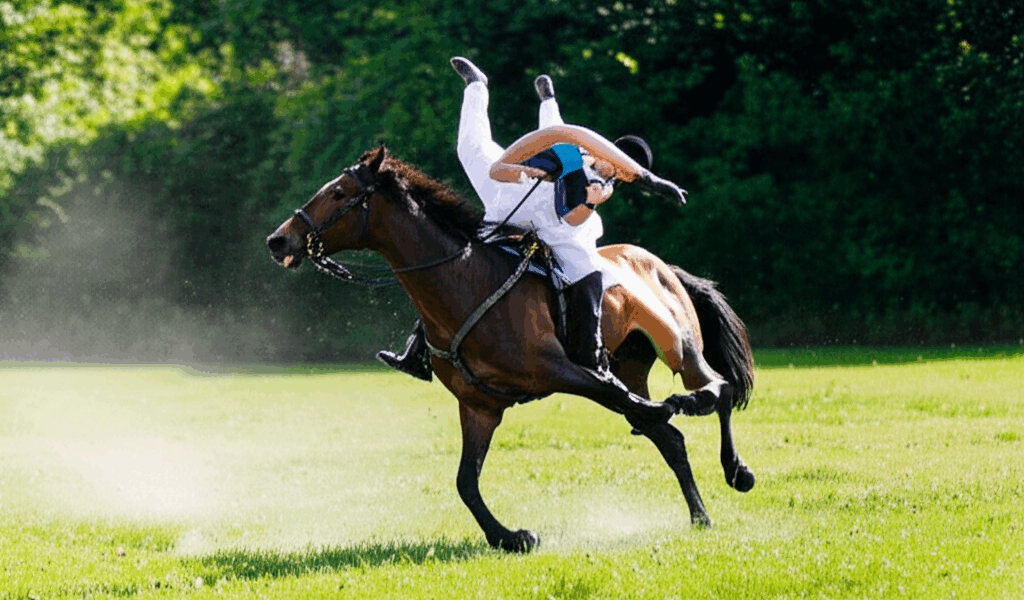
Horseback riding is inherently risky—horses are large, powerful animals that can spook, buck, or bolt unexpectedly. But with proper safety practices, you can significantly reduce your risk of injury. Here’s what every rider needs to know. For unmounted beginners, review our guide to teaching a child to groom a horse safely before the first hands-on session.
The Reality of Riding Risks
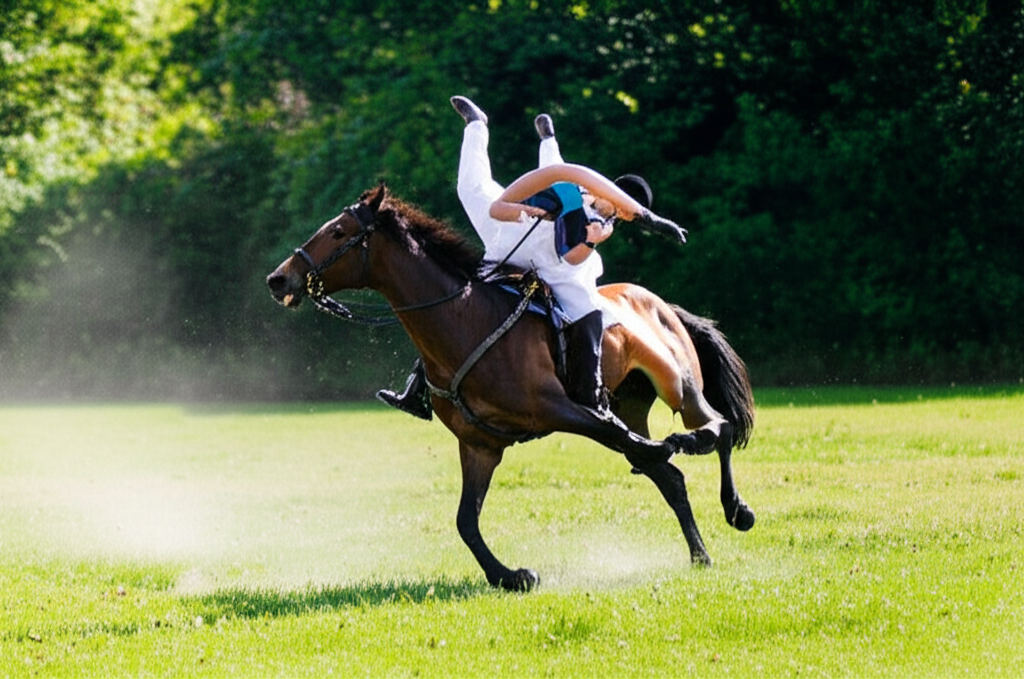
Statistics show horseback riding can be dangerous:
- Hospital visits for horse-related injuries exceed those for motorcycles and skiing
- Head injuries cause 60% of horse-related deaths
- Most accidents happen during routine activities, not high-risk maneuvers
The good news: Most injuries are preventable with proper precautions.
Essential Safety Equipment
Helmets: Non-Negotiable
A properly fitted, ASTM/SEI-certified helmet is the single most important piece of safety equipment.
- Always wear one: Every ride, every time—no exceptions
- Proper fit: Snug but comfortable, sits level on head
- Replace after falls: Even minor impacts can compromise protection
- Replace every 5 years: Materials degrade over time
- No bicycle helmets: Equestrian helmets are designed differently
Footwear
- Heeled boots: 1-1.5 inch heel prevents foot slipping through stirrup
- Smooth sole: Allows quick release from stirrup
- Ankle coverage: Protects from rubs and impacts
- Never: Sneakers, flip-flops, or shoes without heels
Body Protection (Optional but Recommended)
- Safety vest: Required for cross-country, recommended for all jumping
- Air vests: Inflate on impact, excellent protection
- Gloves: Prevent blisters and improve grip
Ground Safety
Around Horses
- Approach at shoulder: Never from directly behind
- Speak before touching: Announce your presence
- Stay close or far: If kicked, being close reduces force
- Lead from the side: Not directly in front
- No running: Horses can spook at sudden movement
Tacking Up
- Cross-tie or have someone hold horse
- Check all equipment before mounting
- Ensure cinch/girth is secure but not over-tight
- Adjust stirrups to proper length
Mounting & Dismounting
Safe Mounting
- Have someone hold horse (especially for beginners)
- Check girth is tight enough
- Use mounting block when possible (easier on horse’s back)
- Hold reins to maintain control
- Don’t pull saddle sideways while mounting
Safe Dismounting
- Remove both feet from stirrups
- Swing leg over, keeping hold of reins
- Land softly on both feet
- Move to horse’s shoulder immediately
Riding Safety
Arena Etiquette
- Pass left to left: Like driving in the US
- Call out: “Rail” when passing, “heads up” for jumps
- Faster gaits inside: Walk on outside rail
- Keep distance: One horse length minimum
Trail Riding Safety
- Never ride alone: At minimum, tell someone your route and return time
- Carry a phone: Fully charged, in secure pocket
- Know your horse: What spooks them? How do they react?
- Ride at the level of the least experienced rider
- Check footing: Avoid unstable ground, hidden holes
What To Do If Things Go Wrong
If Horse Spooks
- Sit deep in saddle
- Keep legs on—don’t grip with knees
- One rein stop if needed (pull one rein to hip)
- Talk calmly to horse
- Let horse see the scary object from a safe distance
If Horse Bolts
- Stay calm (panic makes it worse)
- Sit deep, don’t lean forward
- Use pulley rein (one rein brace, pull other up)
- Circle if space allows—horses can’t bolt in tight circles
- Aim for soft ground if you must bail
If You’re Falling
- Let go of reins
- Tuck chin to chest
- Try to roll with the fall
- Protect your head
- Get away from horse’s feet
After a Fall
- Stay still: Assess for injuries before moving
- Check for head injury: Headache, dizziness, confusion = seek medical help
- Secure the horse: Have someone catch the horse
- Report the fall: To trainer/barn manager
- Replace your helmet: If you landed on your head
When to Seek Medical Attention
- Any head impact (even with helmet)
- Loss of consciousness
- Difficulty breathing
- Severe pain anywhere
- Numbness or tingling
- Visible deformity
Common Mistakes to Avoid
- Skipping helmet “just this once”—most accidents happen during routine rides
- Riding a horse beyond your skill level—green + green = black and blue
- Riding when fatigued—tired riders make mistakes
- Ignoring your instincts—if something feels wrong, stop
- Riding in bad weather—lightning, icy conditions, high winds
The Bottom Line
Horseback riding will never be completely safe—that’s part of working with large, living animals. But wearing a helmet, using proper equipment, following safety guidelines, and riding within your abilities dramatically reduces your risk. The goal isn’t to be fearful, but to be prepared. Safety allows you to enjoy horses for a lifetime.
Sources: American Association of Equine Practitioners, United States Equestrian Federation, Equestrian Medical Safety Association

Leave a Reply