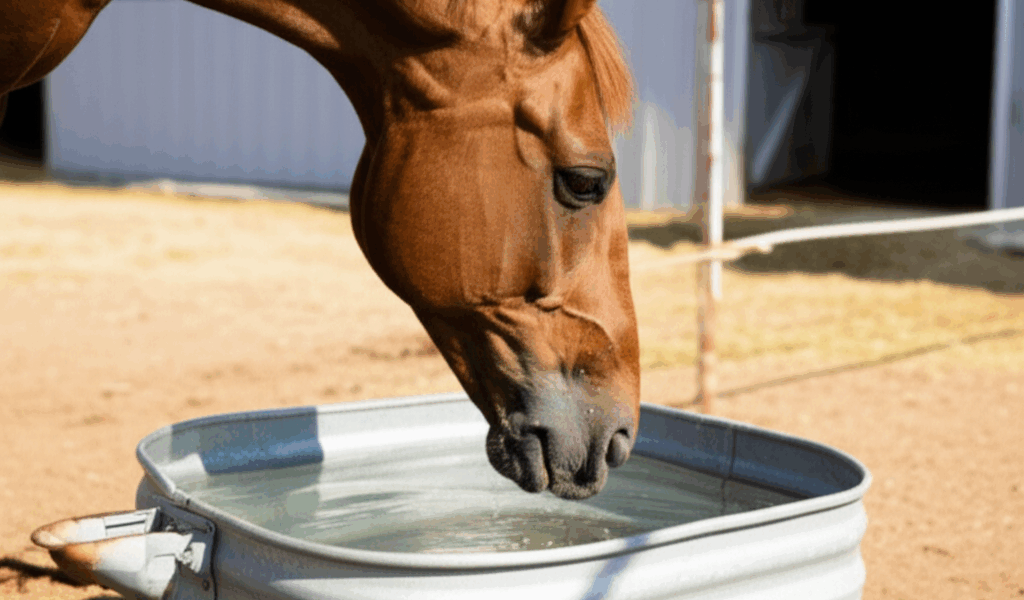
Summer brings its own set of challenges for horses—heat stress, dehydration, flies, and sunburn. Here’s how to keep your horse healthy and comfortable through the hottest months.
How Horses Handle Heat
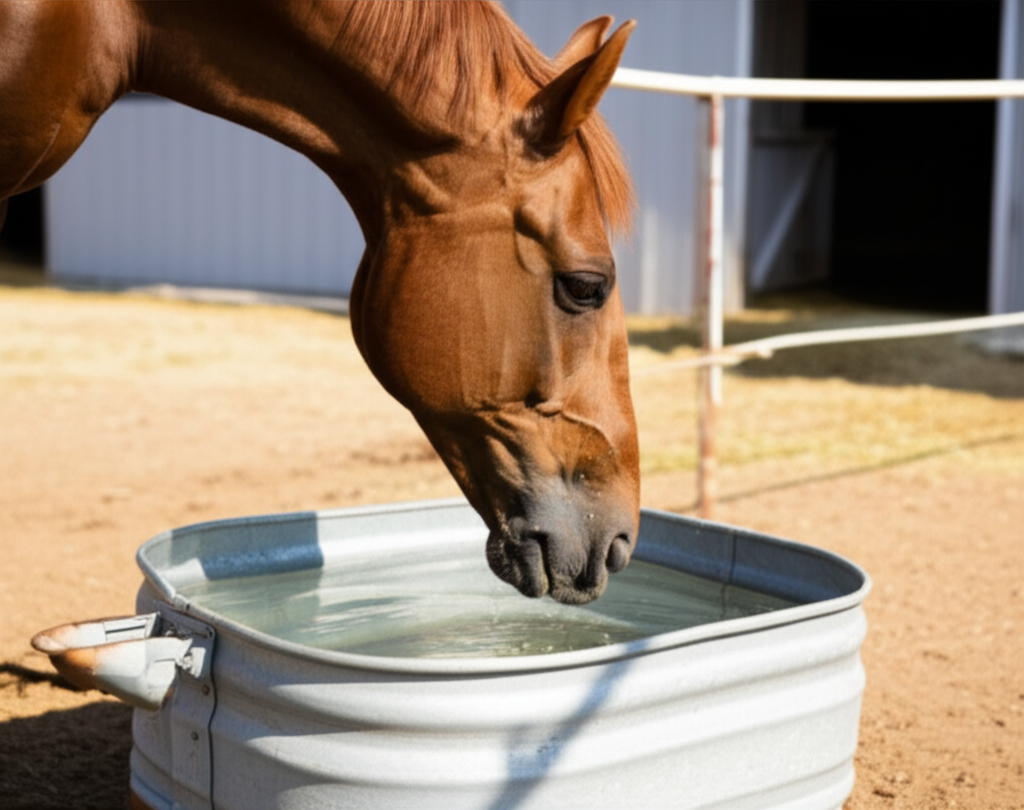
Unlike cold weather, horses struggle with heat:
- Thermoneutral zone: 30-60°F—above this, horses work to cool down
- Primary cooling: Sweating (can lose 2-4 gallons per hour)
- Secondary cooling: Increased respiration
- Humidity matters: High humidity prevents sweat evaporation
Heat Index for Horses
Add temperature (°F) + relative humidity (%):
- Under 130: Generally safe for exercise
- 130-150: Caution—reduce intensity, watch for stress
- 150-180: Dangerous—only light work, monitor closely
- Over 180: Deadly—no exercise, focus on cooling
Hydration: Critical in Summer
Water Requirements
- Minimum: 10-12 gallons daily (more in heat/work)
- During work: May need 15-20+ gallons
- Temperature: Cool (not cold) water preferred
Encouraging Drinking
- Always have fresh, clean water available
- Multiple water sources
- Clean buckets/troughs regularly (algae grows fast)
- Add electrolytes to one water source (plain water always available too)
- Flavor water with apple juice for picky drinkers
Electrolytes
- Replace minerals lost in sweat
- Important during heavy work or prolonged heat
- Give with access to plain water
- Don’t over-supplement—follow product directions
Recognizing Heat Stress
Early Signs
- Excessive sweating (or no sweating—dangerous)
- Rapid breathing
- Elevated heart rate that doesn’t recover
- Lethargy or depression
- Reduced appetite
Emergency Signs
- Anhidrosis: Horse stops sweating (can’t cool down)
- Body temperature over 104°F
- Rapid, shallow breathing
- Stumbling or weakness
- Collapse
Emergency Response
- Move to shade immediately
- Spray with cold water—continuously (old advice to avoid cold water is wrong)
- Use fans if available
- Offer water (don’t force)
- Call veterinarian
Smart Summer Turnout
Timing
- Turn out early morning or evening when cooler
- Bring inside during peak heat (10 AM – 4 PM)
- Night turnout is ideal in extreme heat
Shade Requirements
- Run-in shed or trees
- Minimum 100 square feet per horse
- Good airflow
- No shade = no turnout in extreme heat
Fly Control
The Problem
Flies cause:
- Stress and irritation
- Reduced grazing time
- Eye infections
- Skin conditions
- Disease transmission
Multi-Pronged Approach
Environmental Control
- Remove manure frequently (fly breeding ground)
- Eliminate standing water
- Use fly predators (parasitic wasps)
- Keep areas clean and dry
On-Horse Protection
- Fly spray: Apply daily (reapply after sweating)
- Fly mask: Protects eyes and face
- Fly sheet: Full-body protection
- Fly boots: Protect legs from stomping injuries
Barn Protection
- Fans (flies can’t fly in wind)
- Fly traps
- Screened openings
Summer Exercise
Smart Scheduling
- Ride early morning (before 10 AM)
- Or evening (after 5 PM)
- Avoid midday heat completely
- Monitor heat index
Adjusting Workload
- Reduce intensity in high heat
- Shorter sessions
- More frequent walk breaks
- Allow full recovery between sessions
Cooling After Work
- Hose with cool water immediately
- Scrape excess water off
- Repeat until skin is cool to touch
- Walk until breathing normalizes
- Offer water frequently
Skin & Coat Care
Sunburn
Horses with pink skin are susceptible:
- White faces, pink noses
- White legs
- Apply equine sunscreen to vulnerable areas
- Fly masks with UV protection
- Provide shade during peak sun
Rain Rot & Skin Fungus
Heat + humidity = perfect conditions:
- Groom regularly
- Keep skin dry
- Don’t share brushes between horses
- Treat immediately if spots appear
Hoof Care
Summer Challenges
- Dry, cracked hooves: From hard ground
- Thrush: From wet conditions
- Bruising: From hard, rocky footing
Solutions
- Regular farrier visits (every 6-8 weeks)
- Hoof conditioner in dry conditions
- Clean and dry in wet conditions
- Pick hooves daily
Pasture Management
Grass Concerns
- Founder risk: Lush grass can cause laminitis in susceptible horses
- Limit grazing: Use grazing muzzle or limited turnout
- Early morning: Sugar content highest—avoid for at-risk horses
Pasture Maintenance
- Rotate pastures to prevent overgrazing
- Drag manure to break up piles
- Check for toxic plants
Quick Summer Checklist
- ☐ Fresh, clean water always available
- ☐ Adequate shade in turnout
- ☐ Fly protection in place
- ☐ Adjusted exercise schedule
- ☐ Sunscreen for pink-skinned horses
- ☐ Electrolytes available if needed
- ☐ Emergency cooling supplies ready
The Bottom Line
Horses struggle with heat more than cold—your job is to help them stay cool, hydrated, and protected from flies. Provide shade, unlimited fresh water, and adjust your riding schedule to avoid the hottest parts of the day. Know the signs of heat stress and be ready to act quickly if your horse overheats.
Sources: American Association of Equine Practitioners, University of Kentucky Extension, Rutgers Equine Science Center

Leave a Reply