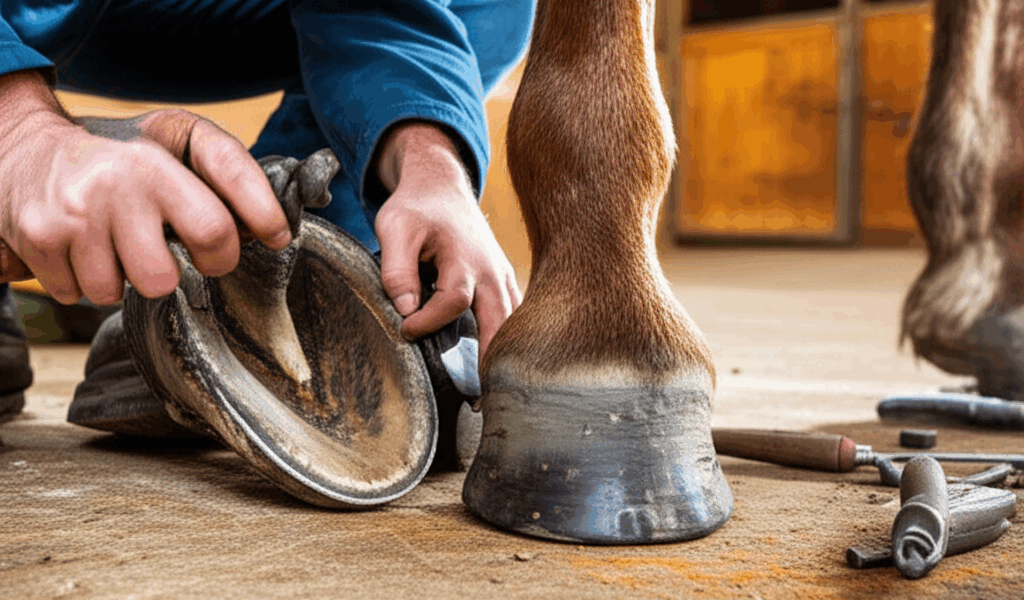
Healthy horse hooves depend on regular observation, an individualized farrier schedule, suitable nutrition, clean footing, and prompt veterinary attention for pain or injury. Pick out and inspect the feet as often as the horse’s management and risk require—commonly before riding and during daily care—but do not turn “daily hoof picking” into a substitute for professional trimming, shoeing, lameness evaluation, or disease treatment.
A hoof that looked normal yesterday can develop a loose shoe, puncture, abscess, crack, thrush, bruise, or laminitis signs. Learn the horse’s normal temperature, digital pulse, shape, landing, and behavior so changes are easier to recognize.
Daily Horse Hoof Check
- Observe before lifting a foot. Watch the horse stand, turn, and walk. Note weight shifting, reluctance, shortened steps, or an abnormal stance.
- Use safe positioning. Work beside the horse, not directly behind it. Ask for the foot using the horse’s trained cue and follow qualified handling instruction.
- Remove loose material carefully. Clean the sole and grooves beside the frog without digging into healthy tissue.
- Inspect the entire foot. Look at wall, coronary band, white line, sole, frog, heel bulbs, shoe or boot, clinches, and any previous repair.
- Compare feet. Check for unusual heat, swelling, odor, discharge, cracks, foreign objects, or a stronger-than-normal digital pulse.
- Stop when something is wrong. Do not ride through unexplained lameness or attempt to cut, drain, or medicate the hoof without professional direction.
Penn State Extension’s ground-handling guidance recommends cleaning from heel toward toe and positioning the handler to face toward the rear while staying close and balanced. Children and inexperienced handlers need direct supervision.
How Often Should Hooves Be Picked?
Frequency depends on turnout, bedding, mud, shoes, workload, hoof disease, and the horse’s ability to lift its feet safely. A practical routine is to inspect during daily care and before and after riding. Horses in wet or dirty stalls, wearing shoes or boots, recovering from a hoof problem, or exposed to stones and debris may need more frequent checks directed by the farrier or veterinarian.
Picking too aggressively can injure sensitive structures. The goal is to remove packed material and find changes early—not carve the frog or sole.
Farrier Schedule: Use the Horse, Not a Calendar Alone
University of Minnesota Extension gives seasonal ranges as general guidance but notes that the interval differs with individual hoof growth. Growth, wear, balance, shoes, age, workload, conformation, footing, disease, and season all affect timing. Your farrier should set and adjust the schedule after seeing the horse repeatedly.
Do not wait for toes to look long, shoes to loosen, or walls to break before booking. Record each visit, work performed, shoe or trim changes, hoof photos, and the next recommended date. Contact the farrier earlier for a sprung or shifted shoe, a lost shoe with damage, rapid cracking, or a change in movement.
Barefoot, Shod, or Hoof Boots?
No option is universally more natural, safer, or cheaper. The choice depends on hoof health, workload, surface, wear, traction, medical needs, and the horse’s comfort. Some horses perform well barefoot; others need shoes, boots, pads, or therapeutic farriery. A transition can require time and management and should not be forced through persistent pain.
Therapeutic trimming or shoeing is part of a veterinarian–farrier plan when lameness or disease is involved. Avoid copying another horse’s shoe package from photographs.
Common Hoof Findings and the Right Response
| Finding | What it may mean | What to do |
|---|---|---|
| Foul black discharge near frog | Possible thrush or deeper infection | Improve cleanliness and contact farrier/veterinarian for severity and treatment |
| Sudden severe lameness | Abscess, fracture, puncture, laminitis, soft-tissue injury, or another cause | Stop work and call the veterinarian |
| New crack | May be superficial or related to imbalance, injury, infection, or loading | Photograph and ask the farrier; call veterinarian for pain, bleeding, coronary-band involvement, or instability |
| Heat or stronger digital pulse | Inflammation may be present | Compare other feet and seek veterinary advice, especially with pain or stance change |
| Loose or shifted shoe | Nails and shoe can injure the foot or alter loading | Restrict use and call the farrier; do not ride |
| Foreign object penetrating sole | Potential deep injury and infection | Do not remove it; protect the foot and call the veterinarian immediately |
Hoof Abscesses Are Not a DIY Diagnosis
An abscess commonly causes sudden severe lameness, but fractures, laminitis, punctures, and soft-tissue injuries can look similar. University of Minnesota Extension recommends veterinary history and lameness examination; radiographs may be needed when a drainage tract is not found or another injury must be excluded.
Do not dig into the sole or repeatedly soak by default. The same Extension guidance warns that multiple daily warm-water and Epsom-salt soaks may weaken and harm the hoof. Drainage, bandaging, pain management, and return to work should follow the veterinarian’s instructions for that case.
Laminitis Warning Signs Are an Emergency
AAEP advises seeking veterinary help immediately for suspected laminitis. Signs can include reluctance to move, pain when turning, repeated weight shifting, heat, increased digital pulses, a hesitant “walking on eggshells” gait, or a stance that unloads painful front feet. Laminitis can affect more than one foot and the underlying trigger may be elsewhere in the body.
Do not wait for visible hoof-wall rings or rotation. Call the veterinarian, limit movement as directed, and coordinate with the farrier after diagnosis. Diet changes, medication, support, imaging, and therapeutic farriery are case-specific.
Thrush, White-Line Disease, and Cracks
Thrush is associated with foul-smelling dark material around the frog and often with wet, contaminated conditions. Clean, dry management helps, but pain, deep tissue involvement, recurrence, or lameness warrants professional evaluation. Avoid caustic products that damage healthy tissue.
White-line separation and hoof cracks have multiple causes and severities. A farrier can assess balance and mechanical loading; a veterinarian should investigate infection, pain, instability, or deeper structures when indicated. “Moisturize dry feet” and “harden wet feet” are too simplistic without considering environment and the actual lesion.
Nutrition and Hoof Supplements
Hoof horn grows from the coronary band, so nutritional changes take months to appear through the wall. Calories, protein and amino acids, vitamins, minerals, disease, genetics, and the complete ration matter. A supplement cannot correct poor trimming, chronic wet contamination, mechanical overload, or an untreated medical condition.
Test forage and balance the full diet before stacking biotin, methionine, zinc, copper, or other products. Our horse supplement evidence guide explains how to avoid duplicate nutrients and unsupported product claims.
Environment and Footing
- Remove manure and maintain clean, dry resting areas.
- Reduce sharp debris, loose nails, glass, and wire in barns, paddocks, and trails.
- Manage drainage and deep mud around gates, water, feeders, and shelters.
- Introduce surface and workload changes gradually.
- Check boots and wraps for trapped grit, rubbing, heat, and moisture.
- Coordinate traction choices with the farrier for weather and activity.
When to Call the Veterinarian or Farrier
Call the veterinarian urgently for:
- A nail or foreign object penetrating the hoof—leave it in place unless the veterinarian directs otherwise.
- Sudden or severe lameness, inability to bear weight, or suspected fracture.
- Laminitis signs, multiple hot feet, or strong digital pulses with pain.
- Bleeding, deep wounds, coronary-band injury, swelling up the limb, fever, or systemic illness.
Contact the farrier promptly for:
- A loose, sprung, twisted, or lost shoe.
- Rapid wall breakage, a new crack, imbalance, or altered landing.
- Boot or shoe rubbing and questions about the trim cycle.
Many cases need both professionals. AAEP emphasizes collaboration between veterinarian and farrier for foot-associated lameness and podiatry problems.
Frequently Asked Questions
Should I pick my horse’s hooves every day?
Daily inspection is a practical routine for many horses, and checks before and after riding are valuable. Adjust frequency for management, disease, shoes, mud, and professional instructions.
How often should a horse see the farrier?
Use an individualized interval based on growth, wear, balance, season, shoes, workload, and health. General seasonal ranges are starting points, not appointments for every horse.
Can I remove a nail from the hoof?
No—not before veterinary guidance. Its location and direction help determine damaged structures and imaging. Prevent further movement and call immediately.
Does a bad smell always mean thrush?
Odor and dark frog discharge are common signs, but severity and other infections require assessment. Pain or lameness is not a routine cosmetic issue.
Sources
- University of Minnesota Extension: Caring for Your Horse’s Hooves
- University of Minnesota Extension: Horse Hoof Abscesses
- AAEP: Recognize the Signs of Laminitis
- AAEP: Front-Foot Lameness and Examination
- Penn State Extension: Safe Ground Handling and Hoof Cleaning
This guide is general education, not a lameness diagnosis, farrier prescription, or treatment plan. Contact an equine veterinarian and qualified farrier for the individual horse.

Leave a Reply