![Can Horses Eat Apples? Feeding Tips [2026]](https://horsebesties.com/wp-content/uploads/sites/115/2026/01/horse-apple-681x600.png)
Yes, horses can eat apples! In fact, apples are one of the most beloved horse treats—crunchy, sweet, and packed with nutrients. Most horses absolutely love them. Here’s everything you need to know about feeding apples to your horse safely.
Are Apples Safe for Horses?
Apples are completely safe for healthy horses when fed properly. They’ve been a traditional horse treat for centuries.
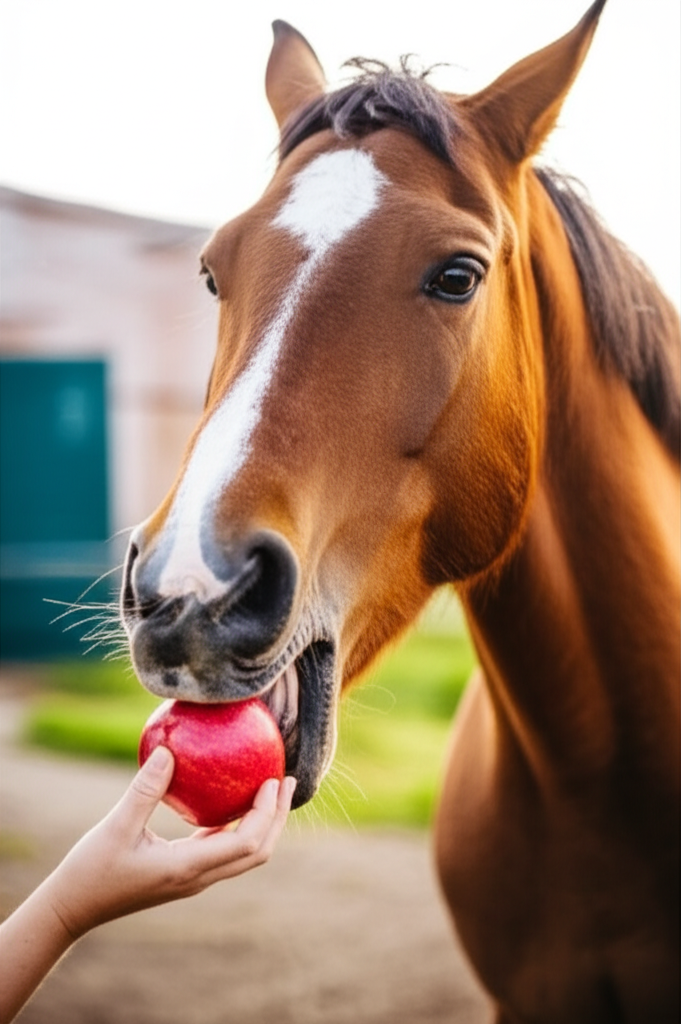
What makes apples safe:
- No toxic compounds in the flesh
- Natural, whole food
- Easy to digest
- Horses have eaten them for centuries
Important safety note: Apple seeds contain amygdalin, which can release cyanide. However, horses would need to eat an enormous quantity of seeds to cause harm. A few seeds from occasional apples are not dangerous, but it’s best practice to core apples or remove as many seeds as possible.
Nutritional Benefits
Apples offer genuine nutritional value:
| Nutrient | Benefit |
|---|---|
| Fiber | Supports digestive health |
| Vitamin C | Antioxidant support |
| Potassium | Muscle function |
| Water content | Hydration (~85% water) |
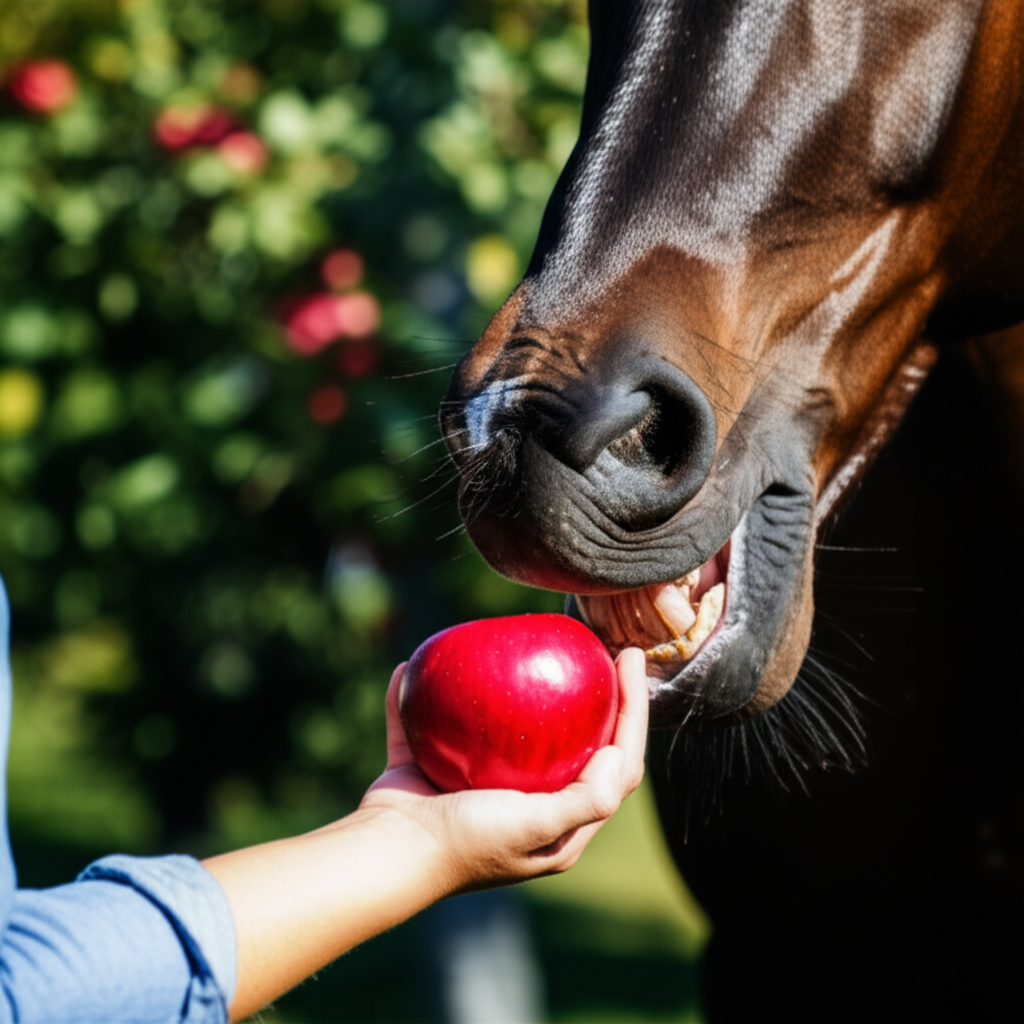
How Many Apples Can Horses Eat?
Moderation is key:
- Occasional treat: 1-2 apples
- Regular treating: 1 apple daily is fine for most horses
- Maximum: 2-3 apples per day for average-sized horse
Why not more?
- Sugar content adds up (about 10g per apple)
- Too many can cause digestive upset
- Risk of choke if horse bolts food
- Should complement, not replace, regular diet
How to Feed Apples Safely
Cut Them Up
This is crucial, especially for:
- Horses that bolt their food
- Older horses with dental issues
- Ponies and minis (smaller throats)
- Any horse to reduce choke risk
Cutting guidelines:
- Quarter the apple at minimum
- Smaller pieces (eighths) are safer
- Remove core if possible
Whole Apples: The Risk
While many horses eat whole apples without issue, there’s a choke risk if the horse:
- Doesn’t chew thoroughly
- Is excited and bolts treats
- Has dental problems
- Competes with other horses for treats
Apple Types: Which Are Best?
All common apple varieties are safe:
- Sweet varieties (Fuji, Gala, Honeycrisp): Most horses love these
- Tart varieties (Granny Smith): Some horses prefer these
- Red Delicious: Classic choice
- Wild/crabapples: Safe in small amounts (very tart)
Avoid: Rotten, moldy, or fermented apples—these can cause digestive issues.
Apples for Metabolic Horses
Horses with metabolic conditions need caution:
- EMS/Insulin Resistant: Limit to 1/4-1/2 apple occasionally, or avoid
- Cushing’s Disease: Check with your vet; most can have small amounts
- Laminitis history: Minimize sugar; consider other treats
Lower-sugar alternatives: Carrots, celery, cucumber
Apple Products: What’s Safe?
| Product | Safe? | Notes |
|---|---|---|
| Fresh apples | Yes | Best option |
| Dried apples | Yes | More concentrated sugar; smaller portions |
| Applesauce | Yes | Unsweetened only |
| Apple juice | Limit | Very high sugar; dilute heavily if using |
| Apple pie/pastries | No | Too much sugar, other ingredients |
Frequently Asked Questions
Can horses eat apple cores?
Yes, but remove if easy. The seeds contain trace amounts of compounds that release cyanide, but a horse would need to eat many apple cores to be affected. Occasional cores are fine.
Can horses eat apple peels?
Yes! The peel is nutritious and safe. Many horses enjoy the texture.
My horse swallowed a whole apple—should I worry?
Watch for signs of choke (distress, drooling, extending neck). If the horse seems fine and continues eating/drinking normally, they likely handled it. Cut apples next time.
Can foals eat apples?
Yes, once eating solid food. Cut into very small pieces for safety.
Creative Ways to Feed Apples
- Hand feeding: Great for bonding
- In feed bucket: Add chopped apples to regular feed
- Frozen treats: Freeze apple slices for summer cooling
- Apple bobbing: Float in water trough for enrichment
- Stuffed in hay nets: Mental stimulation
The Bottom Line
Apples are a classic horse treat for good reason—they’re safe, nutritious, and most horses love them. Feed 1-2 apples daily, cut into pieces for safety, and avoid feeding to horses with metabolic conditions without veterinary guidance. With these simple precautions, apples make an excellent addition to your horse’s treat rotation.
Sources: Kentucky Equine Research, American Association of Equine Practitioners, UC Davis School of Veterinary Medicine




Leave a Reply