![Can Horses Eat Bananas? What Every Owner Should Know [2026]](https://horsebesties.com/wp-content/uploads/sites/115/2026/01/horse-banana-1024x600.png)
Whether horses can eat bananas has gotten complicated with all the conflicting treat advice floating around. As someone who accidentally started a banana tradition at my barn after my gelding stole one right out of my hand, I learned everything there is to know about this surprisingly popular horse treat. Today, I will share it all with you.
He ate the whole thing — peel included — before I could even react. I stood there in shock while he chewed contentedly. Turns out, both the fruit and the peel are perfectly safe. And now he expects a banana every time I show up with a grocery bag. I created a monster.
Are Bananas Safe for Horses?
Bananas are completely safe for healthy horses. The fruit and the peel are both non-toxic. Unlike some fruits with dangerous pits or toxic seeds, every single part of a banana is fair game.
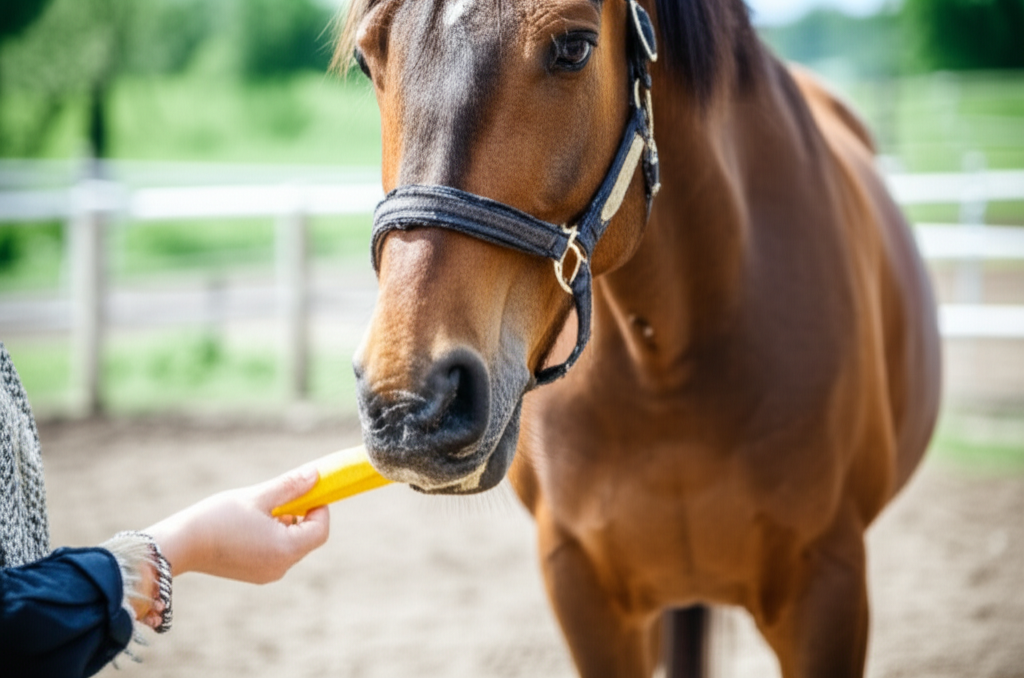
According to Kentucky Equine Research, bananas are in the safe occasional treat category. Many professional trainers and competitive riders use bananas specifically for their potassium content, especially after intense work sessions.
The American Association of Equine Practitioners includes bananas among the fruits that are safe for equine consumption when fed in moderation.
What makes bananas safe:
- No toxic compounds in the fruit or peel
- Soft texture makes choking extremely unlikely
- Easy to digest — gentler on the gut than many treats
- No seeds or pits to worry about
- Natural whole food with nothing weird in it
Nutritional Benefits of Bananas for Horses
Bananas aren’t just tasty. There’s real nutritional value here that makes them one of the more justifiable treats you can offer.
Potassium Powerhouse
Probably should have led with this section, honestly. Potassium is the main reason bananas have become a staple treat for performance horses and riders who know their nutrition. It supports:
- Muscle function and recovery — helps prevent cramping after hard work
- Proper nerve function throughout the body
- Electrolyte balance, which is critical in hot weather or after heavy sweating
- Heart health and normal cardiac rhythm
- Fluid balance maintenance
I started offering bananas after evening lessons during summer, and my horses seem to recover more comfortably. Working horses, performance horses, and horses that sweat heavily may particularly benefit from the potassium boost.
Natural Energy Source
The natural sugars in bananas provide easily digestible carbohydrates that give a quick energy boost without the extreme spike of processed treats. Some endurance riders carry bananas specifically for this purpose, and certain trainers use them as a pre-competition snack.
Digestive Support
Bananas contain several digestive allies:
- Fiber: Supports healthy gut movement
- Pectin: May help regulate digestive processes
- Natural prebiotics: Feed the beneficial bacteria in the hindgut

Other Key Nutrients
- Vitamin B6: Supports metabolism and brain function
- Vitamin C: Antioxidant benefits, though horses produce their own
- Magnesium: Muscle and nerve support — works synergistically with potassium
- Manganese: Supports bone health and metabolism
Can Horses Eat Banana Peels?
Yes, banana peels are safe for horses. My gelding eats them enthusiastically. My mare spits them out every single time. Horses have strong preferences about these things.
The peels are actually more nutritious than most people realize:
- Higher in fiber than the fruit itself
- Rich in potassium and other minerals
- Completely non-toxic
- Some horses genuinely prefer the peel to the fruit
Tips for feeding peels:
- Wash the outside to remove any pesticide residue or wax
- Organic is preferable if your horse eats peels regularly
- Some horses love them, some don’t — no need to force it
- Cut into smaller pieces for horses that are picky about texture
How Many Bananas Can a Horse Eat?
Bananas are relatively calorie-dense and higher in sugar than some alternatives, so moderation matters here.
What I recommend:
- Regular treating: 1 banana at a time
- Regular rotation: Half a banana a few times per week
- Post-exercise recovery: 1-2 bananas after hard work
- Maximum per day: 2 bananas for an average horse
Why moderation matters:
- About 100 calories per banana — that adds up over time
- Natural sugar content is higher than carrots or hay cubes
- Can contribute to weight gain if you’re too generous
- Too many can upset the digestive balance and cause loose manure
- Should supplement, not replace, the regular diet
How to Feed Bananas to Horses
Preparation Options
Whole peeled banana: The most common approach. Just peel and hand over. Simple and most horses love it.
Sliced into rounds: Great for portion control and training treats. I slice them about half an inch thick.
Whole with peel: Some horses enjoy peeling it themselves. It’s entertaining to watch and provides a bit of enrichment.
Mashed into feed: Excellent for hiding medications or making a boring meal more exciting. My mare who spits out every pill known to man will eat them mashed into banana.
Frozen: A cooling summer treat that’s especially appreciated on the hottest days.
Feeding Tips
- Ripe bananas are preferred — most horses find the sweetness more appealing
- Overripe bananas with brown spots are perfectly fine and often even more popular
- Green bananas may be harder to digest and less tasty — I’d wait until they ripen
- Feed from a flat palm to protect your fingers from eager teeth
- Introduce gradually if your horse has never had banana before
Horses Who Should Limit Bananas
That’s what makes being careful about treats endearing to us responsible horse owners — we pay attention to individual needs because we care about the horse standing in front of us.
Metabolic Conditions
- Equine Metabolic Syndrome (EMS): Sugar and calorie content are legitimate concerns
- Insulin resistance: All sugary treats need to be limited, bananas included
- Cushing’s disease (PPID): Requires careful sugar management
- Laminitis history: Talk to your vet before offering bananas or any sugary treat
Overweight Horses
At about 100 calories each, bananas add up fast. Limit or switch to lower-calorie alternatives like celery or cucumber for horses on a diet.
Creative Uses for Bananas
Medication Delivery
Mashed banana does a decent job hiding pills and masking bitter medication taste. Not quite as effective as peanut butter for this purpose, but it’s a solid backup option that most horses accept more readily.
Training Rewards
Slice into small rounds for high-value training treats. The strong, sweet flavor and soft texture make them genuinely motivating rewards. I use banana slices for particularly challenging training moments when I need something better than a carrot.
Post-Exercise Recovery
A banana after a hard workout delivers potassium for muscle recovery, natural sugars for energy replenishment, and a morale boost your horse genuinely appreciates. My horses know the post-lesson routine now and start looking for their banana the moment the saddle comes off.
Frozen Banana Treats
Peel, slice, and freeze for cooling summer treats. Or mash and freeze in ice cube trays mixed with water for a longer-lasting enrichment snack. My barn goes through a lot of frozen banana cubes during July and August.
Banana Enrichment
Give a whole unpeeled banana and watch your horse figure out how to eat it. Some bite right in, others push it around and paw at it first. It’s extended entertainment and mental stimulation beyond just handing over a treat.
Signs of Overconsumption
Watch for these if you’ve been generous with bananas:
- Loose manure or diarrhea
- Decreased appetite for regular feed
- Gradual weight gain over time
If you notice any issues, cut back and make sure plenty of hay is available.
Frequently Asked Questions
Can foals eat bananas?
Yes, once they’re eating solid food regularly. Start with small pieces of the flesh only. Skip the peel for young horses until they’re older.
Are banana chips safe for horses?
Plain, unsweetened banana chips are okay in small amounts. Avoid anything with added sugar, chocolate coating, or flavorings. Fresh bananas are always the better choice.
Can horses eat bananas every day?
For healthy horses, a daily banana is fine and the potassium benefit is real. For horses with weight or metabolic concerns, limit frequency and talk to your vet about what’s appropriate.
My horse doesn’t like bananas — should I worry?
Not at all. Some horses just aren’t fans. There are plenty of other safe treat options out there. Try carrots, apples, celery, or watermelon instead.
Are plantains safe for horses?
Plantains are in the banana family and are generally considered safe. However, they’re starchier and less sweet. Most horses prefer regular bananas.
The Bottom Line
Bananas are a safe, nutritious, and genuinely popular horse treat. The potassium content makes them especially useful for working horses and post-exercise recovery. Both the fruit and the peel are safe, and most horses find them absolutely irresistible. Keep it moderate, watch the sugar intake for metabolic horses, and enjoy the sight of your horse’s face lighting up when you pull a banana out of your pocket at the barn.
Sources: Kentucky Equine Research, American Association of Equine Practitioners, Penn State Extension




Leave a Reply