![Can Horses Eat Carrots? Benefits, Risks & How Much [2026 Guide]](https://horsebesties.com/wp-content/uploads/sites/115/2026/01/horse-carrot-678x600.png)
Whether horses can eat carrots has gotten complicated with all the debate about treat feeding and sugar content in the horse world. As someone who has fed approximately ten thousand carrots to horses over the years (give or take a few thousand), I learned everything there is to know about this classic treat. Today, I will share it all with you.
Carrots are the original horse treat. Before commercial horse cookies and manufactured supplements existed, there were carrots. My grandmother fed them to her horses. My mother fed them to hers. I grew up with a pocket full of baby carrots at the barn. Some traditions exist for good reason.
Are Carrots Safe for Horses?
Carrots are one of the safest treats you can offer. They’ve been a traditional horse treat for literally centuries, and for good reason — horses love the sweet crunch, and carrots deliver genuine nutritional value.
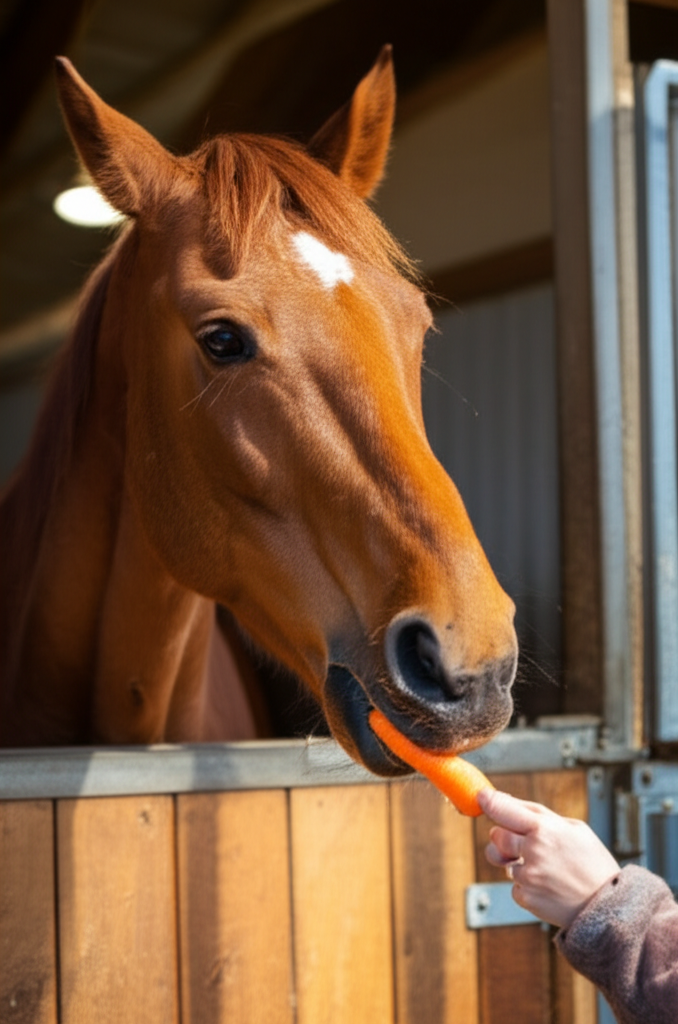
According to Kentucky Equine Research, carrots are a safe treat option because they check every important box:
- Low in sugar compared to most commercial treats and many fruits
- High in fiber and water content
- Free from any toxic compounds
- Easy for horses to digest
- Packed with beneficial vitamins and minerals
The American Association of Equine Practitioners includes carrots among the recommended safe treats for horses.
Nutritional Benefits of Carrots for Horses
Carrots aren’t empty calories. There’s real nutritional substance here that sets them apart from most treats.
Vitamin A (Beta-Carotene)
Probably should have led with this section, honestly. Carrots are famous for beta-carotene, which converts to vitamin A in the body. This supports:
- Healthy vision, including night vision
- Immune system function
- Skin and coat health — I genuinely believe my horse’s coat looks better when carrots are a regular part of the treat rotation
- Reproductive health in breeding animals
- Bone development in young horses
Fiber Content
Carrots provide dietary fiber that supports healthy digestion. They won’t replace hay or forage, but they contribute positively to overall gut function.
Hydration
At roughly 88% water, carrots are a hydrating snack. That’s especially valuable during hot weather or for horses who are stingy about their water intake. I’ve used carrot feeding time as an indirect hydration strategy more than once.
Other Nutrients
- Vitamin K: Supports blood clotting
- Vitamin C: Antioxidant support
- Potassium: Muscle function
- Biotin: Supports hoof health — this one gets me excited as someone who has dealt with soft hooves
How Many Carrots Can a Horse Eat?
This is where people sometimes go overboard. Carrots are healthy, but they still contain natural sugars and shouldn’t become a meal replacement.
What I recommend:
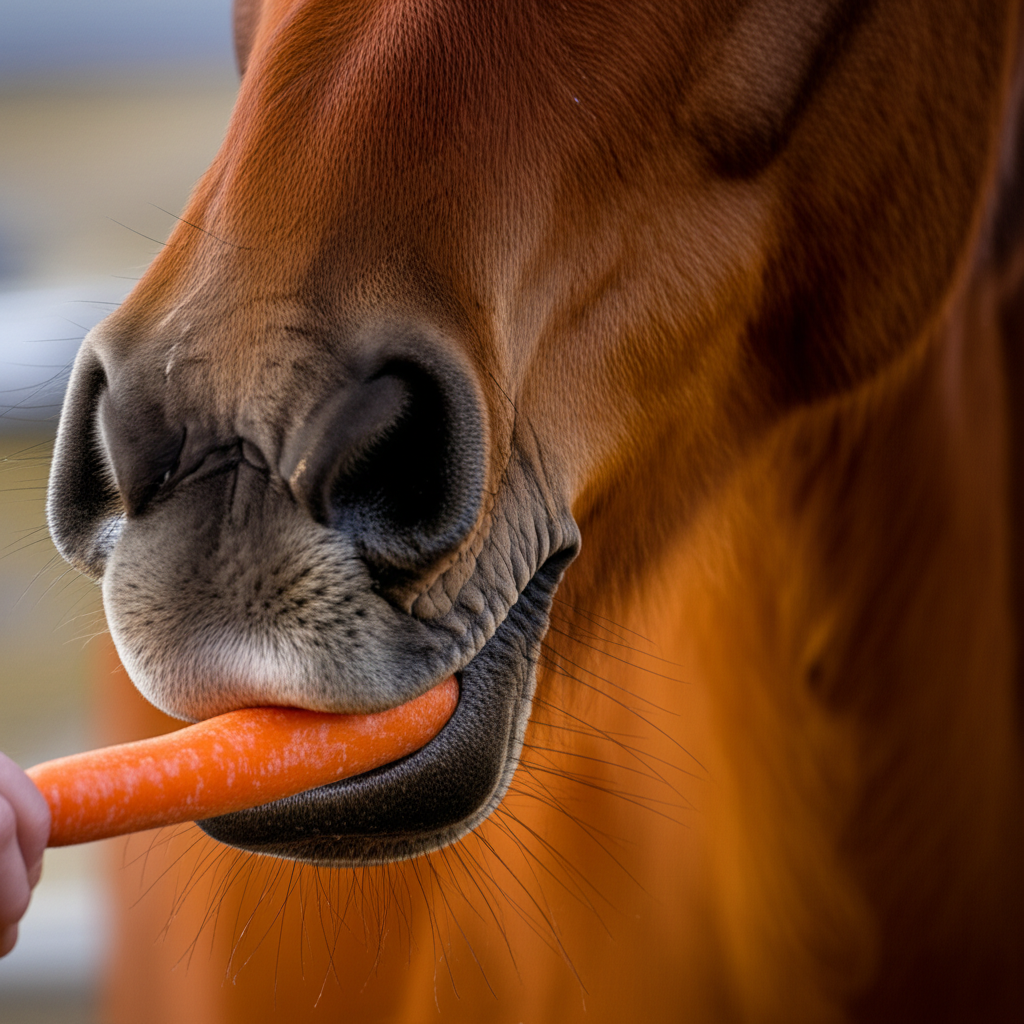
- Daily treating: 1-2 large carrots or a handful of baby carrots
- Training sessions: Cut into small pieces, use as many as needed for a session
- Maximum per day: About 2 pounds for an average horse
Why moderation still matters:
- Sugar content, while lower than fruits, is still present
- Too many can cause loose manure
- Should supplement the diet, not compete with forage
- Easy to overfeed because they’re so convenient
How to Prepare Carrots for Horses
Cutting for Safety
This is something I’m passionate about because I’ve seen a choke incident from improperly cut carrots. It was terrifying.
Best practices:
- Cut lengthwise, then crosswise: Creates pieces that can’t lodge in the esophagus
- Coin-shaped rounds are the worst shape: They’re the perfect diameter to cause choke. Never cut carrots into round coins for horses.
- Small cubes work great: For training treats especially
- Whole carrots are fine: For horses that chew properly. Most horses crunch through a whole carrot just fine.
- Baby carrots: Generally safe as-is due to their small size
Preparation Tips
- Wash thoroughly to remove dirt (they’re root vegetables, after all)
- No need to peel — the skin is nutritious and horses don’t care
- Remove any tops (green leafy part) — while not toxic, they’re not the tastiest part and can be bitter
- Discard any moldy, slimy, or rotten carrots
Horses Who Should Limit Carrots
That’s what makes knowing your horse’s individual needs endearing to us dedicated owners — every horse is different.
Metabolic Conditions
- Equine Metabolic Syndrome (EMS): Even carrots’ moderate sugar content matters for these horses
- Insulin resistance: Limit all treats, carrots included
- Cushing’s disease (PPID): Sugar management is critical
- Laminitis history: Ask your vet about appropriate treat amounts
For metabolic horses, celery or cucumber may be better alternatives with even lower sugar content.
Overweight Horses
While carrots are lower calorie than most treats (about 30 calories per large carrot), they still add up if you’re feeding handfuls daily.
Choking Risk
Horses with a history of choke or horses that eat too fast need carrots cut into small pieces. Period. No exceptions.
Creative Ways to Use Carrots
Training Rewards
Cut into small cubes for training sessions. Carrots are the go-to training treat for most professionals because they’re healthy, cheap, and motivating. I keep a bag of pre-cut carrot pieces in the barn fridge.
Enrichment
Drop carrot pieces into a bucket of water and let your horse fish them out. It’s hilarious to watch and provides mental stimulation. Or hide pieces in their hay for a foraging challenge.
Frozen Treats
Freeze carrot pieces for a cooling summer treat. Or freeze them in ice cube trays with water for extended engagement time.
Mixed with Feed
Shred or chop carrots and mix into regular feed. My mare who’s a picky eater cleans her bucket when there are carrot pieces mixed in.
Medication Delivery
Hollow out a thick carrot piece, stuff medication inside, and cap with peanut butter. Works surprisingly well for pills.
Carrot Myths Debunked
“Carrots will make my horse hot.” No. The sugar content in a reasonable amount of carrots is negligible compared to grain. Your horse is not going to turn into a fire-breathing dragon from two carrots.
“Too many carrots will turn my horse orange.” Also no. While beta-carotene does affect color in some animals, you’d have to feed an absolutely absurd amount of carrots for this to even theoretically matter.
“Carrots cause laminitis.” Not in normal amounts for healthy horses. Metabolic horses need to limit ALL sugar, including from carrots, but the average horse can enjoy carrots without any laminitis risk.
Signs of Carrot Overconsumption
Watch for:
- Loose manure — the most common sign you’ve been too generous
- Decreased appetite for regular feed (because they’re holding out for treats)
- Pushy, demanding behavior at treat time (a training issue more than a health issue)
Frequently Asked Questions
Can foals eat carrots?
Yes, once eating solid food. Cut into very small pieces. Their chewing isn’t as efficient as adults.
Are organic carrots necessary?
Not strictly necessary. Carrots aren’t as heavily pesticide-treated as some crops. Conventional is fine when washed well. Organic is nice if it’s in your budget.
Can horses eat carrots every day?
Absolutely. Daily carrot treating is fine for healthy horses and probably the most common treat routine out there.
Should I buy whole carrots or baby carrots?
Either works. Whole carrots are cheaper per pound. Baby carrots are more convenient and portion-controlled. I buy whichever is on sale.
Can carrots replace vitamin A supplements?
Not reliably. While carrots provide beta-carotene, they shouldn’t be considered a supplement substitute. Work with your vet on nutritional needs.
The Bottom Line
Carrots are the quintessential horse treat for a reason. Safe, healthy, affordable, and universally loved by horses. They provide genuine nutritional benefits including beta-carotene, fiber, and hydration. Cut them properly to avoid choke, moderate the amount for metabolic horses, and enjoy the simple pleasure of handing your horse a crunchy orange snack. Some things don’t need to be complicated.
Sources: Kentucky Equine Research, American Association of Equine Practitioners, Colorado State University Extension




Leave a Reply