![Can Horses Eat Carrots? Safe Treat Guide [2026]](https://horsebesties.com/wp-content/uploads/sites/115/2026/01/horse_carrot-1024x600.png)
Carrots are the most iconic horse treat—but are they actually safe and healthy for horses? Here’s everything you need to know about feeding carrots to horses.
Quick Answer: Yes, Horses Love Carrots!
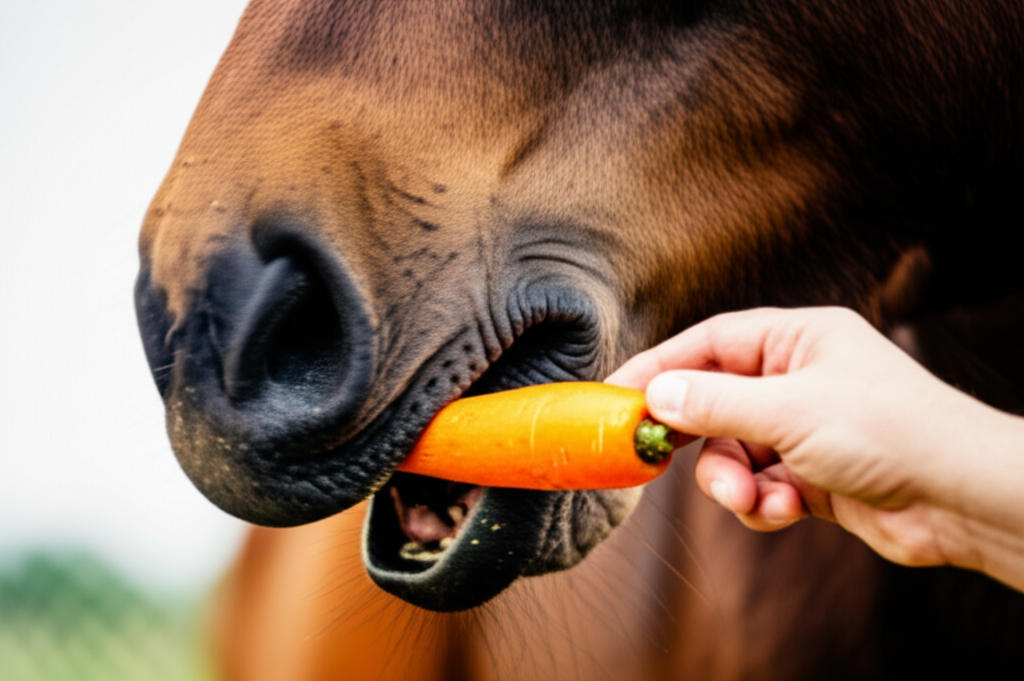
Carrots are safe, nutritious, and most horses absolutely love them. They make excellent training treats and rewards.
Nutritional Benefits
| Nutrient | Benefit |
|---|---|
| Beta-carotene | Converts to Vitamin A, supports vision |
| Fiber | Supports digestive health |
| Vitamin K | Blood clotting function |
| Potassium | Muscle and nerve function |
| Water content (88%) | Helps with hydration |
How to Feed Carrots Safely
Preparation
- Cut into pieces: Slice lengthwise or into rounds to prevent choking
- Wash thoroughly: Remove dirt and any pesticide residue
- Remove greens: Carrot tops are safe but often not preferred
- Check freshness: Avoid soft, moldy, or slimy carrots
Choking Prevention
Whole carrots can be a choking hazard. Always:
- Cut carrots lengthwise (not round coins)
- Slice into finger-sized pieces
- Supervise when feeding treats
- Let horse chew completely before offering more
How Many Carrots Can Horses Eat?
Recommended Amounts
- Treats: 1-2 carrots per day is reasonable
- Maximum: No more than 4-5 carrots daily
- Training: Cut small for multiple rewards
Why Limit Carrots?
- Natural sugars add up
- Can cause digestive upset if overfed
- May contribute to weight gain
- Should not replace balanced diet
Horses That Should Limit Carrots
- Insulin-resistant horses: Sugar content problematic
- Horses with HYPP: Potassium levels concerning
- Horses prone to laminitis: Limit all sugary treats
- Overweight horses: Reduce all treats
Carrot Varieties
All carrot types are safe:
- Orange: Most common, high in beta-carotene
- Purple: Safe, high in antioxidants
- White: Safe, milder flavor
- Yellow: Safe, slightly different nutrients
- Baby carrots: Safe, convenient size
Creative Ways to Feed Carrots
- Training rewards: Cut into small pieces
- Mixed with grain: Chop and add to feed
- Frozen treats: Freeze for summer refreshment
- Hidden in hay net: Mental enrichment
- Carrot stretches: Encourage flexibility exercises
Carrot Stretches for Horses
Use carrots to encourage beneficial stretching:
- Between front legs: Neck stretch down
- To each side: Lateral flexion
- To hip: Side stretch
- Between hind legs: Full stretch (for flexible horses)
Warning Signs of Overfeeding
If you’ve given too many carrots, watch for:
- Loose stool or diarrhea
- Gas or bloating
- Refusing regular feed
- Orange-tinged droppings
Carrots vs. Other Treats
| Treat | Sugar Content | Notes |
|---|---|---|
| Carrots | Moderate | Good everyday treat |
| Apples | Higher | Limit more strictly |
| Hay cubes | Low | Best for metabolic horses |
| Sugar cubes | Very high | Avoid for most horses |
The Bottom Line
Carrots are safe, healthy, and beloved by most horses. Cut them properly to prevent choking, limit to 1-2 per day for most horses, and avoid them for metabolic horses. Your horse will likely nicker with joy when they hear you crunching on a carrot—they know what’s coming!
Sources: American Association of Equine Practitioners, University of Minnesota Extension


Leave a Reply