![Can Horses Eat Corn? Feed vs Treat Guide [2026]](https://horsebesties.com/wp-content/uploads/sites/115/2026/01/horse-corn-680x600.png)
Yes, horses can eat corn—but with important caveats. Corn is commonly used in horse feeds and is safe when fed properly, but it’s also easy to overfeed and can cause problems if not handled correctly. This guide explains when corn is safe, how much to feed, and potential risks to be aware of.
Is Corn Safe for Horses?
Corn itself is not toxic to horses. In fact, it’s been used in equine diets for centuries and remains a common ingredient in commercial feeds.
However, corn comes with significant considerations:
- Very high in starch and energy
- Low in fiber compared to other grains
- Easy to overfeed
- Can cause digestive upset if introduced too quickly
- Requires proper storage to prevent mold
Corn as Feed vs. Corn as a Treat
Corn in Commercial Feeds
Many commercial horse feeds contain processed corn (cracked, rolled, or flaked). When properly formulated by nutritionists, corn can be a safe energy source as part of a balanced diet.
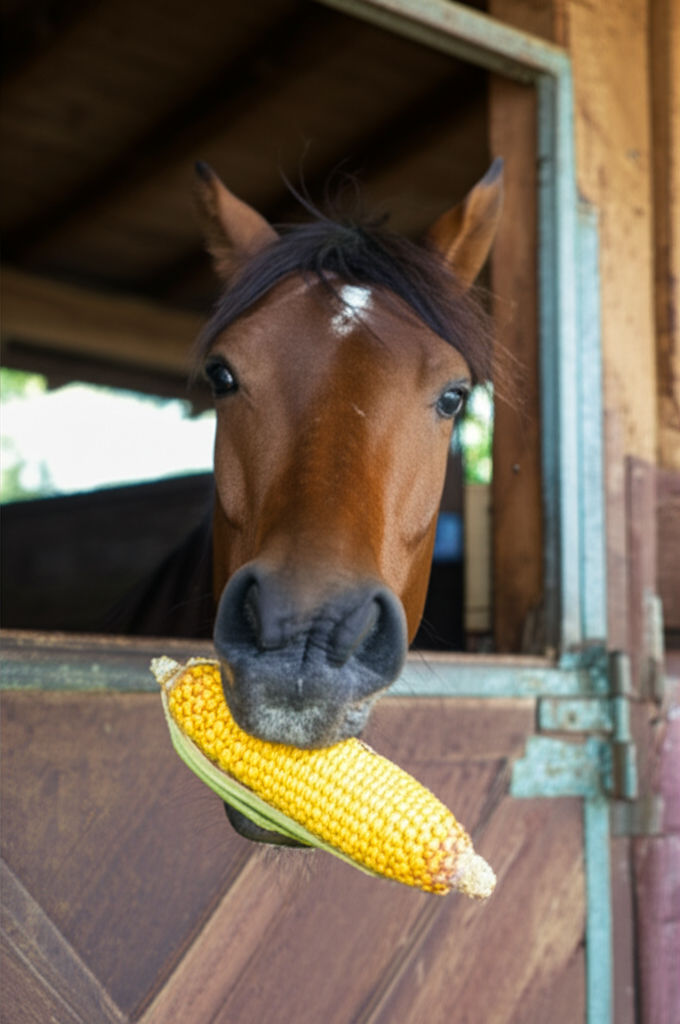
Corn on the Cob as a Treat
Feeding corn on the cob as an occasional treat is generally safe if:
- Given in small amounts (one small ear or half a large ear)
- Fed occasionally, not daily
- The horse chews thoroughly
- You watch for any digestive upset
Whole Kernel Corn
Whole kernel corn passes through many horses largely undigested. Cracked or processed corn is more digestible, but also carries higher risk if overfed.
Nutritional Profile of Corn
| Nutrient | Content | Consideration |
|---|---|---|
| Energy | Very High | Most energy-dense common grain |
| Starch | ~70% | Risk of hindgut acidosis if overfed |
| Protein | ~9% | Lower than oats; may need supplementation |
| Fiber | Low | Should never replace forage |
Potential Risks of Feeding Corn
1. Digestive Problems
The high starch content can cause:
- Colic: If too much reaches the hindgut
- Hindgut acidosis: Disrupts gut bacteria balance
- Laminitis: Starch overload can trigger founder
2. Weight Gain
Corn’s high calorie content makes it easy to overfeed, leading to obesity.
3. Mold Contamination
Improperly stored corn can develop mold that produces mycotoxins—extremely dangerous to horses. According to Kentucky Equine Research, mycotoxin contamination is one of the biggest concerns with corn feeding.
4. Hot Behavior
Some horses become “hot” or excitable when fed corn due to the rapid energy release.

Horses Who Should Avoid Corn
Do not feed corn to horses with:
- Equine Metabolic Syndrome (EMS)
- Insulin resistance
- Cushing’s disease (PPID)
- History of laminitis
- Obesity or easy keepers
- History of colic
- PSSM (Polysaccharide Storage Myopathy)
Safe Corn Feeding Guidelines
If you choose to include corn in your horse’s diet:
- Limit quantity: No more than 0.5% of body weight per meal (5 lbs for a 1,000 lb horse)
- Process it: Cracked or steam-flaked is more digestible than whole
- Check quality: Ensure no mold or musty smell
- Store properly: Keep dry and cool
- Introduce slowly: Take 2-3 weeks to adjust
- Balance the diet: Work with an equine nutritionist
Corn vs. Other Grains
| Grain | Starch | Safety Level |
|---|---|---|
| Corn | ~70% | Higher risk |
| Oats | ~45% | Safest grain |
| Barley | ~60% | Moderate risk |
Frequently Asked Questions
Can horses eat popcorn?
Plain, unsalted, unbuttered popcorn in very small amounts is technically safe, but it’s not recommended—choking risk and no nutritional benefit.
Can horses eat corn husks?
Yes, corn husks are safe and are actually higher in fiber than the corn itself.
Can horses eat corn stalks?
Dried corn stalks can be fed like a roughage, but watch for mold and nitrate accumulation.
Is sweet corn safer than field corn?
Sweet corn is slightly lower in starch but higher in sugar. Neither is particularly better as a treat.
The Bottom Line
Corn can be safely fed to horses as part of a balanced diet or as an occasional treat—but it requires more caution than most other foods. Its high starch content makes it easy to overfeed, and mold contamination is a serious concern. For most recreational horses, there are safer, simpler treat options like carrots and apples that don’t require the same level of careful management.
Sources: Kentucky Equine Research, American Association of Equine Practitioners, Rutgers University Extension



Leave a Reply