Whether horses can eat grapes has gotten complicated with all the contradictory information flying around online. As someone who had to research this in a hurry after my horse helped himself to some grape clusters that fell off a vine near the pasture fence, I learned everything there is to know about this controversial topic. Today, I will share it all with you.
The short answer is: it’s complicated, and most experts say just don’t risk it. I’ll explain why.
Are Grapes Toxic to Horses?
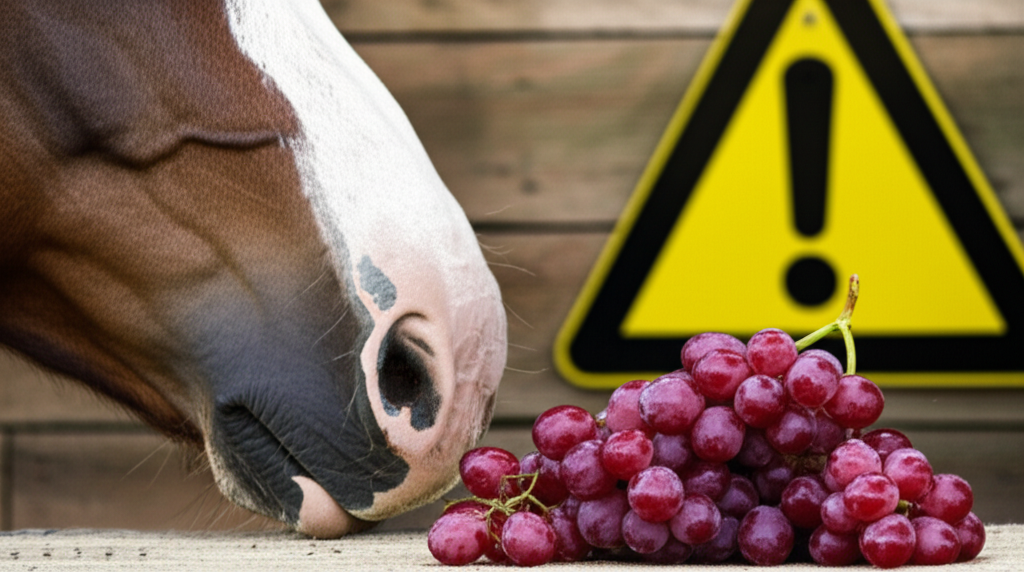
Here’s where it gets frustrating. In dogs, grape and raisin toxicity is well-documented — it causes acute kidney failure and can be fatal. In horses? The research is genuinely unclear.
What we actually know:
- No definitive study has proven grapes are toxic to horses specifically
- Plenty of horses have eaten grapes without obvious ill effects
- The toxic compound in grapes that kills dogs hasn’t even been identified yet
- Horses have fundamentally different digestive systems than dogs
Why I still say avoid them:
- That unknown toxic compound could theoretically affect horses — we just don’t know
- Individual horses may be more sensitive than others
- Grapes are high in sugar regardless
- Seeds pose a choking hazard
- There are dozens of proven-safe alternatives available. Why gamble?
The Dog Toxicity Connection
Probably should have led with this section, honestly, because it’s the whole reason this topic exists. According to the ASPCA Poison Control, grapes and raisins can cause acute kidney failure in dogs, sometimes from shockingly small amounts.
The really concerning part? Scientists still haven’t figured out what compound in grapes causes the reaction. The theories include:
- A mycotoxin (fungal toxin) on the grape skin
- A naturally occurring compound in the fruit itself
- Pesticide residue
- Something specific in the seeds
Because nobody has identified the actual toxic agent, we cannot say definitively whether horses are affected. That uncertainty is exactly why most vets say skip them.
What Veterinarians Say
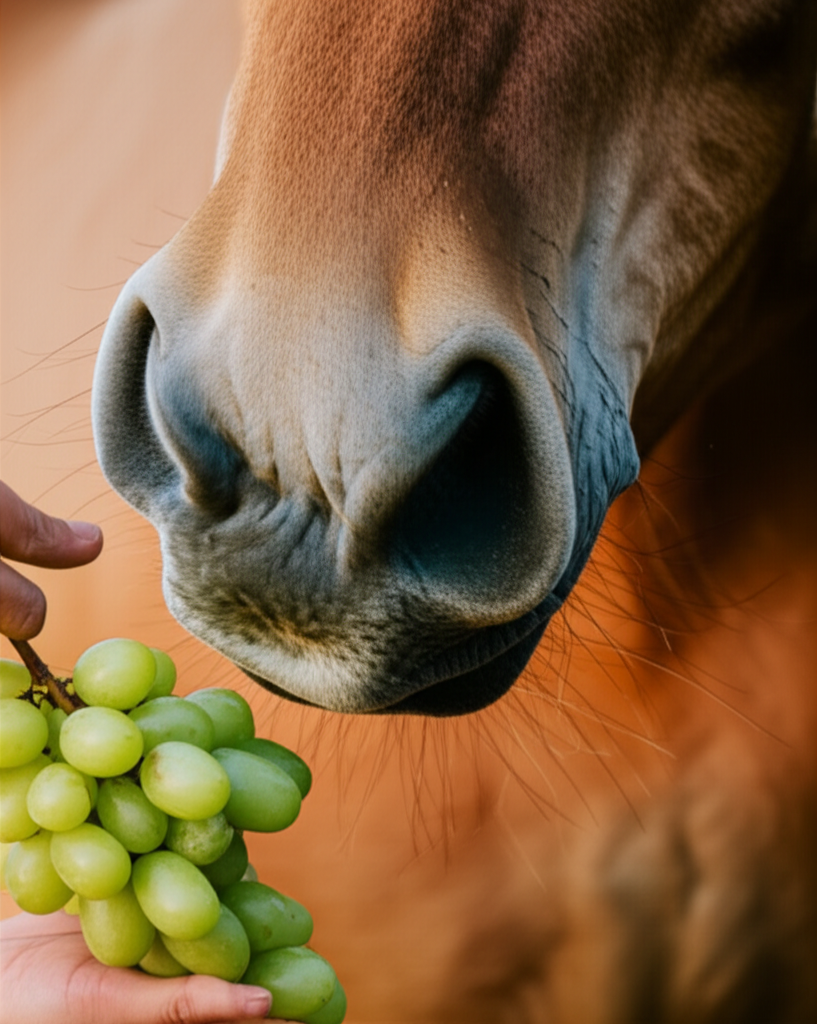
The American Association of Equine Practitioners doesn’t formally list grapes as a known equine toxin. But here’s the thing — most equine vets I’ve talked to take a “better safe than sorry” approach, and I think that’s wise.
The general veterinary consensus:
- Don’t feed grapes or raisins as treats
- Don’t panic if your horse accidentally eats a handful
- Monitor for unusual symptoms if accidental ingestion occurs
- Choose proven-safe alternatives instead
Potential Risks Beyond Toxicity
Even if grapes turn out to be non-toxic for horses, they present other issues:
High Sugar Content
Grapes contain 15-20% sugar by weight. That’s higher than most other fruits. That’s what makes this especially concerning for us owners of metabolic horses — sugar is sugar, and it’s a problem for:
- Horses with Equine Metabolic Syndrome (EMS)
- Insulin-resistant horses
- Horses with Cushing’s disease (PPID)
- Horses with any laminitis history
- Overweight horses on restricted diets
Choking Hazard
Grapes are small, round, and slippery. That’s basically the textbook choking shape. Horses that bolt their food are at particular risk.
Seeds
Seeded varieties add another dimension to the choking concern. The seeds themselves aren’t known to be toxic to horses, but they’re another potential problem in an already questionable treat.
What About Raisins?
Raisins are dried grapes, so they carry the same concerns plus some amplified ones:
- Even more concentrated sugar content
- Same unknown compound worries
- Stickier texture that can lodge in teeth or throat
- Easier to accidentally overfeed because they’re so small
Bottom line: If you’re avoiding grapes, raisins are off the table too.
What If My Horse Accidentally Ate Grapes?
Don’t panic. Seriously. Many horses have eaten grapes without any noticeable problems. Here’s what to do:
If your horse ate a few grapes:
- Note approximately how many they consumed
- Monitor your horse closely for the next 24-48 hours
- Watch for any signs of distress
- Make sure fresh water is readily available
- Call your vet if you notice anything concerning
Signs to watch for:
- Decreased appetite or refusing feed
- Lethargy or depression
- Changes in urination frequency or amount
- Colic symptoms
- Diarrhea
- Any behavior that seems off
If your horse ate a large quantity:
- Call your veterinarian immediately. Don’t wait.
- Note the amount consumed and the timeframe
- Follow your vet’s specific instructions
Safer Treat Alternatives
Why gamble when there are so many options that are definitively safe?
Fruits (Proven Safe)
- Apples: Remove the seeds, cut into pieces. The universal horse treat.
- Bananas: Peel and fruit are both safe. Most horses go bananas for them (sorry).
- Watermelon: Flesh, rind, and seeds are all fair game
- Strawberries: Safe and beloved by most horses
- Cantaloupe: Remove rind and seeds, feed the flesh
- Pears: Remove seeds, cut into pieces
Vegetables
- Carrots: The classic for a reason
- Celery: Low sugar, hydrating, great for dieters
- Cucumber: Excellent summer treat
- Pumpkin: Seasonal favorite with real nutritional value
Other Options
- Quality commercial horse treats (check ingredients)
- Hay cubes — boring but nutritionally sound
- Sugar-free peppermints in moderation
Grapes in Horse Pastures
If you’ve got wild grapevines growing near your pasture, here’s the practical advice:
- Horses with adequate forage generally don’t seek out grapes
- Wild grapes are usually small and less appealing than cultivated varieties
- Grape leaves aren’t known to be toxic to horses
- If it’s practical, removing access to grapevines is the safest approach

What About Wine or Grape Juice?
Hard no on all of these. Beyond the grape concerns:
- Alcohol is flat-out toxic to horses
- Processed grape products may contain harmful additives
- Sugar content is even more concentrated
The Bottom Line: Should You Feed Grapes to Horses?
My honest recommendation: No.
While grapes may not be definitively proven toxic to horses, the combination of factors makes them a poor choice:
- Unresolved toxicity questions that nobody can answer yet
- High sugar content that’s problematic regardless
- Choking hazard from the shape and texture
- An abundance of safer alternatives horses love just as much
When there are so many treats that are known to be safe and that horses enjoy equally, there’s simply no compelling reason to roll the dice with grapes. Grab a carrot instead.
Frequently Asked Questions
My horse has eaten grapes before with no problems. Is it safe to continue?
Past tolerance doesn’t guarantee future safety. Since we don’t understand what triggers the toxic reaction in dogs, we can’t predict what might trigger it in horses. I’d switch to proven-safe alternatives.
Are organic grapes safer for horses?
Not necessarily. The unknown toxic compound doesn’t appear to be pesticide-related. Organic grapes carry the same concerns as conventional.
Can horses eat grape leaves?
Grape leaves aren’t known to be toxic to horses. But horses don’t typically seek them out, and I’d focus on providing known-safe forage instead.
What about grape seed extract supplements?
Some equine supplements include grape seed extract for antioxidant benefits. These are processed very differently than whole grapes. Talk to your vet before adding any supplement.
Summary
The grape question for horses sits in an uncomfortable gray area — not definitively toxic, but uncertain enough that most experts advise against it. When you add high sugar content and perfectly good alternatives, grapes just aren’t worth the risk. Choose carrots, apples, bananas, or any of the many proven-safe treats, and you’ll have a happy horse with zero worry.
Sources: ASPCA Poison Control, American Association of Equine Practitioners, Kentucky Equine Research




Leave a Reply