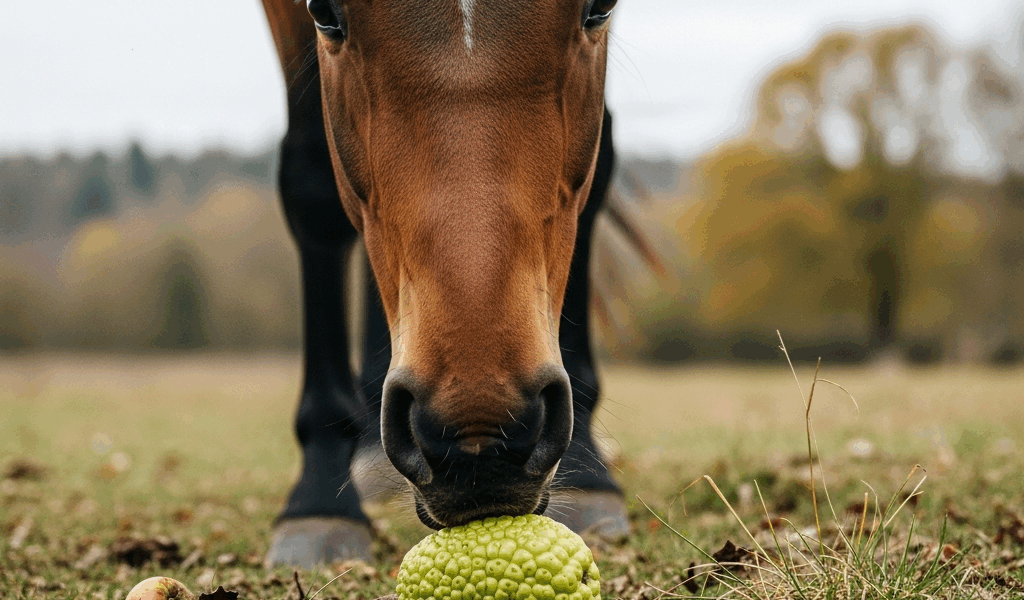
Can Horses Eat Hedge Apples? Safe Treat or Choking Hazard?
Can horses eat hedge apples? It’s a question I get every fall, usually from someone who just moved to a property lined with Osage orange trees and found their horse nosing around the fallen fruit. The short answer is that hedge apples are not toxic to horses. But stop right there — because “not toxic” is doing a lot of heavy lifting in that sentence, and the full picture is more complicated than most quick internet searches let on.
I’ve kept horses on a property in central Missouri for about eleven years, and we have a full fence line of mature Osage orange trees along the east pasture. Those things drop fruit like clockwork every September and October. The first autumn I had horses out there, I had no idea what I was dealing with. One of my mares, a 16-hand Quarter Horse named Delia, was spending a lot of time with her nose in the grass near the tree line. That’s when I started digging into what these things actually are — and why my relaxed attitude probably needed an adjustment.
Are Hedge Apples Poisonous to Horses?
Hedge apples — the fruit of the Osage orange tree (Maclura pomifera) — are not poisonous to horses. Studies and veterinary sources, including research shared through Kentucky Equine Research, confirm that the fruit does not contain compounds that are acutely toxic to horses. The milky sap inside can cause mild skin irritation in humans handling the fruit, but horses consuming the flesh have not shown signs of poisoning in documented cases.
That said, this is not a fruit you want to toss into a feed bucket as a treat. The “not toxic” classification simply means it won’t poison your horse. It says nothing about the mechanical risks of eating something the size and density of a softball.
Osage orange fruit is round, bumpy, and dense. A typical hedge apple runs about 3 to 5 inches in diameter and weighs somewhere between 1 and 2 pounds. The texture is firm and fibrous — not soft like an apple or a pear. These are not gentle fruits. Horses that attempt to eat them whole, or even bite off large chunks, are working with a food item that is genuinely difficult to manage in the mouth and throat.
The Real Danger — Why Hedge Apples Are Still a Risk
The choking hazard is real. That’s the headline.
Horses do not chew food the way humans do. They use a lateral grinding motion, and their esophagus, while capable of moving feed efficiently, is narrow enough that improperly chewed material causes choke — a condition where food becomes lodged in the esophagus rather than the stomach. Choke in horses is a veterinary emergency. It’s painful, it can last hours, and in serious cases it causes damage to the esophageal lining or leads to aspiration pneumonia.
Hedge apples present a specific problem: the combination of their size and their hardness. A horse might bite into one, break off a large chunk, and attempt to swallow it before it’s adequately chewed down. The fibrous interior doesn’t break apart easily. Unlike a carrot, which splinters into manageable pieces, hedge apple flesh tends to compress and stick together.
I learned this the uncomfortable way when I found Delia standing stiffly near the water trough one October afternoon, stretching her neck, saliva running from her mouth. My vet, Dr. Hartley, charged $185 for the farm call plus tubing — a nasogastric tube passed to clear the blockage. The choke resolved without lasting damage, but it was a stressful afternoon I won’t forget. We never confirmed the hedge apple was the culprit, but the timing and the evidence on the ground made it a reasonable conclusion.
Probably should have opened with this section, honestly. The toxicity question gets all the attention, but choke is the actual threat here.
Mold — The Other Concern
Fallen hedge apples don’t disappear quickly. They sit on the ground, they get rained on, and in warm fall weather they start to break down and mold. This matters.
Moldy fruit and moldy feed are a known risk for horses. Certain mold species produce mycotoxins — compounds that cause neurological symptoms, colic, and feed refusal. A hedge apple that has been on the ground for two weeks in wet conditions is a very different object than a freshly fallen one. The surface develops visible white or gray fuzzy growth, the rind softens, and the interior begins to ferment slightly.
Horses that graze near Osage orange trees in late fall may encounter fruit that has been sitting since September. By November in a wet year, you can have heavily molded fruit scattered across a pasture. This is when the risk profile shifts from “mechanical hazard” to “potential mycotoxin exposure.” Watch for:
- Unexplained feed refusal or reduced appetite
- Signs of colic — pawing, looking at flanks, rolling
- Neurological symptoms like stumbling, head pressing, or incoordination
- Increased water intake without obvious cause
None of these symptoms are specific to hedge apple mold exposure, but if your pasture is full of decomposing Osage orange fruit and your horse starts showing any of them, the fruit should be on your list of suspects when you call the vet.
What to Do If Your Pasture Has Osage Orange Trees
This is the practical section. You have trees. You can’t necessarily remove them. What now?
Assess the Volume of Fruit Drop
Not all Osage orange trees produce the same volume of fruit. Male trees produce no fruit at all — only female trees do. If your fence line has a mix, you might have fewer hedge apples than you expect. Walk the line in late August before the drop season starts and get a sense of what you’re dealing with. One or two trees dropping fruit into a large pasture is a different management challenge than fifteen trees dropping into a dry lot.
Remove Fruit Regularly During Drop Season
Struck by the sheer volume of fruit that hit the ground in that first October, I started picking up hedge apples twice a week during peak drop. It’s tedious. I used a Fiskars 9415 Weasel Cultivator repurposed as a rolling tool to gather them without bending over for each one, plus a wheelbarrow. On a heavy week I was collecting 40 to 60 fruit per pass along a 300-foot fence line. I bagged them in contractor bags and put them out with yard waste collection.
Twice a week isn’t always enough if fruit drop is heavy and you have horses that actively seek them out. Some horses ignore hedge apples entirely. Others seem drawn to them. Know your horses.
Fence Off the Tree Line If Necessary
If removal isn’t feasible or your horses are persistent grazers near the trees, adding a secondary fence line to create a buffer zone is a reliable solution. A simple strand of electric fencing set 4 to 6 feet inside the existing fence keeps horses away from the area where fruit collects. It’s not expensive — basic polytape and a few step-in posts handle a 300-foot run for under $60.
When to Call the Vet
If you see your horse showing signs of choke — neck stretching, distress, food or saliva coming from the nose or mouth — call your vet immediately. Don’t wait to see if it resolves. Choke that goes on too long causes serious damage. If the horse is showing any neurological symptoms and has had access to moldy fruit, that also warrants a call. These are not wait-and-see situations.
Hedge apples are not poison. But they are not a non-issue either. Manage the trees, manage the fruit, and know your individual horse’s habits around the fence line. That’s really the whole playbook.

Leave a Reply