![Can Horses Eat Oats? The Safest Grain Explained [2026]](https://horsebesties.com/wp-content/uploads/sites/115/2026/01/horse-oats-712x600.png)
Yes, horses can eat oats—and they’re actually considered the safest grain for horses! Oats have been a staple in horse feeding for centuries, and their relatively low starch content and high fiber make them a more forgiving choice than other grains. But is oats-as-a-treat different from oats-as-feed?
This guide covers everything you need to know about feeding oats to horses.
Are Oats Safe for Horses?
Oats are the safest grain you can feed horses. Among all cereal grains, oats have the lowest starch content and highest fiber content, making them the most digestible and least likely to cause problems.
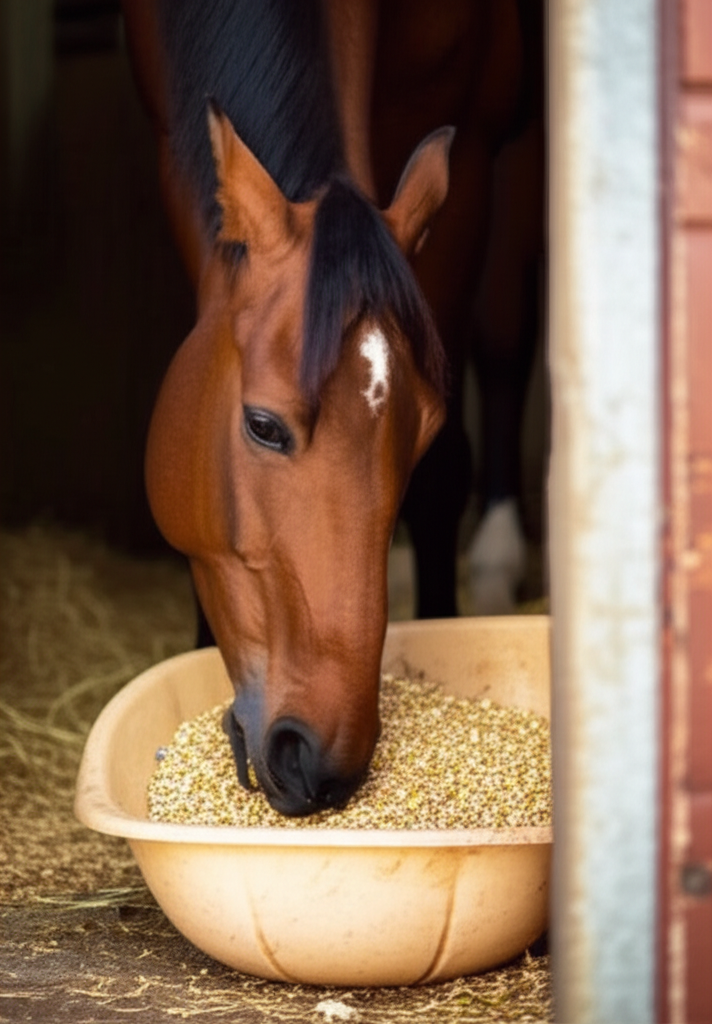
According to Kentucky Equine Research, oats are often called the “safest grain for horses” due to their nutritional profile and digestibility.
What makes oats safer than other grains:
- Lower starch content (~45% vs. 70% for corn)
- Higher fiber content (hull provides fiber)
- Slower digestion reduces colic risk
- Less likely to cause hindgut acidosis
- Traditional, time-tested horse feed
Oats as Feed vs. Oats as a Treat
Oats in Regular Feeding
Oats are commonly used as a grain component in horse diets. For horses that need additional calories beyond what hay provides, oats are an excellent choice.
Oats as an Occasional Treat
A handful of oats makes a perfectly safe treat. Many horses love the taste and texture.
Treat guidelines:
- A handful (about 1/4 cup) is a reasonable treat amount
- Can be fed daily in small amounts without concern
- Mix with other treats for variety

Types of Oats
Whole Oats
Oats with the hull intact. Most common form for horses. The hull provides fiber but may pass through undigested in horses that don’t chew well.
Crimped/Rolled Oats
Slightly processed to crack the hull, improving digestibility. Good choice for senior horses or fast eaters.
Steel-Cut Oats
Safe for horses but more commonly used for human consumption. Fine for treats.
Instant/Quick Oats
Safe in small amounts but more processed. Better to use whole or crimped oats for horses.
Nutritional Benefits of Oats
| Nutrient | Content | Benefit |
|---|---|---|
| Protein | ~12% | Higher than most grains |
| Fiber | ~10-12% | Highest of common grains |
| Fat | ~5% | Higher than most grains; good for coat |
| Energy | Moderate | Less “hot” than corn |
Additional Benefits
- B vitamins: Support energy metabolism
- Phosphorus: Bone health (though may need calcium balancing)
- Beta-glucans: Fiber type that supports gut health
How Much Oats Can Horses Eat?
As Part of Regular Diet
General guidelines (consult with equine nutritionist for specific horses):
- Light work: 0-2 lbs per day
- Moderate work: 2-5 lbs per day
- Heavy work: 5-8 lbs per day
As a Treat
- A handful daily is perfectly safe
- No need to count exact amounts for small treat portions
Horses Who Should Limit Oats
While oats are the safest grain, some horses should still limit them:
Metabolic Horses
Horses with these conditions should limit ALL grains, including oats:
- Equine Metabolic Syndrome (EMS)
- Insulin resistance
- Cushing’s disease (PPID)
- Laminitis history
Easy Keepers
Horses who maintain weight easily may not need any grain, including oats.
Horses Prone to Tying Up
Some horses with PSSM or RER do better with lower starch diets.
Oats vs. Other Horse Treats
| Treat | Starch/Sugar | Best For |
|---|---|---|
| Oats (handful) | Moderate starch | Working horses, variety |
| Carrots | Low sugar | Most horses, daily treating |
| Apples | Medium sugar | Special treats |
| Hay cubes | Very low | Metabolic horses |
Creative Ways to Use Oats
Mixed with Treats
Combine a handful of oats with apple pieces or carrot chunks for a varied snack.
In Treat Recipes
Oats are a base ingredient in many homemade horse treats.
Medication Hiding
Mix crushed pills or powder medications into a small amount of oats with a bit of molasses.
Storage and Quality
For safe oat feeding:
- Store in cool, dry location
- Use sealed containers to prevent moisture and pests
- Check for mold or musty smell before feeding
- Use within 3-6 months of purchase
Frequently Asked Questions
Are oats better than commercial feeds?
Neither is universally “better.” Commercial feeds are formulated with balanced vitamins and minerals. Plain oats may need supplementation for horses on oats-only grain diets.
Can horses eat oatmeal?
Plain cooked oatmeal (unsweetened, no milk) is safe in small amounts but messier to feed than whole oats.
Do oats make horses “hot”?
Some horses become more energetic on any grain, but oats are generally less “heating” than corn.
Can foals eat oats?
Foals can begin eating small amounts of grain around 2-3 months as they begin nibbling at their dam’s feed. Creep feeds designed for foals are often preferable.
The Bottom Line
Oats are the safest grain for horses and make an excellent treat or feed addition. Their lower starch content and higher fiber make them more forgiving than other grains. Whether you’re feeding oats as a regular part of your horse’s diet or just offering a handful as a treat, you can feel confident that oats are a time-tested, horse-approved choice.
Sources: Kentucky Equine Research, American Association of Equine Practitioners, Penn State Extension



Leave a Reply