![Can Horses Eat Pumpkin? The Perfect Fall Treat Guide [2026]](https://horsebesties.com/wp-content/uploads/sites/115/2026/01/horse-pumpkin-1024x600.png)
Whether horses can eat pumpkin has gotten complicated with all the seasonal treat confusion flying around. As someone who gives my horses pumpkin every fall — and has become known as “the pumpkin lady” at my barn — I learned everything there is to know about this seasonal treat. Today, I will share it all with you.
It started a few years back when I had leftover pumpkins from Halloween. I looked it up, discovered they were safe, and tossed one in the paddock. My gelding rolled it around for twenty minutes before figuring out he could bite into it. The look on his face when he cracked it open was pure joy. Now pumpkin season is basically a holiday at our barn.
Is Pumpkin Safe for Horses?
Completely safe. The flesh, skin, and seeds are all non-toxic. This isn’t a “maybe” or a “probably” — pumpkin is a genuinely safe treat for healthy horses.
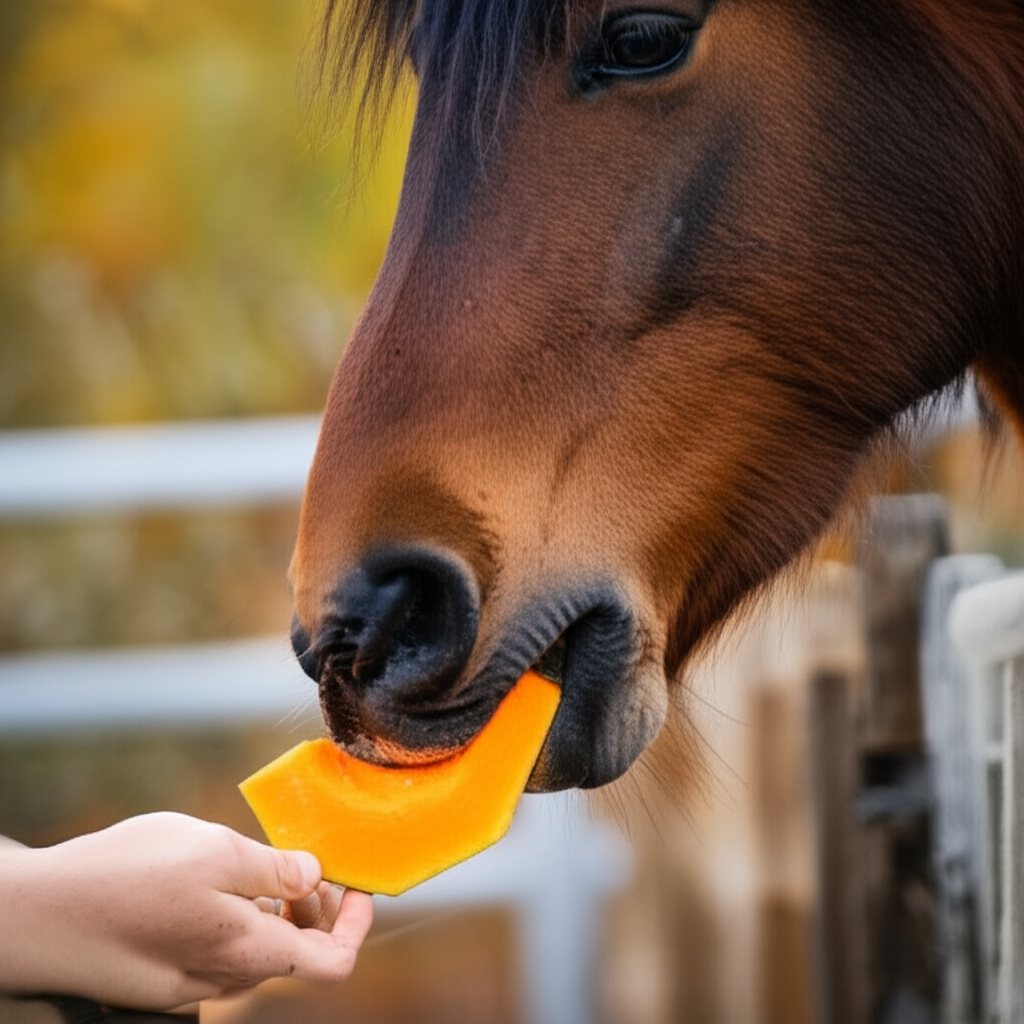
According to Kentucky Equine Research, pumpkin is a safe treat option that many horses enjoy. Its fiber content and overall nutrient profile actually make it one of the healthier treat choices.
What makes pumpkin safe:
- Zero toxic compounds in the flesh, skin, or seeds
- About 90% water content — great for hydration
- Solid source of dietary fiber
- Lower in sugar than many fruits — better for sugar-sensitive horses
- Seeds are not just safe, they’re actually nutritious
Nutritional Benefits of Pumpkin for Horses
Pumpkin is more than a seasonal novelty. There’s real nutritional value here.
Beta-Carotene (Vitamin A)
That bright orange color comes from beta-carotene, which the body converts to vitamin A. This supports:
- Eye health and vision quality
- Immune system function
- Skin and coat health — I swear my mare’s coat looks better in the months she gets pumpkin
- Reproductive health in breeding animals
Fiber Content
Probably should have led with this section, honestly. Pumpkin is an excellent source of dietary fiber, which supports:
- Healthy digestion and gut motility
- Gut bacteria balance
- Overall digestive comfort
Other Key Nutrients
- Vitamin C: Antioxidant support
- Vitamin E: Supports muscle and immune health
- Potassium: Important for muscle function
- Iron: Supports blood health
- Zinc: Important for immune function and — here’s a bonus — hoof health
Hydration
At roughly 90% water, pumpkin is basically a crunchy drink. That’s especially nice in fall when temperatures drop and horses tend to drink less on their own.
Can Horses Eat Pumpkin Seeds?
Yes, and here’s where it gets interesting. Pumpkin seeds aren’t just safe — some horse owners specifically seek them out for the benefits:
What pumpkin seeds offer:
- Good protein content for a plant-based source
- Healthy omega fatty acids
- Zinc for immune support and hoof health
- There’s a folk remedy tradition of using pumpkin seeds as a natural dewormer. I’ll be honest, the science is thin on this, and you absolutely should not replace proper parasite management with pumpkin seeds. But it’s an interesting bit of horse lore.
How to feed them:
- Fresh from the pumpkin, raw, straight up — totally fine
- Dried or roasted works too (unsalted only)
- Mix into regular feed or hand-feed as treats
- About a quarter to half cup makes a reasonable serving
Can Horses Eat Pumpkin Skin?
Yes, the rind is safe. A few things to consider though:
- Cut into manageable pieces. The skin is tougher and can be a choking risk if you leave huge chunks.
- Not every horse likes the texture. My gelding chews right through it. My mare is more picky and leaves the skin behind.
- Pesticides tend to concentrate in the skin, so wash thoroughly or go organic
How Much Pumpkin Can a Horse Eat?
Pumpkin is relatively low in sugar compared to most fruit treats, but you still don’t want to go overboard.
What I recommend:
- Regular treat: 1-2 cups of cubed pumpkin
- Special fall treat: Up to a quarter of a small pumpkin
- Maximum per day: About 2-3 pounds for a full-sized horse
Why moderation matters:
- Too much fiber at once can cause digestive upset — even good fiber
- Pumpkin supplements the diet, it doesn’t replace hay or feed
- New foods should always be introduced gradually
How to Prepare Pumpkin for Horses
Fresh Pumpkin
My process:
- Wash the outside thoroughly
- Cut in half and pull off the stem
- Scoop out seeds (save them for separate feeding or leave in, either way)
- Cut the flesh into manageable chunks — about fist-sized works well
- Feed by hand or drop into the feed bucket
Tips from experience:
- Smaller pieces are easier and safer, especially for older horses or enthusiastic eaters
- Cut away any moldy or soft spots — pumpkins rot from the inside out sometimes
- Toss anything that’s been painted, glittered, or treated with preservatives
- Post-Halloween jack-o-lanterns are fine IF they haven’t been decorated with toxic materials and aren’t moldy
Cooked vs. Raw Pumpkin
Horses handle both just fine:
- Raw: Most common, maintains full nutrient value, horses enjoy the crunch
- Cooked/steamed: Softer, which is helpful for senior horses with dental issues
- Never add: Sugar, spices, butter, or seasonings. Your horse does not need cinnamon.
Can Horses Eat Canned Pumpkin?
Plain canned pumpkin — as in 100% pumpkin puree — is safe. But read the label carefully.
- CHECK THE LABEL: Must be pure pumpkin, NOT “pumpkin pie filling”
- Pumpkin pie filling has sugar, spices, and additives that horses don’t need
- Canned pumpkin is more concentrated than fresh, so use smaller portions
- I’ve used plain canned pumpkin mixed into feed when I wanted the nutritional boost outside of pumpkin season
Horses Who Should Limit Pumpkin
Pumpkin is lower in sugar than apples, bananas, or carrots, but some horses still need to be cautious:
Metabolic Conditions
- Equine Metabolic Syndrome (EMS): Talk to your vet about appropriate amounts
- Insulin resistance: Pumpkin is relatively low-glycemic, but monitor closely
- Cushing’s disease (PPID): May be acceptable in small amounts — ask your vet first
That’s what makes pumpkin endearing to us owners of metabolic horses — it may actually be a better treat option than the usual suspects because of its lower glycemic impact.
Digestive Sensitivities
The fiber content can cause loose manure if you go too heavy, especially in horses with touchy guts. Start small and work up.
Fall Fun: Pumpkin Enrichment Ideas
Whole Pumpkin Enrichment
This is the best part. Give your horse a whole small pumpkin and watch the show. They’ll roll it, nose it, paw at it, and eventually bite into it. It provides:
- Mental stimulation on a level few other treats match
- Physical activity as they work to break into it
- Extended treat enjoyment — way longer than handing them a carrot
- Excellent photo and video material (not going to pretend that doesn’t matter)
Safety notes for whole pumpkins:
- Stay nearby to supervise, especially the first time. Some horses get aggressive with the biting and could choke on big pieces.
- Choose pumpkins small enough that they can get their mouth around them
- Pull the stem off before giving it to them
- Clean up any uneaten pieces before they start to rot
Pumpkin Treat Recipes
Frozen pumpkin treats: Mix plain canned pumpkin with water and freeze in ice cube trays. Easy, fun, keeps them busy.
Pumpkin mash: Stir cooked pumpkin into regular feed for a seasonal upgrade. My horses think they’re getting something incredibly special.
Pumpkin seed mix: Dry the seeds, combine with other safe treats for a trail mix of sorts.
What About Decorative Pumpkins?
Worth addressing because people ask every fall:
Safe:
- Plain, undecorated pumpkins that have just been sitting on a porch
- Post-Halloween jack-o-lanterns as long as they’re not moldy and have no candle wax residue
Avoid:
- Painted pumpkins — paints may contain toxic compounds
- Anything with glitter (should go without saying, but here we are)
- Pumpkins sprayed with preservatives or shellac
- Moldy or rotting pumpkins — mycotoxins are no joke
- Pumpkins with candle wax inside
Pumpkin vs. Other Fall Treats
| Treat | Sugar | Fiber | Best For |
|---|---|---|---|
| Pumpkin | Low | High | Sugar-sensitive horses, digestive support, enrichment |
| Apples | Medium-High | Medium | General treating, training rewards |
| Carrots | Low-Medium | Medium | Year-round everyday treating |
| Butternut Squash | Low | High | Similar benefits to pumpkin, available longer |
Signs of Pumpkin Overconsumption
Watch for:
- Loose manure or diarrhea — the most common sign you went too heavy on the pumpkin
- Decreased appetite for regular feed
- Gas or mild colic symptoms
If anything seems off, cut back and make sure plenty of hay is available. Hay fixes most mild digestive disruptions.
Frequently Asked Questions
Can foals eat pumpkin?
Yes, once they’re consistently eating solid food. Start with small, soft pieces of flesh only. No skin for the little ones.
Can horses eat butternut squash or other winter squash?
Absolutely. Most winter squash varieties — butternut, acorn, spaghetti squash — are safe with similar preparation and portion guidelines. My horses actually prefer butternut to pumpkin, if I’m being honest.
Is pumpkin good for horses with ulcers?
It’s not a treatment for ulcers, but pumpkin’s gentle fiber content makes it unlikely to aggravate them. Always follow your vet’s specific ulcer management plan.
Can I feed pumpkin year-round?
You can, though fresh pumpkin is really a fall thing. Plain canned pumpkin (not pie filling) is available year-round if you want to keep it in the rotation.
The Bottom Line
Pumpkin is one of the safest, most nutritious, and most entertaining treats you can offer your horse. Lower in sugar than most fruit alternatives, packed with fiber and beta-carotene, and genuinely enjoyed by the vast majority of horses. Whether you’re feeding cubed pieces, offering the seeds separately, or watching your horse demolish an entire small pumpkin like a pirate, this orange gourd is a fantastic way to celebrate fall with your equine partner.
Sources: Kentucky Equine Research, American Association of Equine Practitioners, Penn State Extension


Leave a Reply