![Can Horses Eat Strawberries? Safe Summer Fruits Guide [2026]](https://horsebesties.com/wp-content/uploads/sites/115/2026/01/horse-strawberry-681x600.png)
Whether horses can eat strawberries has gotten complicated with all the well-meaning but sometimes inaccurate berry advice online. As someone who grows strawberries in my garden right next to the pasture fence, I learned everything there is to know about feeding these berries to horses the first summer my mare reached over and helped herself. Today, I will share it all with you.
She ate about a dozen before I noticed. I panicked, called the vet, and felt pretty silly when they told me strawberries are perfectly safe. Now I intentionally set aside a portion of each harvest for barn treats.
Are Strawberries Safe for Horses?
Strawberries are completely safe. Every part — the fruit, the tiny seeds, even the leafy green cap on top — is non-toxic to horses.
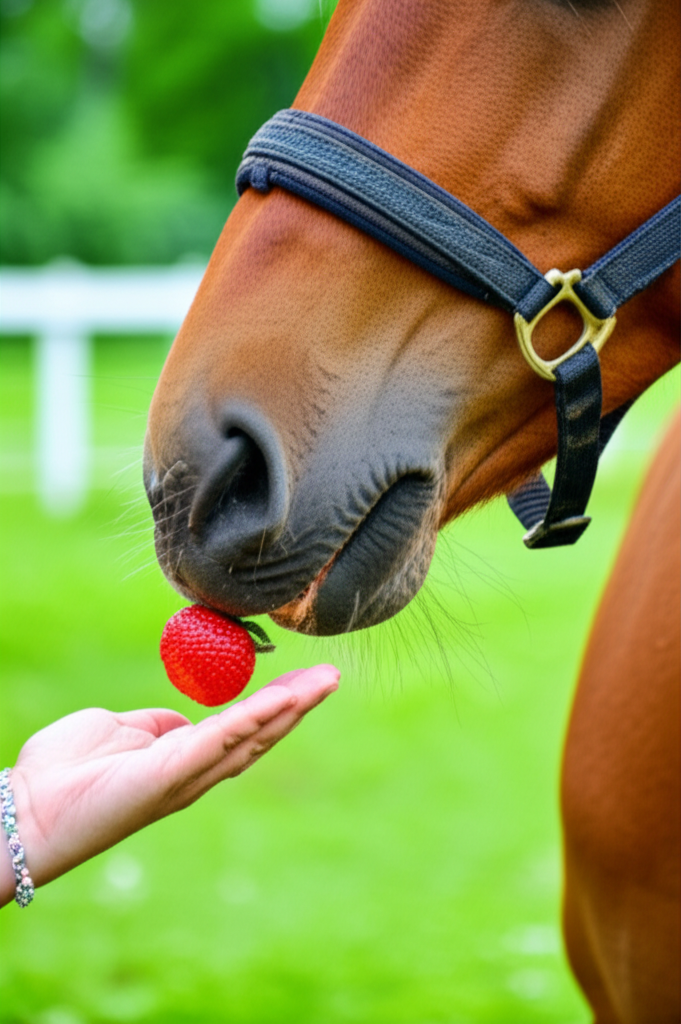
According to Kentucky Equine Research, strawberries fall into the safe occasional treats category. They’re one of several berry fruits horses can enjoy without toxicity concerns.
What makes strawberries safe:
- No toxic compounds in the fruit, seeds, or leaves
- Soft texture makes choking nearly impossible
- Those tiny seeds pass right through without issue
- Natural whole food, nothing weird
- Easy on the digestive system
Nutritional Benefits of Strawberries for Horses
These aren’t just tasty — there’s actual nutritional value here that I didn’t expect.
Vitamin C Powerhouse
Strawberries are loaded with vitamin C. Now, horses make their own vitamin C (unlike us), but extra antioxidant support from natural sources can still benefit:
- Senior horses whose natural production may slow down
- Horses dealing with stress from travel, shows, or environmental changes
- Horses bouncing back from illness
Antioxidants
Probably should have led with this section, honestly. Strawberries contain some serious antioxidant compounds:
- Anthocyanins: Responsible for the red color, support cellular health
- Ellagic acid: Supports immune function
- Quercetin: Has anti-inflammatory properties

Other Key Nutrients
- Fiber: Supports digestive health
- Manganese: Important for bone health and metabolism
- Folate: Supports cell function
- Potassium: Important for proper muscle function
Hydration
About 91% water. On a hot day, strawberries are basically a juicy, vitamin-packed hydration delivery system.
How Many Strawberries Can a Horse Eat?
They do contain natural sugars, so moderation matters here.
What works for me:
- Occasional treat: 5-10 strawberries at a time
- Regular rotation: 3-5 strawberries a few times per week
- Maximum per day: About a cup for an average-sized horse
Why limit them:
- Natural sugar content adds up if you’re too generous
- Too many at once can cause loose manure
- They should complement the regular diet, not compete with it
- Variety in treats is healthier than overloading on any single one
How to Feed Strawberries to Horses
Preparation Options
Whole strawberries: Most horses handle whole berries just fine. The soft texture means choking is really not a concern.
Halved or quartered: Better for horses that inhale their food or for ponies with smaller mouths.
Mashed: Great mixed into feed or for hiding bitter medications.
Frozen: A cooling summer treat that takes longer to eat. My horses love frozen strawberries on hot afternoons.
Feeding Tips
- Wash thoroughly to remove dirt and pesticide residue
- Toss any moldy or mushy berries
- The green top is safe — no need to hull them. Some horses eat the whole thing, tops included. Others leave the leafy bit behind. Both are normal.
- Introduce gradually if your horse has never had them
- Feed from a flat palm or bucket to protect your fingers

Can Horses Eat Strawberry Tops (Leaves)?
Absolutely. The green leafy cap is completely safe. I don’t bother removing them and my horses have never had an issue. Some eat the whole berry including the top, others are picky and leave it behind. Either way, no concerns.
Horses Who Should Limit Strawberries
Metabolic Conditions
- Equine Metabolic Syndrome (EMS): Sugar content is a valid concern
- Insulin resistance: All sugary treats need to be limited
- Cushing’s disease (PPID): Careful sugar management is essential
- Laminitis history: Strict sugar control, full stop
For metabolic horses, check with your vet. A couple of berries may be fine, or you may need to skip them entirely. That’s what makes having a good vet relationship endearing to us horse owners — they know your specific horse’s needs.
Overweight Horses
If your horse is on a diet, limit sugary treats including strawberries. Carrots, celery, or cucumber are lower-sugar alternatives that still feel like a treat.
Strawberry Season: Making the Most of It
Fresh strawberries hit their peak from late spring through early summer in most regions. This is when you want to treat:
- Freshly picked berries have the best flavor and maximum nutrition
- Seasonal berries are usually cheaper than off-season imports
- Local strawberries haven’t spent weeks in cold storage
- You can freeze extras for year-round use
Freezing Strawberries for Horses
Simple process I use every year:
- Wash and dry the berries thoroughly
- Remove any spoiled ones
- Spread on a baking sheet in a single layer and freeze
- Once frozen solid, transfer to freezer bags
- Thaw slightly before feeding, or serve frozen as a summer cooling treat
Strawberries vs. Other Berry Treats
| Berry | Safe? | Sugar | Notes |
|---|---|---|---|
| Strawberries | Yes | Medium | Highest in vitamin C of the bunch |
| Blueberries | Yes | Medium | Antioxidant champions |
| Raspberries | Yes | Low-Medium | Lower sugar option if that matters |
| Blackberries | Yes | Low-Medium | High in fiber |
All of these berries are safe in moderation. Mixing them up gives your horse variety and different nutritional profiles.
Signs of Strawberry Overconsumption
Watch for:
- Loose manure or diarrhea — the most common giveaway
- Decreased appetite for regular feed
- Red staining around the mouth (harmless but it tells you how many they’ve had)
If you notice digestive upset, scale back and make sure plenty of hay is available.
Creative Ways to Use Strawberries
Training Rewards
Cut into small pieces for high-value training treats. The strong flavor and soft texture make them appealing rewards that motivate.
Enrichment
- Hide strawberries in hay for foraging entertainment
- Add to horse-safe treat toys
- Freeze into ice cubes for summer enrichment sessions
Medication Helper
Mashed strawberries can mask the taste of bitter medications. Not as effective as peanut butter for this purpose, but worth a shot if your horse is a berry fan.
Frequently Asked Questions
Can foals eat strawberries?
Yes, once they’re regularly eating solid food — typically around 2-3 months. Start tiny, introduce gradually.
Are organic strawberries better for horses?
Organic reduces pesticide exposure, which is worth considering since conventional strawberries are notoriously heavily sprayed. If you’re feeding regularly, organic is a solid choice. Conventional is fine when washed well.
Can horses eat strawberry jam or preserves?
Not recommended. The added sugar, preservatives, and processing make commercial strawberry products a poor choice. Stick to fresh or frozen whole berries.
My horse doesn’t like strawberries — is that normal?
Completely normal. Not every horse likes every treat. Some are suspicious of new foods, some just don’t care for the taste. Don’t force it, just try something else.
Can strawberries cause allergies in horses?
Food allergies in horses are rare, but not impossible. If you notice hives, swelling, or digestive upset after feeding strawberries, stop and talk to your vet.
The Bottom Line
Strawberries are a safe, nutritious, and genuinely delicious treat that most horses enjoy. Rich in vitamin C and packed with antioxidants, they offer real health benefits when fed in moderation. Whether fresh from the garden in summer or frozen for a cooling treat on a hot afternoon, strawberries can earn a regular spot in your horse’s treat rotation. Just remember the golden rule: moderation, always.
Sources: Kentucky Equine Research, American Association of Equine Practitioners, Colorado State University Extension

Leave a Reply