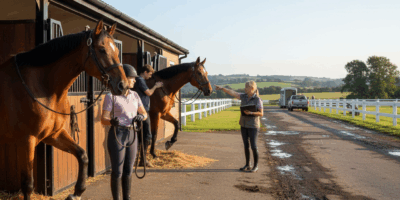
![Horse First Aid Kit Essentials [2026]](https://horsebesties.com/wp-content/uploads/sites/115/2026/01/horse-first-aid-1024x600.png)
Horse first aid has gotten complicated with all the conflicting advice and scary internet stories flying around. As someone who’s dealt with more than my share of barn emergencies, I learned everything there is to know about what to keep on hand and when to call the vet. Today, I will share it all with you.
Building Your Horse First Aid Kit
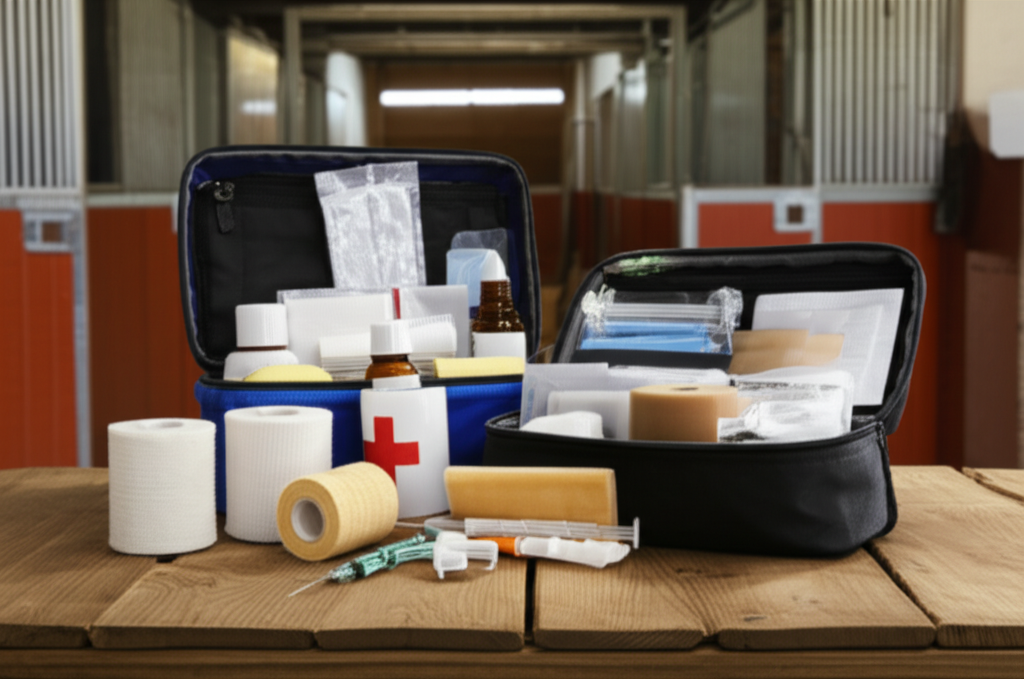
Probably should have led with this section, honestly. A well-stocked kit can make the difference between a minor incident and a major problem.
Essential Supplies
| Item | Purpose | Quantity |
|---|---|---|
| Veterinarian’s phone number | Emergency contact | Posted visibly |
| Digital thermometer | Check temperature | 1 |
| Stethoscope | Check heart rate, gut sounds | 1 |
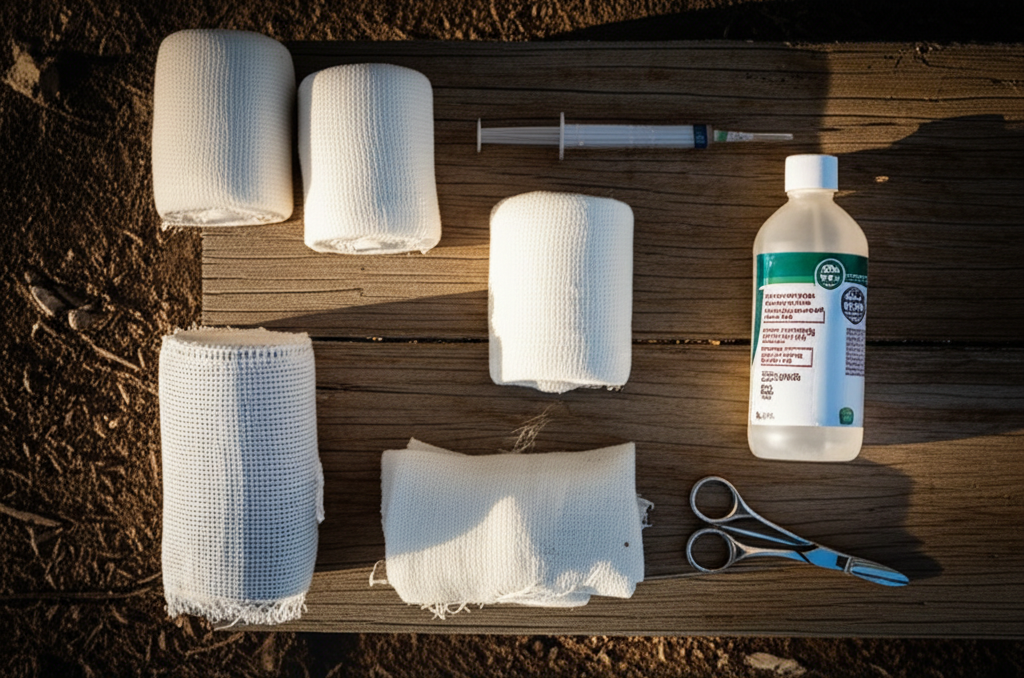
| Vetrap/self-adhesive bandage | Wrap wounds and legs | 4-6 rolls |
| Gauze pads (4×4) | Clean and cover wounds | 20+ |
| Cotton roll | Padding under bandages | 2 rolls |
| Saline solution | Flush wounds and eyes | 2 bottles |
| Betadine/antiseptic | Clean wounds | 1 bottle |
| Scissors (bandage) | Cut bandages and wraps | 1 pair |
| Wound ointment | Protect healing wounds | 1 tube |
Normal Vital Signs
That’s what makes knowing normal vital signs endearing to us horse owners—you can’t spot a problem if you don’t know what normal looks like.
- Temperature: 99-101°F
- Heart rate: 28-44 beats per minute
- Respiratory rate: 8-16 breaths per minute
- Gut sounds: Present in all four quadrants
- Capillary refill time: Under 2 seconds
- Mucous membranes: Pink and moist
Practice checking vitals when your horse is healthy. You’ll recognize abnormal faster if you know what their normal looks like.
Common Emergencies
Colic
Signs: pawing, looking at flanks, rolling, not eating, lack of gut sounds, sweating. This is the one that scares us most and for good reason.
- Call the vet immediately
- Walk the horse if they’re trying to roll violently
- Remove food and water until vet advises
- Note symptoms, vital signs, and last bowel movement
- Don’t give any medications without vet approval
Wounds
For minor wounds:
- Clean with saline or clean water
- Apply antiseptic
- Cover with clean bandage if needed
- Monitor for infection signs
For serious wounds: Apply pressure to stop bleeding and call the vet. Don’t remove puncture objects—the vet needs to see them in place.
Choke
Signs: food or saliva from nostrils, coughing, extended neck, distress.
- Remove all food immediately
- Keep horse calm
- Call vet
- Keep head low to prevent aspiration
- Many chokes resolve on their own, but vet may need to tube
Lameness
For sudden severe lameness: Check for obvious injury or foreign object. Feel legs for heat or swelling. Pick up hoof to check for rocks, nails, or abscesses. If no obvious cause, call vet.
Eye Injuries
Any eye problem = call the vet immediately. Eyes deteriorate quickly and vision can be permanently damaged. Don’t touch or rub the eye. Keep horse in dark area if possible. Flush with saline if debris present. Put fly mask on to prevent further irritation.
When to Call the Vet
Always call for: Colic symptoms, severe lameness, eye injuries, deep wounds or punctures, heavy bleeding, difficulty breathing, temperature over 102°F, signs of infection, anything you’re uncertain about.
It’s better to call and not need the vet than to wait too long.
First Aid Kit Maintenance
Check expiration dates every 6 months. Replace items after use. Keep kit in a known, accessible location. Have a travel kit for shows and trail rides. Keep vet’s number in multiple places.
The Bottom Line
Being prepared for emergencies is essential horse ownership. Build a well-stocked first aid kit, learn to check vital signs, and know when to call the vet. Most importantly, stay calm—your horse will take cues from you. When in doubt, always call your veterinarian.
Sources: American Association of Equine Practitioners, UC Davis School of Veterinary Medicine

Leave a Reply