![Horse Hoof Care Basics and Common Problems [2026]](https://horsebesties.com/wp-content/uploads/sites/115/2026/01/hoof_care-1024x600.png)
“No hoof, no horse”—this old saying captures the essential truth of equine care. Proper hoof care is the foundation of horse health. Here’s everything you need to know.
Why Hoof Care Matters
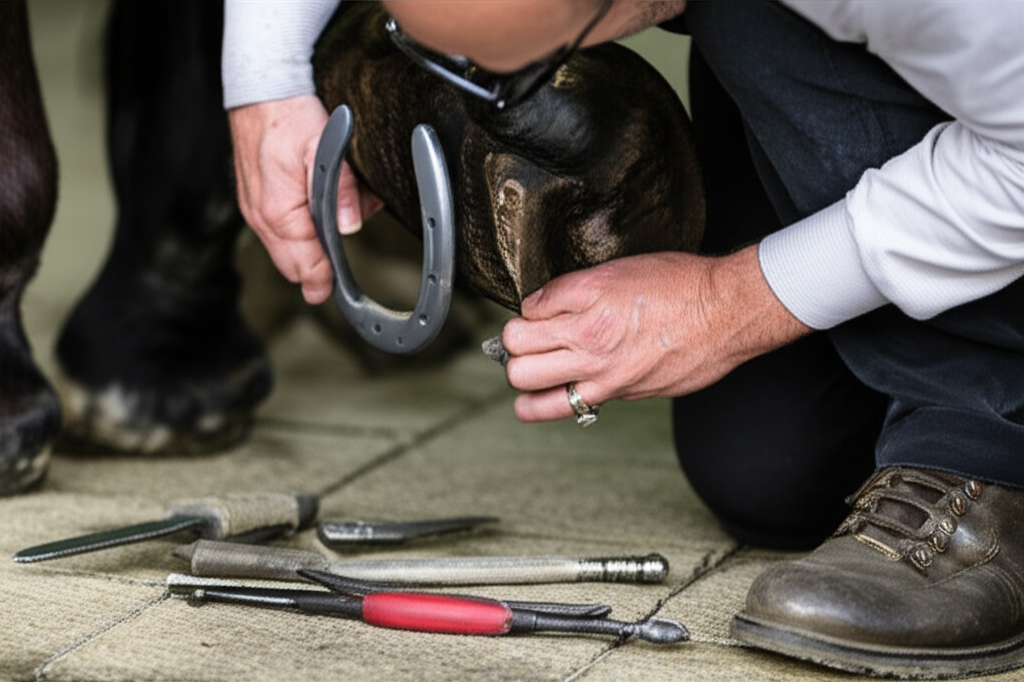
Horse hooves are remarkably complex structures that support the entire weight of the horse. Poor hoof care leads to:
- Lameness
- Abscesses
- Thrush infections
- Hoof cracks
- Joint problems
- Permanent damage
Hoof Anatomy Basics
External Structures
- Hoof wall: Hard outer layer (like a fingernail)
- Sole: Bottom of hoof, slightly concave
- Frog: V-shaped structure, shock absorber
- Bars: Extensions of wall at heel
- White line: Junction between wall and sole
Internal Structures
- Coffin bone: Main bone inside hoof
- Navicular bone: Small bone behind coffin bone
- Laminae: Tissue connecting hoof wall to bone
- Digital cushion: Shock-absorbing tissue
Daily Hoof Care
Picking Out Hooves
This should be done daily—ideally before and after riding.
How to Pick Hooves:
- Stand beside horse, facing rear
- Run hand down leg, squeeze fetlock
- Say “foot” or your cue word
- Support hoof with one hand
- Pick from heel toward toe
- Clean grooves beside frog
- Check for stones, nails, injuries
What to Look For Daily
- Heat: May indicate infection or injury
- Smell: Foul odor suggests thrush
- Cracks: Note any new or worsening cracks
- Stones: Remove anything lodged in hoof
- Shoes: Check for looseness or missing nails
Farrier Care Schedule
| Service | Frequency | Cost Range |
|---|---|---|
| Trim only | Every 6-8 weeks | $35-75 |
| Full shoe set (4) | Every 6-8 weeks | $100-200 |
| Front shoes only | Every 6-8 weeks | $70-120 |
| Corrective shoeing | As needed | $150-400+ |
Barefoot vs. Shod
Barefoot Pros
- Natural hoof function
- Better blood circulation
- No risk of lost shoes
- Lower cost
Barefoot Cons
- Not all horses can go barefoot
- May need hoof boots for riding
- Requires good hoof quality
When Shoes Are Needed
- Heavy work on hard surfaces
- Thin soles or weak hoof walls
- Corrective issues
- Competition requirements
- Certain medical conditions
Common Hoof Problems
Thrush
- Signs: Black, foul-smelling discharge in frog area
- Cause: Bacteria from wet, dirty conditions
- Treatment: Clean thoroughly, apply thrush treatment
- Prevention: Daily picking, dry environment
Abscesses
- Signs: Sudden severe lameness, heat in hoof
- Cause: Bacteria enter through small wound
- Treatment: Soak, poultice, vet may need to drain
- Prevention: Good footing, regular farrier care
White Line Disease
- Signs: Separation at white line, crumbly hoof wall
- Cause: Fungal/bacterial infection
- Treatment: Debride affected area, treat with antifungal
- Prevention: Balanced trims, dry environment
Hoof Cracks
- Types: Toe cracks, quarter cracks, heel cracks
- Causes: Imbalanced trimming, dry hooves, injury
- Treatment: Depends on severity—farrier assessment needed
- Prevention: Regular balanced trims, hoof conditioning
Laminitis
- Signs: Reluctance to move, rocking back on heels, heat in hooves
- Cause: Inflammation of laminae (often metabolic)
- Treatment: Veterinary emergency—requires immediate care
- Prevention: Manage diet, avoid sugary grass, maintain healthy weight
Hoof Supplements and Treatments
When Supplements Help
- Poor hoof quality
- Slow hoof growth
- Cracking or chipping
Key Ingredients
- Biotin: Supports hoof growth
- Methionine: Amino acid for keratin
- Zinc: Essential for hoof health
- Copper: Supports tissue integrity
Topical Products
- Hoof conditioners: Moisturize dry hooves
- Hoof hardeners: Strengthen soft hooves
- Thrush treatments: Combat infection
Environment and Hoof Health
- Avoid constant wet: Weakens hoof structure
- Avoid constant dry: Causes brittle hooves
- Clean stalls regularly: Ammonia damages hooves
- Provide good footing: Avoid rocky, muddy, or hard-packed areas
When to Call the Vet
- Sudden severe lameness
- Heat in hooves with reluctance to move
- Puncture wound to hoof
- Significant hoof crack reaching sensitive structures
- Swelling above hoof
- Persistent lameness despite treatment
The Bottom Line
Daily hoof care and regular farrier visits are non-negotiable parts of horse ownership. Pick hooves daily, schedule farrier appointments every 6-8 weeks, and address problems early. A good farrier is worth their weight in gold—invest in quality hoof care and your horse will thank you with years of soundness.
Sources: American Farrier Association, American Association of Equine Practitioners


Leave a Reply