![How Much Does a Percheron Cost? [2026 Price Guide]](https://horsebesties.com/wp-content/uploads/sites/115/2026/01/percheron-1024x600.png)
The Percheron is the most popular draft horse breed in America—powerful, elegant, and surprisingly versatile. Originally from France’s Perche region, these gentle giants combine strength with refinement. But how much does a Percheron cost?
Percheron Breed Background
The Percheron traces its roots to the Perche region of Normandy, France, where breeders crossed local heavy horses with Arabian stallions — most notably through captured Moorish warhorses after the Battle of Poitiers in 732 AD. That Arabian influence is why Percherons look and move differently from other draft breeds. They carry more refinement, more animation in their step, and a cleaner leg without the heavy feathering you see on Clydesdales or Shires.
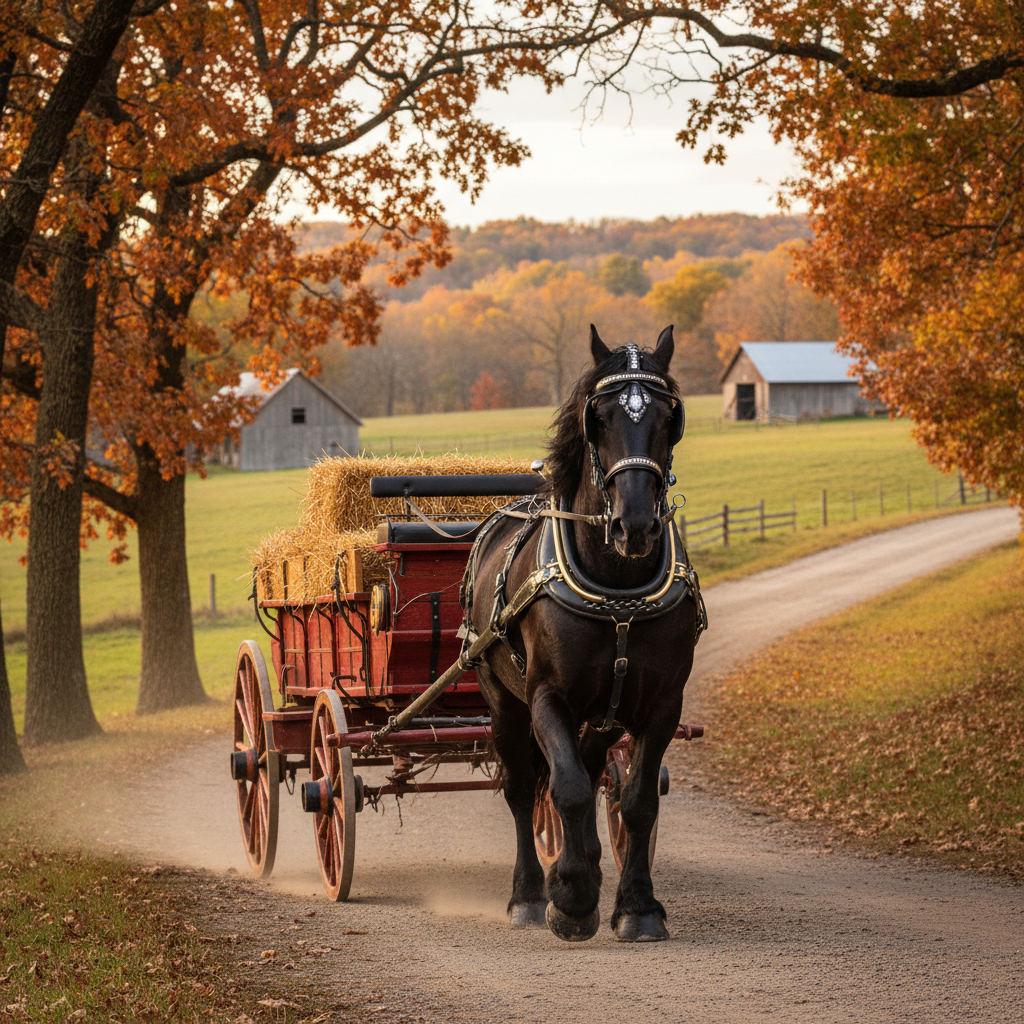
By the 1800s, Percherons were the dominant draft breed in France, pulling stagecoaches across the country and doing the heavy farm work that every rural family depended on. American importers took notice. Between 1880 and 1920, more Percherons were imported to the United States than all other draft breeds combined. At the breed’s American peak, there were over 70,000 registered Percherons in the country.
The tractor nearly wiped them out. By the 1950s, registration numbers had collapsed. What saved the Percheron was exactly the trait that made them popular in France — versatility. Unlike some draft breeds that excel at one thing, Percherons can do almost everything. That flexibility kept breeders interested through the lean years and is driving renewed popularity today.
Physical Characteristics and Size
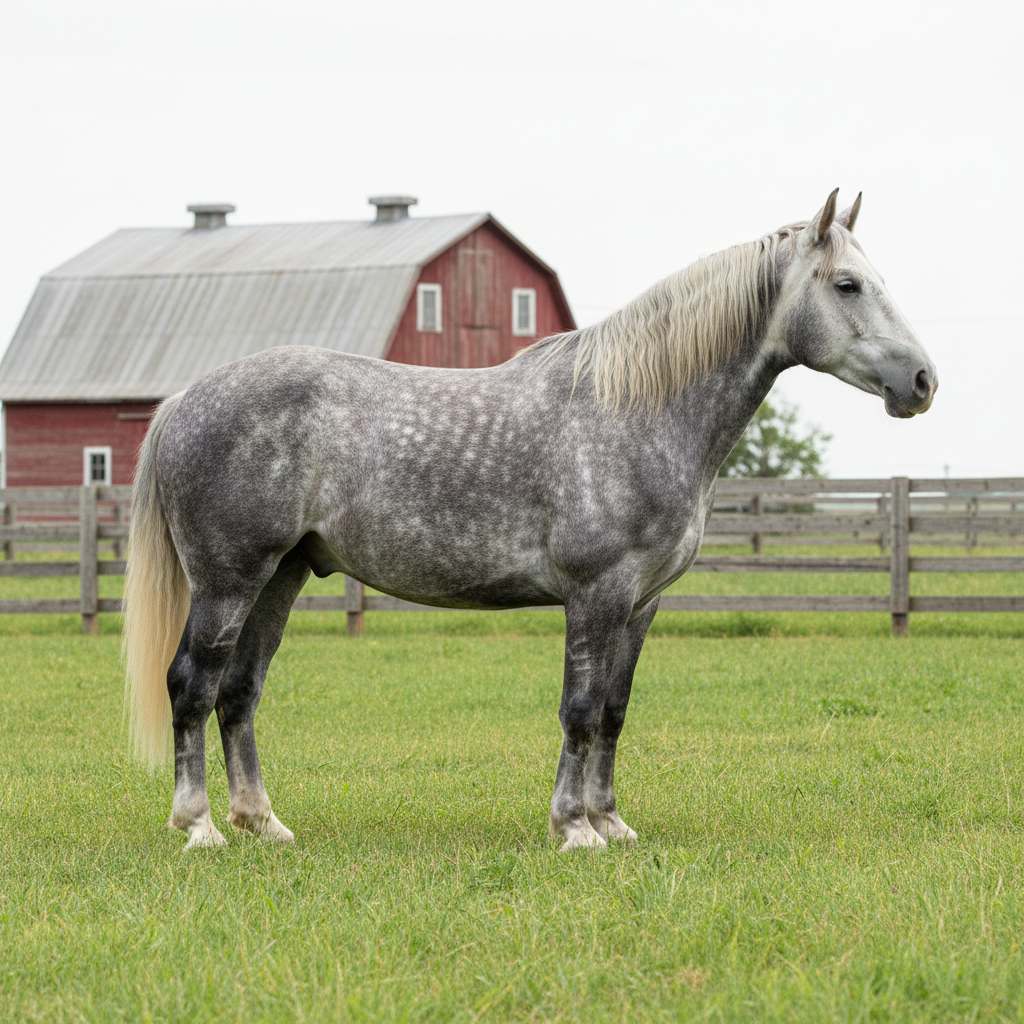
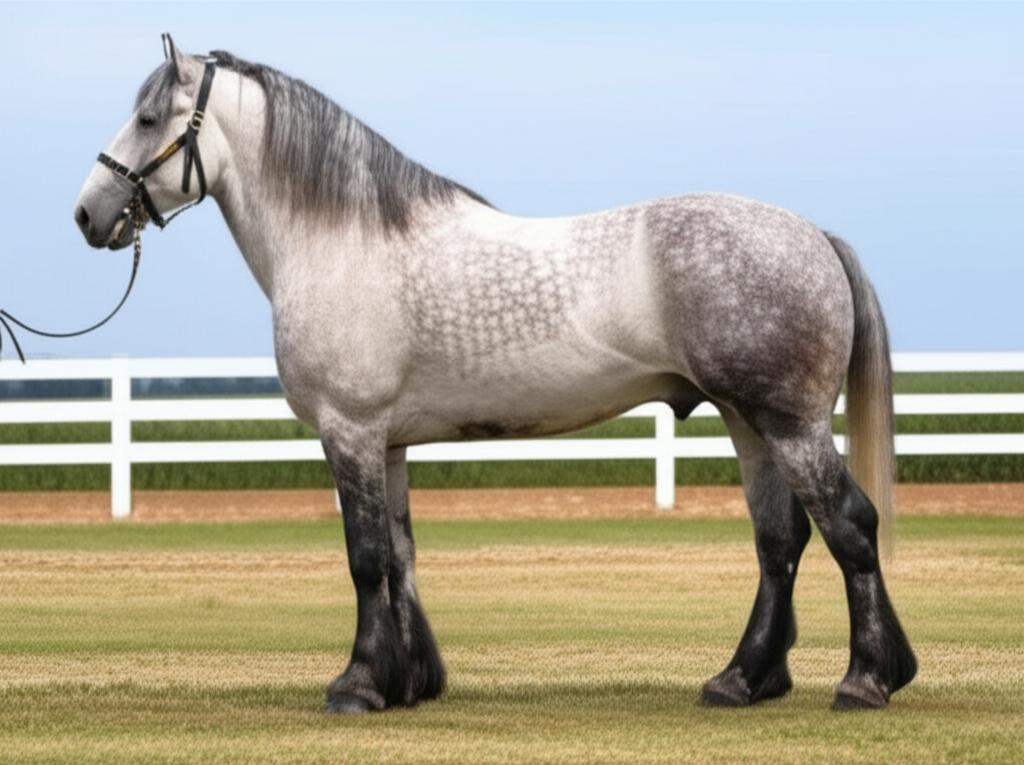
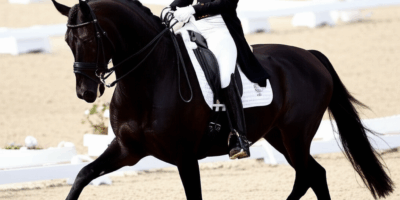
Percherons are large horses, typically standing between 15.1 and 19 hands and weighing 1,800 to 2,600 pounds, though most working horses fall in the 16.2 to 17.2 hand range. Their most recognizable colors are dapple gray and black. Grays often darken to iron gray or lighten to near white as they age, which makes them one of the more visually striking breeds at any stage of life.
Compared to other drafts, Percherons look leaner in the face and neck — a direct legacy of that Arabian breeding. Their hooves are proportionally large and dense, which matters when you’re asking a 2,000-pound horse to travel on varied terrain. The cannon bones are short relative to body size, which contributes to their efficient, ground-covering stride.
One practical note on size: many horse facilities are not set up for draft horses. Standard stalls (12×12) are technically adequate but cramped for a large Percheron. Standard halters, blankets, and saddle pads won’t fit. Budget for draft-specific tack when you’re calculating total ownership costs.
Quick Answer: Percheron Prices
| Type | Price Range |
|---|---|
| Rescue/Grade | $1,000 – $3,500 |
| Trail/Pleasure Horse | $3,500 – $8,000 |
| Riding Percheron | $5,000 – $15,000 |
| Driving/Hitch Horse | $7,500 – $25,000 |
| Show Quality | $15,000 – $50,000 |
| Breeding Stock | $10,000 – $75,000+ |
Why Percherons Are Popular
The “Light” Draft Horse
Percherons are more refined than other drafts:
- More Arabian influence in breeding history
- Lighter, more elegant movement
- Less feathering than Clydesdales or Shires
- Often used for riding, not just driving
Temperament
- Calm and willing
- Intelligent and trainable
- Good with beginners
- Patient and forgiving
Factors Affecting Price
1. Color
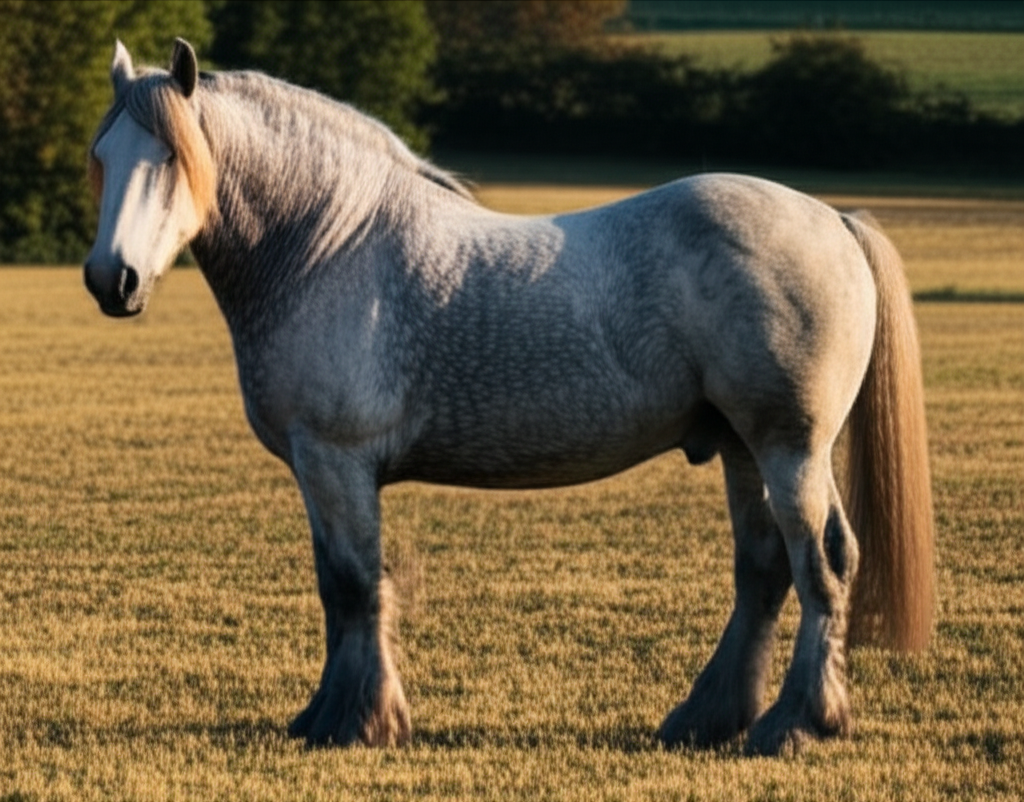
Percherons are predominantly gray or black:
- Dapple gray: Most recognizable, good demand
- Black: Increasingly popular
- Bay, sorrel, roan: Less common, variable pricing
2. Size
Percherons range from 15.1 to 19 hands:
- Under 16.2 hands: “Sport” Percherons, riding market
- 16.2-17.2 hands: All-purpose, standard pricing
- Over 17.2 hands: Hitch work, higher prices
3. Training
- Untrained: $2,000 – $5,000
- Started under saddle: $5,000 – $10,000
- Driving trained: $7,500 – $20,000
- Hitch experienced: Premium prices
4. Registration
- Percheron Horse Association of America (PHAA) papers add value
- Grade Percherons cost significantly less
Percheron Prices by Purpose
Riding
Yes, you can ride Percherons—they make excellent mounts:
- Trail horse: $4,000 – $10,000
- Dressage prospect: $6,000 – $18,000
- Therapeutic riding: $5,000 – $15,000
Driving/Hitch
- Single pleasure driving: $5,000 – $12,000
- Team member: $8,000 – $20,000
- Show hitch quality: $15,000 – $40,000
Farm Work
- Working draft horse: $3,500 – $10,000
- Logging: $5,000 – $15,000
Breeding
- Broodmare: $5,000 – $20,000
- Breeding stallion: $10,000 – $75,000
- Foals: $2,000 – $8,000
Percheron vs. Other Drafts
| Breed | Typical Price | Feathering | Notes |
|---|---|---|---|
| Percheron | $5,000-$20,000 | Light | Most versatile |
| Clydesdale | $5,000-$25,000 | Heavy | Most recognizable |
| Belgian | $4,000-$15,000 | Light | Most powerful |
| Shire | $8,000-$30,000 | Heavy | Tallest breed |
What to Look for When Buying a Percheron
The biggest mistake first-time draft buyers make is skipping the pre-purchase veterinary exam. At $5,000 to $20,000, a Percheron is a significant financial commitment, and draft horses carry specific health risks that a standard horse vet exam might miss if the vet isn’t familiar with the breed.
Hooves and feet: Look at the bottom of the hoof, not just the outside. Percherons are prone to white line disease and thrush, especially in wet environments. Ask when the horse was last shod and how the hooves have held up. A farrier who works with drafts is worth consulting before purchase.
Skin and legs: Even though Percherons have less feathering than Clydesdales, they can still develop chronic progressive lymphedema (CPL) — a progressive swelling of the lower limbs with no cure. It’s manageable but affects soundness and quality of life. Ask specifically whether the horse has been tested or evaluated for CPL.
Movement under load: Watch the horse work before you buy. Percherons sometimes compensate for joint issues with their size and power — problems that become apparent only when the horse is asked to do more. For a driving horse, hitch them up. For a riding horse, put a saddle on them.
Temperament testing: Percherons are generally calm, but individual horses vary significantly. A horse that’s easy in a familiar barn environment may be different at a show or in a new location. If possible, ride or drive the horse somewhere new before committing.
Where to Find Percherons for Sale
The Percheron Horse Association of America (PHAA) maintains a breeder directory and classifieds. Registered horses come with paperwork verifying breed lineage, which matters if showing is in your future. Expect to pay a premium for PHAA-registered stock.
Draft horse auctions can be good sources for working Percherons, particularly in the Midwest. Topeka, Indiana hosts one of the largest draft horse sales in the country. Be cautious at auction — you often can’t do a full pre-purchase exam, and horses are sold as-is. Auctions work best for experienced buyers who can evaluate a horse quickly.
Breed-specific rescues occasionally have Percherons available for adoption at low cost ($500-$2,000), but these horses typically need significant rehabilitation time and may have behavioral or health history that’s not fully documented. A rescue Percheron can be a rewarding option for the right owner, but isn’t recommended as a first draft horse.
Private sellers on platforms like DreamHorse, HorseClicks, and local agricultural Facebook groups often have the most variety. For private sales, always visit in person before purchasing and bring a trainer or experienced horse person if you’re new to drafts.
Is a Percheron Right for You?
Percherons are often described as the most beginner-friendly draft breed, and that reputation is generally earned. Their calm temperament and willingness to work makes them more forgiving of handling mistakes than many lighter breeds. That said, “beginner-friendly” doesn’t mean “zero-risk” when you’re dealing with a 2,000-pound animal.
Percherons work well for:
- Riders who want a draft horse for trail riding and pleasure work
- Drivers looking for a single pleasure driving horse or a first team
- Small farms needing a working horse for light to moderate draft work
- Therapeutic riding programs (their size and calm make them excellent mounts)
- Larger riders who have outgrown the weight limits of lighter breeds
Think carefully before buying if:
- You have limited draft horse experience and no trainer nearby who works with drafts
- Your facilities aren’t set up for a horse over 1,800 pounds
- Your budget is tight — draft horse ownership costs consistently run 40-60% higher than standard horses
- You want a performance sport horse for competitive jumping or racing
Ongoing Costs
Draft horses cost more to maintain:
| Expense | Average Horse | Percheron |
|---|---|---|
| Feed (monthly) | $200 – $400 | $350 – $700 |
| Farrier | $50 – $150 | $100 – $300 |
| Veterinary | $50 – $150 | $75 – $200 |
Frequently Asked Questions
How much does it cost to own a Percheron per year?
Budget $8,000 to $15,000 per year for a typical Percheron when you include feed, farrier care every 6-8 weeks, annual vet work, deworming, dental floating, and basic supplies. This assumes you have your own land and aren’t paying full board. Full board at a facility that accommodates drafts typically runs $600-$1,200/month.
Can beginners own a Percheron?
Percherons are among the more forgiving draft breeds, but the size and strength of any draft horse requires experience. Beginners are better served finding a trainer with draft horse experience before purchase rather than after. The learning curve is steeper than it looks when the horse weighs a ton.
How long do Percherons live?
A well-maintained Percheron typically lives 20-25 years. Working draft horses with heavy use may show wear in their joints and hooves earlier, while lightly-worked pleasure horses often stay sound well into their late teens.
Are Percherons good for riding?
Yes — Percherons are among the most rideable draft breeds. Smaller Percherons (under 16.2 hands) are increasingly popular in dressage and trail riding circles. Their smooth, ground-covering walk is particularly valued for trail riding. The main limitation is standard tack sizing; most off-the-shelf saddles and equipment won’t fit a Percheron without modification.
What’s the difference between a registered and grade Percheron?
A registered Percheron has documented lineage in the Percheron Horse Association of America studbook. Registration adds $500-$3,000 to price depending on bloodlines but is only meaningful if you plan to breed or show. For pleasure riding, driving, or farm work, a grade Percheron (unregistered) performs identically at lower cost.
The Bottom Line
Percherons range from $3,500 for grade horses to $50,000+ for elite show and breeding stock. For riding or pleasure driving, expect $5,000-$15,000 for a trained Percheron. Their versatility—suitable for both riding and driving—combined with their gentle temperament makes them excellent value among draft breeds.
Sources: Percheron Horse Association of America, Draft Horse Journal, EQUUS Magazine



Leave a Reply