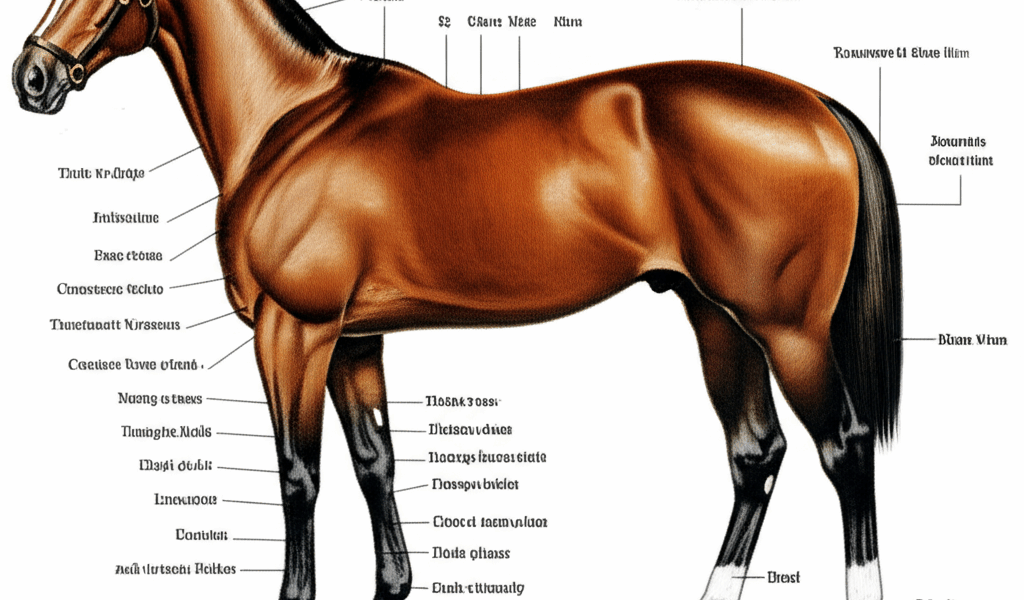
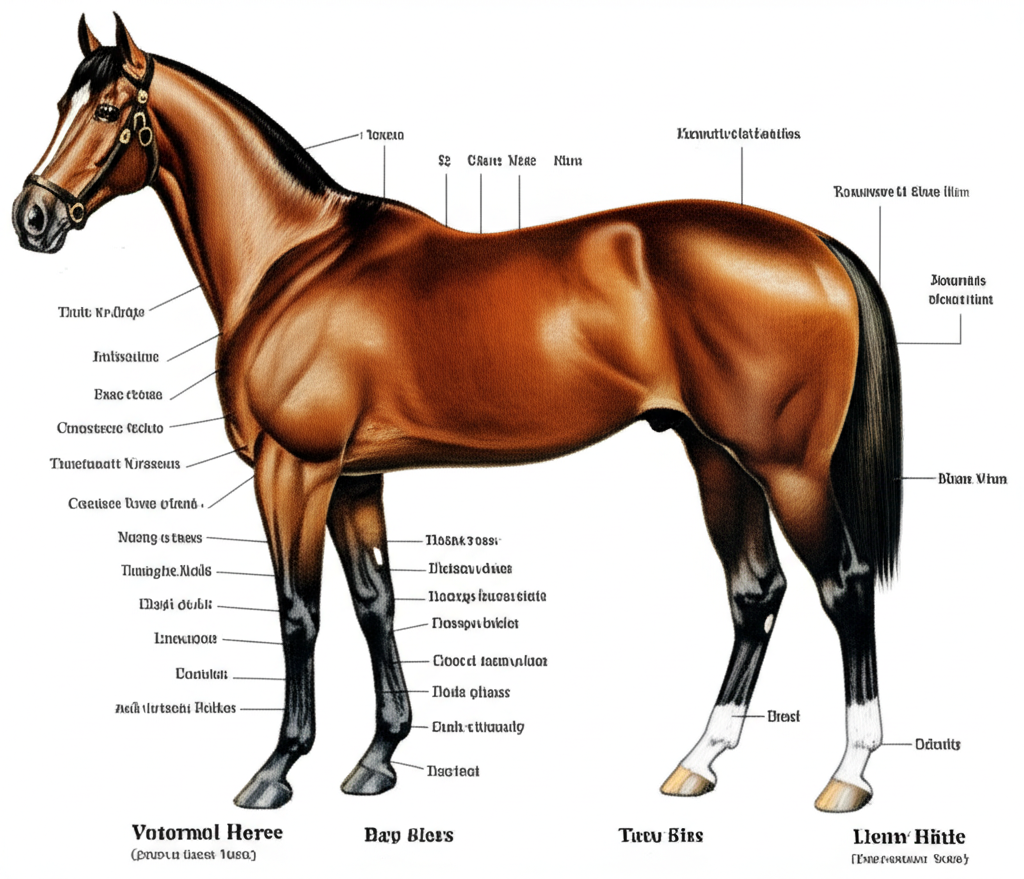
Horse anatomy has gotten complicated with all the technical terminology being thrown around. As someone who started out not knowing a fetlock from a forelock, I learned everything there is to know about the 50+ parts of the horse through years of ownership, vet visits, and tack fitting. Today, I will share it all with you.
Honestly, learning horse anatomy was one of those things I kept putting off until my vet started talking in what felt like a foreign language. “There’s heat in the left hind fetlock.” “The gaskin looks tight.” I was nodding along having no idea what she was talking about. So I finally sat down and learned it all, and I cannot tell you how much easier everything got after that.
Why Learn Horse Anatomy?
This isn’t just academic trivia. Knowing the parts of your horse makes you a better owner, period. Here’s what it does for you:
- You can actually communicate with your vet and farrier instead of saying “the thing above the hoof looks swollen”
- You catch injuries and problems way earlier because you know what you’re looking at
- Tack fitting goes from guesswork to precision
- You understand why your horse moves the way it does
- You can evaluate conformation when buying a horse (saved me from a bad purchase once)
- Your daily care improves because you understand the body you’re maintaining
The Head
The horse’s head is packed with sensory organs and tells you everything about what your horse is thinking and feeling.
External Parts of the Head
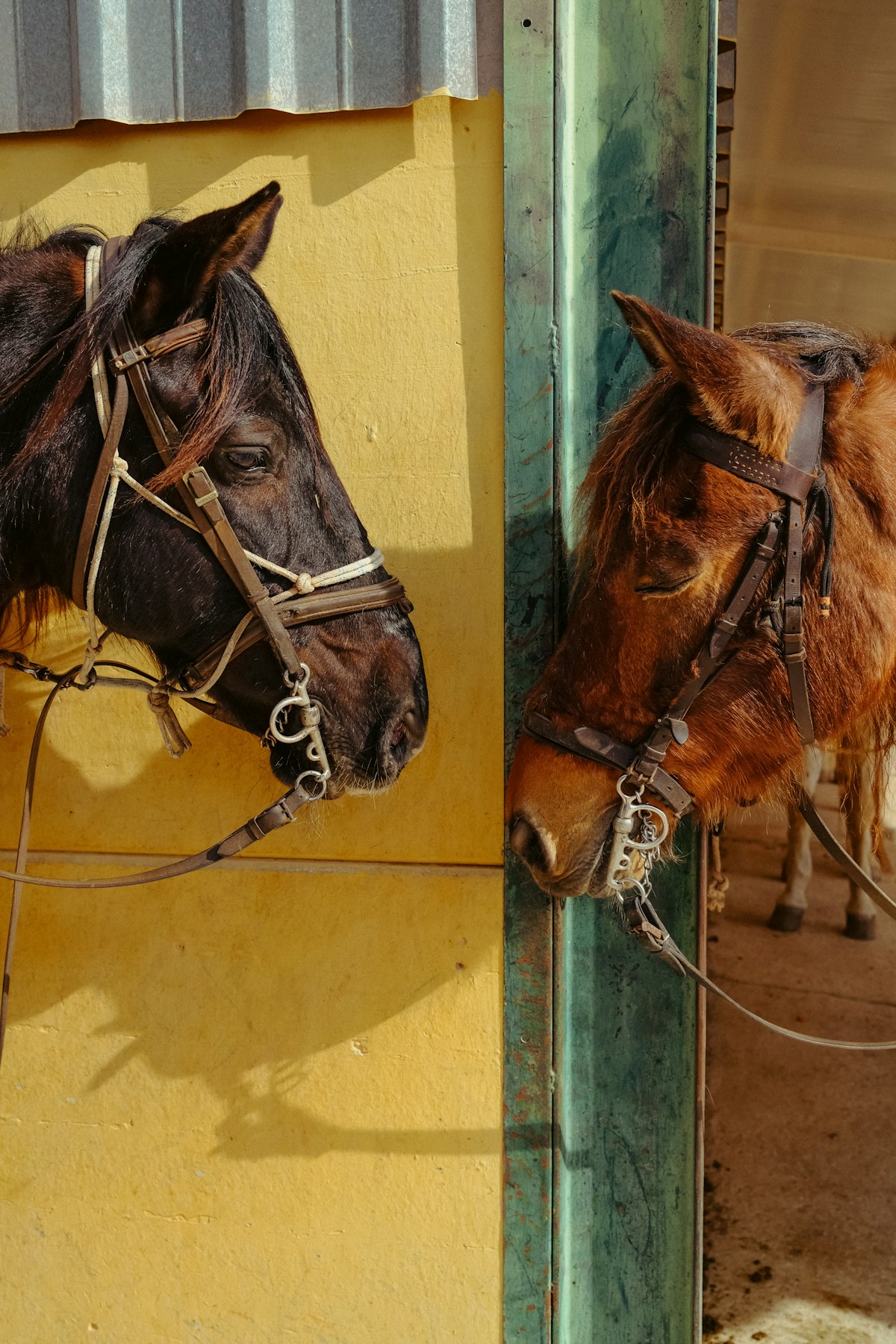
Poll: The very top of the head, between the ears. This is where the bridle’s crownpiece sits, and it’s a sensitive spot. If your horse is “poll shy” — flinching when you touch this area — they may have had bad experiences there. My mare was poll shy when I got her and it took months of gentle handling before she was comfortable being bridled.
Forelock: The hair that falls forward between the ears onto the forehead. It’s not just decorative — it gives some protection from flies and sun. Some horses have thick forelocks, others have wisps. Just genetics.
Ears: Here’s a fun fact that still amazes me: horses can rotate their ears 180 degrees independently. Each ear can track a different sound source. Ear position tells you everything about mood and attention. Forward means interested. Pinned back means annoyed or angry. Floppy to the sides means relaxed or sleepy.
Forehead: The broad, flat area between the eyes and below the forelock. Great spot for scratches, and many horses love having this area rubbed.
Eye: Horses have the largest eyes of any land mammal. They sit on the sides of the head, giving nearly 360-degree vision. The trade-off is two blind spots — directly in front of the nose and directly behind the tail. This is why you never approach a horse from directly behind.
Face: The front of the head, from forehead to nostrils. This is where you’ll see markings like a star, strip, blaze, or snip. Every horse’s facial markings are unique.
Bridge of nose: The bony ridge running down the center of the face. Some horses have a straight profile, others have a dish (concave) like Arabians, and some have a Roman nose (convex).
Nostril: Those big, flexible openings that flare dramatically during exercise. Here’s something most people don’t know: horses can only breathe through their nose, never through their mouth. Those big nostrils are doing all the respiratory heavy lifting.
Muzzle: The whole area including the chin, lips, and nostrils. Incredibly sensitive. Those whiskers (vibrissae) aren’t just cosmetic — they help horses sense objects close to their face, which is crucial given the blind spot in front of their nose.
Lips: Both upper and lower lips are prehensile, meaning horses use them like fingers to grasp food and investigate objects. Watch a horse pick up a single grain of feed and you’ll appreciate how dexterous those lips are.
Chin: The lower part of the muzzle. The chin groove is important for tack fitting — it’s where curb chains sit on certain bit setups.
Jaw/Jowl: The sides of the face below the cheekbones. Those big muscles you can see and feel? Those are the masseter muscles that power all that chewing. Horses chew a lot.
Cheek: The fleshy area over the cheekbone. Good spot for a friendly pat.
The Neck
Probably should have led with this section, honestly, because the neck is central to everything — balance, movement, and your horse’s ability to eat off the ground.
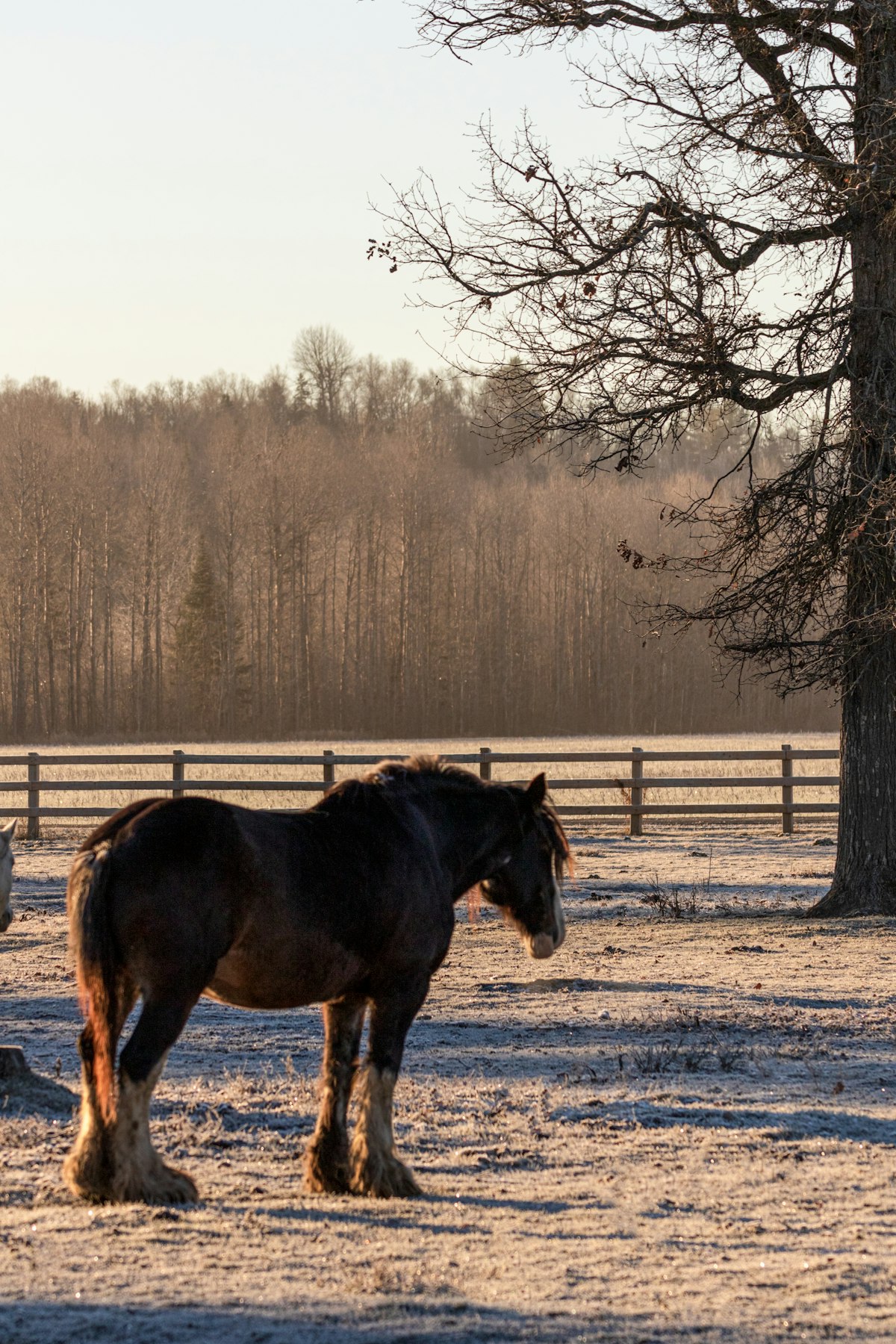
Crest: The top line of the neck where the mane grows. In a fit, well-muscled horse, the crest is firm. In overweight horses, it can get fatty and flop over, which is called “cresty neck” and is actually a health indicator your vet will watch.
Mane: The long hair growing from the crest. Can fall on either side or split down the middle. Different breeds have different mane traditions — some show disciplines require braiding, others want it long and flowing.
Throatlatch: Where the head connects to the neck, just behind the jaw. Super important for bridle fitting. Too tight here and you’re restricting your horse’s ability to breathe and flex properly. I check this fit every time I bridle up.
Windpipe (trachea): You can see and feel it along the underside of the neck. It’s a good landmark for checking your horse’s respiratory health.
Jugular groove: The channel on either side of the neck where the jugular vein runs. Your vet uses this for blood draws and IV medications. Worth knowing where it is.
The Body (Trunk)
The Topline
Withers: The bony ridge at the base of the neck, formed by the top points of the thoracic vertebrae. This is the highest point of the back when the head is up, and it’s where horse height is measured. More importantly for riders, saddles sit behind the withers. High withers need different saddle fitting than low (mutton) withers. My Thoroughbred has prominent withers that made saddle shopping an adventure.
Back: The stretch between the withers and the loin. Should be relatively short and strong, especially in riding horses. A long, weak back has trouble supporting a rider and is prone to soreness.
Loin: Between the back and croup, sitting over the lumbar vertebrae. Needs to be short, broad, and well-muscled. A weak loin means a horse that can’t engage its hindquarters properly — which affects basically everything in riding.
Croup: From the loin to the tail, sitting over the pelvis. Different breeds have different croup angles. Quarter Horses tend to have steeper croups, while Arabians often carry their tails higher with a flatter croup.
Dock: The fleshy base of the tail where the hair grows from. Be gentle here — some horses are very sensitive about their dock being handled.
Tail: An extension of the spine, covered with long hair. Used for fly control (essential function) and communication (a swishing tail can mean irritation, a clamped tail means fear).
The Sides and Underside
Shoulder: The large, sloping area from the withers to the point of shoulder. A good shoulder angle is one of the most important conformation features for riding. A well-angled shoulder means smooth, comfortable gaits. A straight, upright shoulder means choppy movement that’ll rattle your teeth.
Point of shoulder: The front of the shoulder where it meets the upper leg. An important landmark for saddle fitting — your saddle should sit behind this point.
Chest: The front of the body between the shoulders. Needs to be deep enough to house the heart and lungs properly. A narrow, shallow chest limits athletic capacity.
Breast: The muscular area at the front of the chest. Where a breast collar sits if you use one.
Barrel: The main body — ribs and abdomen. Well-sprung (nicely rounded) ribs mean good lung capacity and room for internal organs. A slab-sided horse tends to have less stamina.
Ribs: Horses have 18 pairs. You should be able to feel them with light pressure but not see them prominently. If you can see ribs easily, the horse is underweight. If you can’t feel them at all, they’re overweight.
Girth area: Where the girth or cinch sits, just behind the front legs. A common spot for sensitivity, rubs, and girth sores. I check this area before and after every ride.
Belly/Abdomen: The underside of the barrel. Worth looking at regularly — a distended belly can indicate various health issues.
Flank: The soft area between the last rib and the hip, on the side. Very sensitive — most horses don’t love being touched here. But watching the flank is how you count respiratory rate, which is useful information.
Stifle: This is the horse’s version of the human knee, connecting the thigh to the gaskin. It’s the largest joint in the horse’s body. Stifle issues are unfortunately common and can be career-ending for performance horses.
Hip: The bony prominence on each side of the croup. Used to measure width and symmetry.
Point of hip: The most prominent part, visible from above and behind. If one point of hip looks higher than the other, something’s going on that needs attention.
Buttock: The muscular area behind the hip and above the thigh. Well-developed muscles here indicate good hindquarter strength.
Thigh: The heavily muscled area above the stifle. This is where a lot of the horse’s power comes from.
The Front Legs (Forelimbs)
Front legs bear roughly 60% of the horse’s weight. That’s what makes front leg soundness endearing to us horse owners — we know those legs are carrying more than their fair share, and we watch them closely.
Point of shoulder: Where the shoulder blade meets the upper arm bone (humerus).
Arm: From the point of shoulder down to the elbow. Contains the humerus bone.
Elbow: The joint at the back of the upper leg. Should sit clear of the body so it can swing freely during movement.
Forearm: The muscular section from elbow to knee. Contains the radius bone. Well-developed forearm muscles indicate strength.
Knee: What we call the knee is actually the equivalent of a human wrist (the carpus). It’s made up of 7-8 small bones. Should look flat and clean from the front, not rounded or puffy. “Over at the knee” or “back at the knee” are conformation faults that affect soundness.
Cannon bone: Between the knee and fetlock. Contains the third metacarpal bone. Should be short and “clean” — meaning free of lumps, bumps, or puffiness. The shorter the cannon bone, generally the stronger the leg structure.
Splint bones: Small bones on either side of the cannon bone. These vestigial structures can develop painful bony growths called “splints,” especially in young horses in heavy work. I’ve dealt with splints on two horses and they’re usually manageable but annoying.
Tendons: Running down the back of the cannon bone. The superficial and deep digital flexor tendons are the ones you hear about getting injured in racehorses and sport horses. Learning to feel these tendons for heat or swelling is one of the most useful horse care skills you can develop.
Fetlock: The joint between cannon bone and pastern. It’s called the “ankle” of the horse, though the anatomy is quite different from ours. This joint absorbs tremendous impact with every stride.
Ergot: A small, horny growth at the back of the fetlock. It’s a vestigial structure — a leftover from ancestral horses that had more toes. Sometimes farriers trim these.
Pastern: Between the fetlock and the hoof. The angle of the pastern matters enormously — it affects shock absorption and should match the hoof angle. Too upright or too sloped and you’re looking at increased stress on tendons and joints.
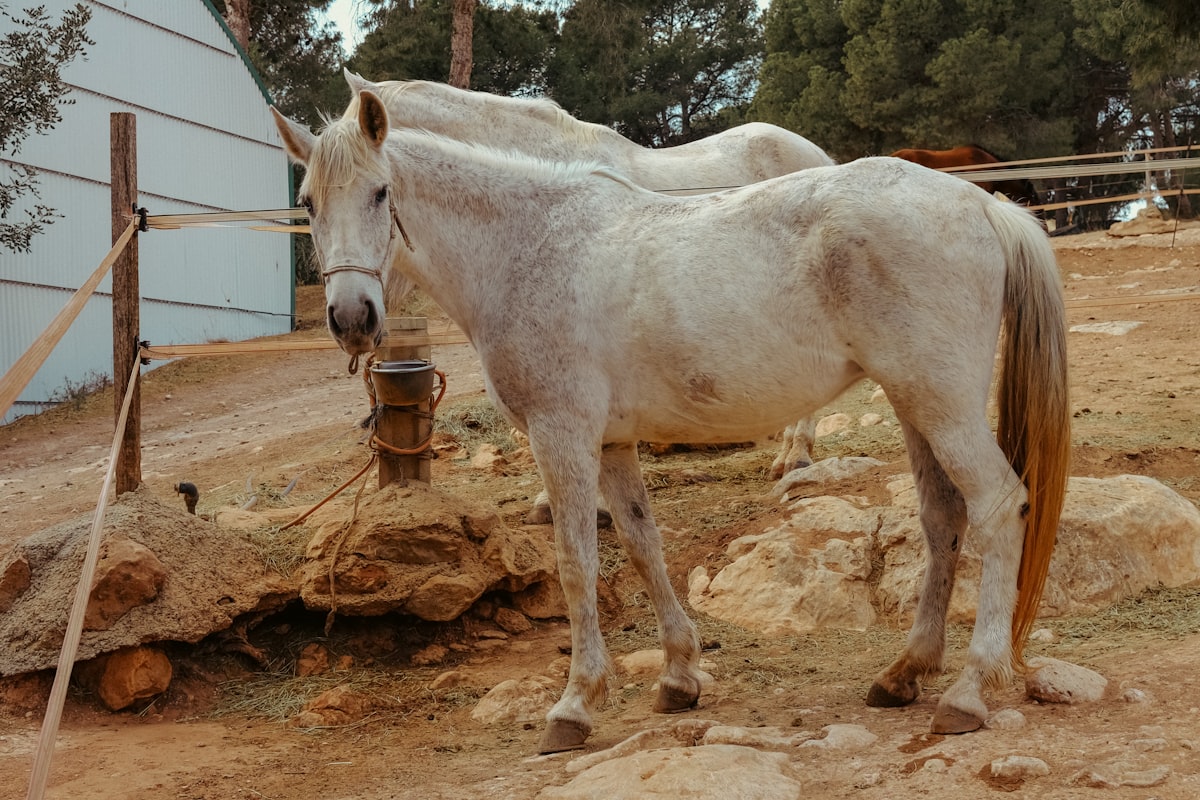
Coronet/Coronary band: The junction where hair meets hoof. This is where all hoof growth originates, growing downward at about a quarter inch per month. Injuries to the coronary band are serious because they can cause permanent hoof defects.
The Hind Legs
The hind legs provide propulsion and power. Everything that pushes the horse forward comes from back here.
Hip joint: Buried deep inside the body, connecting the pelvis to the femur. You can’t see it or feel it, but hip problems show up as hind-end lameness.
Thigh: Heavily muscled area above the stifle. Quarter Horses are famous for their massive thigh muscles. This is the powerhouse.
Stifle: The horse’s knee equivalent. Contains the patella (kneecap). Stifle locking — where the patella gets stuck — is more common than you’d think, especially in young or unfit horses.
Gaskin: The muscular area between the stifle and hock, containing the tibia. Well-developed gaskin muscles indicate a horse that can really push off the ground.
Hock: A complex joint equivalent to the human ankle. Multiple small bones, critical for propulsion, and unfortunately a very common site for arthritis and injuries like bog spavin and bone spavin. I pay close attention to my older horse’s hocks.
Point of hock: The bony projection at the back of the hock. This is the calcaneus — the same bone as your heel bone.
Cannon, fetlock, pastern, coronet: Similar structures to the front legs, with the same care considerations.
Chestnut: A horny growth on the inside of the leg. Above the knee on front legs, below the hock on hind legs. Here’s the cool part: each chestnut is unique, like a fingerprint. No two horses have the same pattern.
The Hoof
“No hoof, no horse.” That saying exists for a reason. The hoof is an incredibly complex structure and everything depends on it.
Hoof wall: The hard outer surface, made of keratin (same protein as your fingernails). Grows about a quarter to three-eighths of an inch per month. Takes roughly a year for a completely new hoof wall to grow from coronary band to ground.
Toe: The front of the hoof. Long toes create leverage problems and mechanical strain. This is why regular farrier visits matter.
Quarter: The sides of the hoof. Quarter cracks can be painful and persistent.
Heel: The back of the hoof. Collapsed heels are a common problem that changes how the entire leg loads.
Sole: The bottom of the hoof, slightly concave. Protects the sensitive internal structures underneath. A flat sole or a bruised sole means a sore horse.
Frog: The V-shaped rubbery structure on the bottom. Does double duty — provides traction and acts as a pump that helps circulate blood back up the leg with each step. When your horse’s frog smells bad, that’s thrush, and it needs treatment.
Bars: Extensions of the hoof wall that run alongside the frog. Help with structural support.
White line: Where the hoof wall meets the sole. A vulnerable spot — white line disease (a fungal infection) enters here and can undermine the hoof wall from inside.
Coronary band: Where it all starts. Every bit of hoof growth originates here. Protect it.
Common Anatomy Terms You’ll Hear
| Term | Meaning |
|---|---|
| Conformation | How the horse is built — the structure and proportions that determine soundness and athletic ability |
| Topline | The line from poll to tail along the top of the horse |
| Underline | The line from elbow to stifle along the belly |
| Near side | The left side of the horse (tradition says you mount from this side) |
| Off side | The right side of the horse |
| Hand | Unit of measurement; 1 hand = 4 inches. A 15.2 hand horse is 15 hands and 2 inches tall at the withers. |
Using Anatomy Knowledge
At the Vet
When you can say “There’s heat and swelling in the left hind fetlock and the digital pulse feels strong” instead of “his leg seems warm,” you’ve gone from helpless observer to useful partner in your horse’s healthcare. Your vet will appreciate the specificity more than you know.
Tack Fitting
Understanding that the saddle seats behind the withers, that the girth belongs in the girth groove, and that the throatlatch needs enough room for flexion and breathing turns tack fitting from frustrating to logical. Poorly fitted tack causes real pain and behavioral problems.
Evaluating Conformation
Knowing ideal proportions helps you evaluate horses for purchase or understand why your horse excels at certain things and struggles with others. Conformation tells you what a horse is physically built to do well.
The Bottom Line
Learning all 50+ parts of the horse takes time, and you won’t memorize everything in one sitting. Start with the major landmarks — withers, fetlock, hock, cannon, croup — and build from there. Before long, terms that used to sound like gibberish become second nature. I promise you’ll use this knowledge every single day you’re around horses, and it’ll make you a noticeably better owner.
Sources: American Association of Equine Practitioners, Kentucky Equine Research, University of Minnesota Extension, The Horse Magazine

Leave a Reply