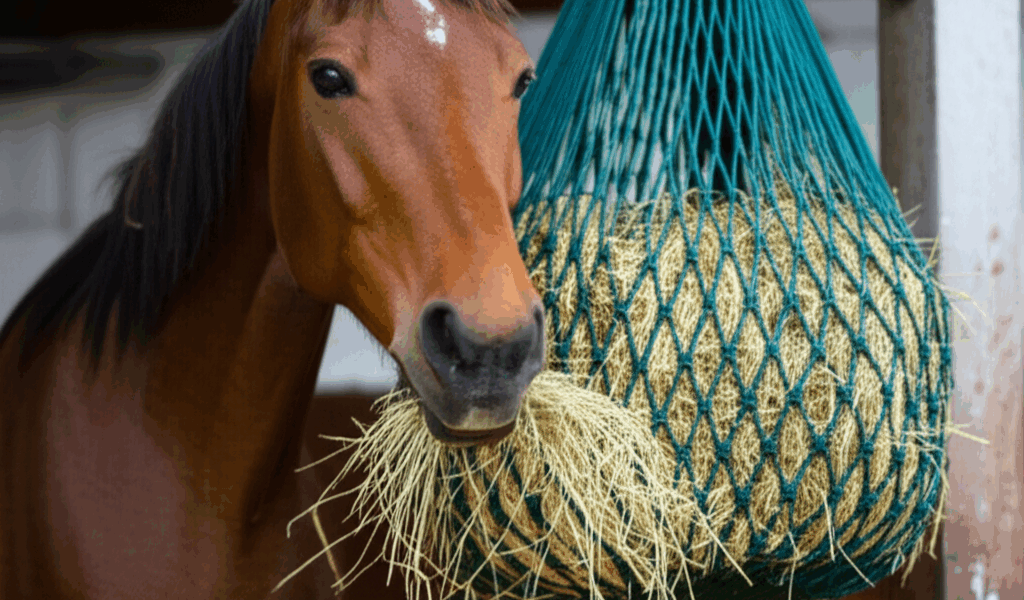
Hay is the foundation of every horse’s diet—but not all hay is created equal. Understanding hay types, quality indicators, and proper feeding helps keep your horse healthy and your feed bill manageable.
Why Hay Matters
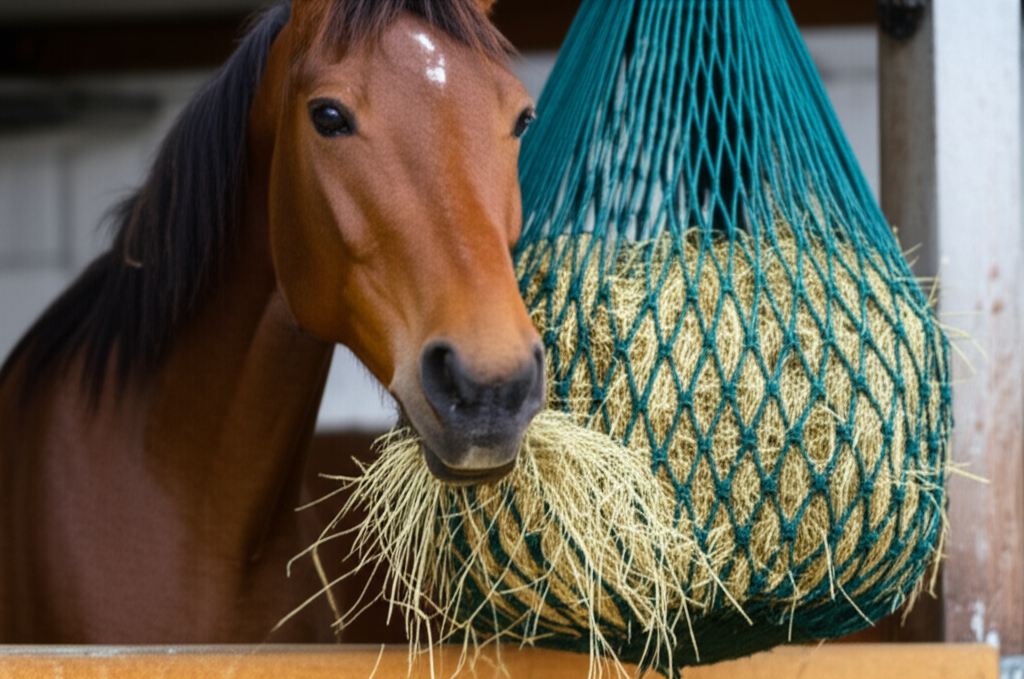
Horses evolved eating forage—grass and other plants—for up to 18 hours per day. Hay replicates this natural diet:
- Provides essential fiber for gut health
- Keeps digestive system moving (prevents colic)
- Generates heat through fermentation (warmth in winter)
- Satisfies the need to chew (mental health)
Types of Hay
Grass Hays
Generally safer and lower in calories—good for most horses.
Timothy
- Best for: Most horses, especially easy keepers
- Protein: 8-11%
- Notes: Gold standard, widely available in many regions
Orchard Grass
- Best for: General feeding, horses with allergies to timothy
- Protein: 10-12%
- Notes: Softer than timothy, palatable
Bermuda
- Best for: Horses in Southern/Western US
- Protein: 8-14% (varies widely)
- Notes: Common in warm climates, watch for sand content
Brome
- Best for: General feeding
- Protein: 9-12%
- Notes: Popular in Midwest
Legume Hays
Higher in protein and calories—feed carefully.
Alfalfa
- Best for: Hard keepers, growing horses, pregnant/lactating mares, performance horses
- Protein: 15-22%
- Cautions: Too rich for easy keepers, can cause weight gain and hyperactivity
Clover
- Best for: Mixed with grass hay
- Protein: 14-18%
- Cautions: Can cause slobbers (harmless but messy), photosensitivity in some horses
Mixed Hays
- Combination of grass and legume
- Often labeled “grass/alfalfa mix”
- Good compromise for many horses
Hay Quality Indicators
Good Quality Hay
- Color: Green (indicates vitamins preserved)
- Smell: Fresh, slightly sweet
- Texture: Soft, pliable leaves
- Leafiness: More leaves = more nutrition
- Cleanliness: Free of weeds, dirt, debris
Bad Quality Hay (Avoid)
- Mold: White or gray dusty patches—NEVER feed
- Dust: Excessive dust causes respiratory problems
- Brown/yellow color: Sun-bleached, reduced nutrition
- Musty smell: Indicates mold or improper curing
- Weeds: Can be toxic or reduce palatability
- Moisture: Damp hay will mold
How Much Hay to Feed
General Guidelines
| Horse Type | Hay Amount (% body weight) |
|---|---|
| Maintenance | 1.5-2% |
| Light work | 1.5-2% |
| Heavy work | 2-2.5% |
| Easy keeper | 1.5% (minimum) |
Example: 1,000 lb horse needs 15-20 lbs hay per day
Minimum Requirements
- Never feed less than 1% body weight in forage
- Horses need fiber for gut health
- Restricting hay too much causes ulcers and behavioral issues
Hay Feeding Tips
Best Practices
- Feed on ground level: Natural grazing position
- Use hay nets: Slows eating, reduces waste
- Multiple feedings: Divide into 2-3 meals minimum
- Free choice: Best for most horses (unless obese)
- Weigh hay: Don’t guess—use a scale
Storage
- Store off ground on pallets
- Keep dry and ventilated
- Use within one year for best nutrition
- Check for mold before feeding
Special Situations
Horses with Metabolic Issues
- Test hay for sugar content (NSC)
- Look for NSC under 10-12%
- Soak hay to reduce sugars (30-60 minutes)
- Avoid alfalfa
Senior Horses
- May need softer hay (soaked if dental issues)
- Consider hay cubes or pellets
- Alfalfa often appropriate for weight maintenance
Hay Testing
Professional hay analysis reveals:
- Protein content
- Sugar (NSC) levels
- Mineral content
- Digestible energy
Cost: $25-50 per test—worth it for metabolic horses or to balance diet
The Bottom Line
Quality hay is the foundation of horse nutrition—more important than any supplement or grain. Choose hay appropriate for your horse’s needs, prioritize quality over price, and feed adequate amounts. When in doubt, have hay tested and work with an equine nutritionist to balance your horse’s diet.
Sources: National Research Council, University of Kentucky Extension, AAEP

Leave a Reply