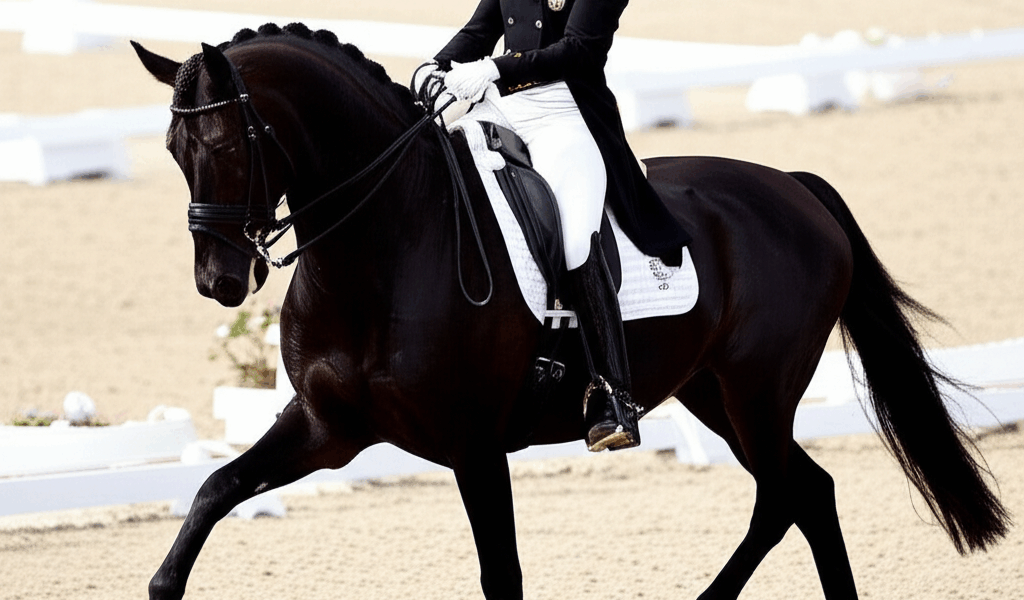
Walking into your first horse show can be overwhelming—there are so many different types of classes, disciplines, and competitions. This guide breaks down every major type of horse show so you know what to expect.
Understanding Horse Shows
English Disciplines
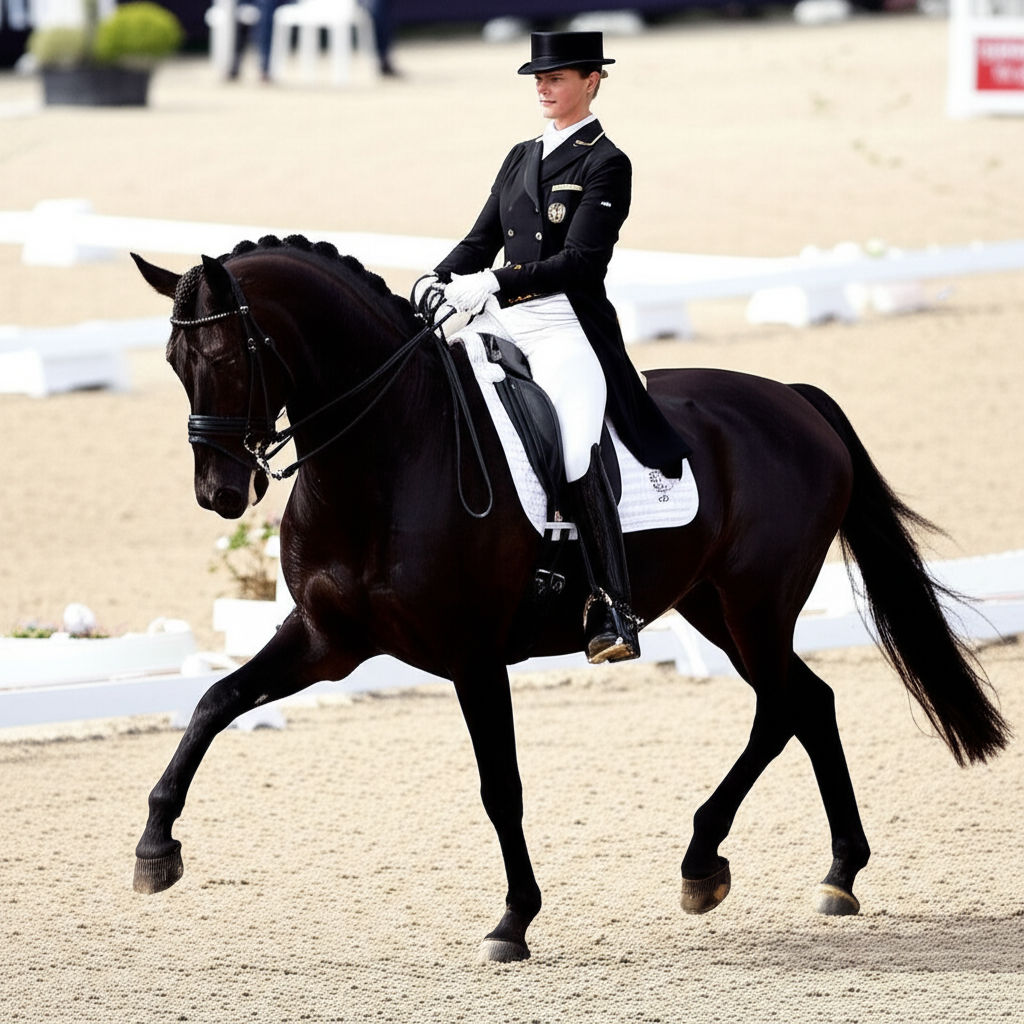
Dressage
Often called “ballet on horseback,” dressage tests horse and rider precision through a series of predetermined movements.
- What to expect: Riders perform in a 20×60 meter arena, executing specific movements at set points
- Levels: Introductory through Grand Prix
- Judging: Each movement scored 0-10
- Attire: Dark coat, white breeches, top hat at upper levels
- Olympic sport: Yes (since 1912)
Show Jumping
Horse and rider navigate a course of jumps, trying to be fast without knocking rails.
- What to expect: Colorful fences, timed rounds, jump-offs for ties
- Heights: From 18 inches (cross rails) to 5+ feet (Grand Prix)
- Penalties: 4 faults per rail down, time faults for slow rounds
- Olympic sport: Yes (since 1912)
Hunter Classes
Judges evaluate the horse’s movement, manners, and style over fences—how pleasing the horse is to ride.
- Judging: Subjective—smooth gaits, jumping form, overall picture
- Divisions: Working hunters, green hunters, children’s hunters, amateur hunters
- Attire: Conservative coat, tan breeches, plain tack
- Not timed: Unlike jumpers, speed doesn’t matter
Equitation
The rider is judged, not the horse. How well does the rider maintain position and communicate with the horse?
- Hunter seat equitation: Flat and over fences classes
- Medal classes: Prestigious equitation competitions (Maclay, Medal, USEF)
- Dressage seat equitation: Position evaluated during dressage tests
Eventing (Three-Day Eventing)
The “triathlon” of equestrian sports—combines dressage, cross-country jumping, and show jumping.
- Day 1: Dressage test
- Day 2: Cross-country (solid natural obstacles, timed)
- Day 3: Show jumping
- Levels: Beginner Novice through Advanced/5-star
- Olympic sport: Yes (since 1912)
Western Disciplines
Western Pleasure
Horses are judged on smooth gaits and pleasant expression—would this horse be a pleasure to ride?
- Gaits: Walk, jog (slow trot), lope (slow canter)
- Judging: Manners, movement quality, responsiveness
- Attire: Western hat, show chaps, silver-adorned saddles
Reining
Often called “Western dressage,” reining features athletic maneuvers like spins, slides, and rollbacks.
- Pattern: Riders perform set patterns from memory
- Scoring: Starts at 70, points added/subtracted for each maneuver
- Highlights: Sliding stops, 360° spins, flying lead changes
- FEI discipline: Yes (World Equestrian Games)
Barrel Racing
Pure speed—horse and rider race a cloverleaf pattern around three barrels.
- Timing: Fastest time wins (often hundredths of a second)
- Penalties: 5 seconds per knocked barrel
- Popular breeds: Quarter Horses, Paints, Appaloosas
- Rodeo event: Yes
Cutting
Horse works to separate a cow from the herd and prevent it from returning—showcasing “cow sense.”
- Time: 2.5 minutes to work multiple cattle
- Judging: Horse’s ability, difficulty of cattle worked
- Rider: Must not cue horse after initial cut
Western Horsemanship
Western equitation—the rider is judged on position and ability to control the horse through a pattern.
Trail Classes
Horse and rider navigate obstacles like gates, bridges, logs, and mailboxes—simulating trail situations.
Breed Shows
What Are Breed Shows?
Shows limited to specific breeds, often featuring both halter (conformation) and performance classes.
Major Breed Shows
- AQHA World Show: Quarter Horses (Oklahoma City)
- Arabian Nationals: US National Championship
- Pinto World: Pinto Horse Association
- Morgan Grand National: Morgan horses
- Appaloosa World: Appaloosa Horse Club
Other Disciplines
Driving
Horse pulls a cart or carriage—includes pleasure driving, combined driving, and fine harness.
Endurance
Long-distance racing (25-100 miles) with veterinary checks along the way.
Polo
Team sport played on horseback—oldest team sport in the world.
Mounted Games
Relay-style games on horseback—popular with Pony Club.
Vaulting
Gymnastics performed on a moving horse—yes, really.
Show Levels & Organizations
| Level | Description |
|---|---|
| Schooling Shows | Informal, learning-focused, low pressure |
| Local/Regional | Recognized shows, more competition |
| National | Championship-level competition |
| International/FEI | World-level, Olympic qualification |
Major Organizations
- USEF: United States Equestrian Federation
- USDF: United States Dressage Federation
- USHJA: United States Hunter Jumper Association
- AQHA: American Quarter Horse Association
- NRHA: National Reining Horse Association
Getting Started
Tips for Your First Show
- Start with schooling shows—lower pressure, great learning experience
- Arrive early—give yourself time to settle in
- Watch classes before you compete
- Bring a knowledgeable friend or trainer
- Focus on learning, not winning
The Bottom Line
Horse shows range from casual schooling shows to the Olympic Games, with dozens of disciplines in between. Whether you prefer the precision of dressage, the thrill of barrel racing, or the elegance of hunters, there’s a horse show discipline perfect for you. Start with local schooling shows to learn the ropes, then work your way up as your skills improve.
Sources: USEF, USDF, AQHA, NRHA, FEI

Leave a Reply