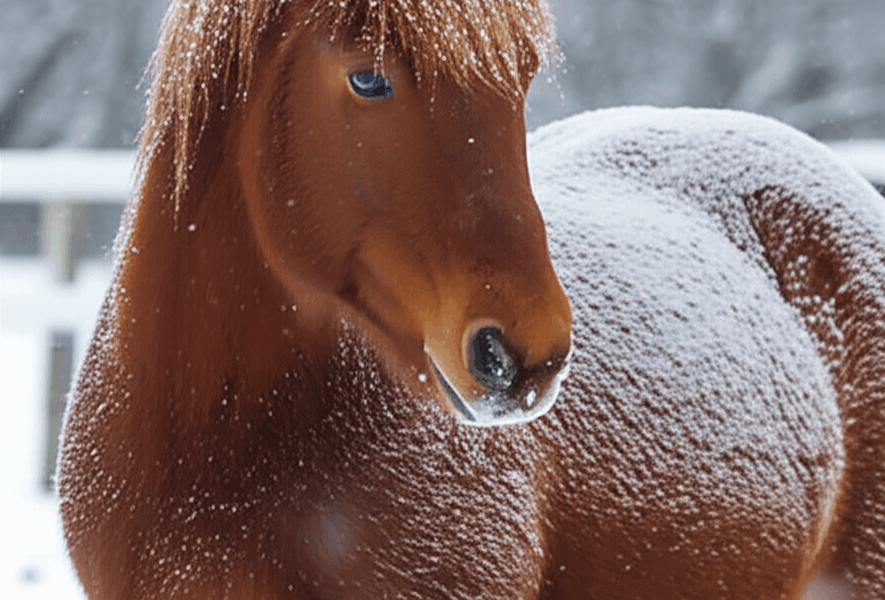
Winter brings unique challenges for horse owners—frozen water, icy footing, and deciding whether to blanket. Here’s everything you need to know to keep your horse healthy and comfortable through the cold months.
How Horses Handle Cold
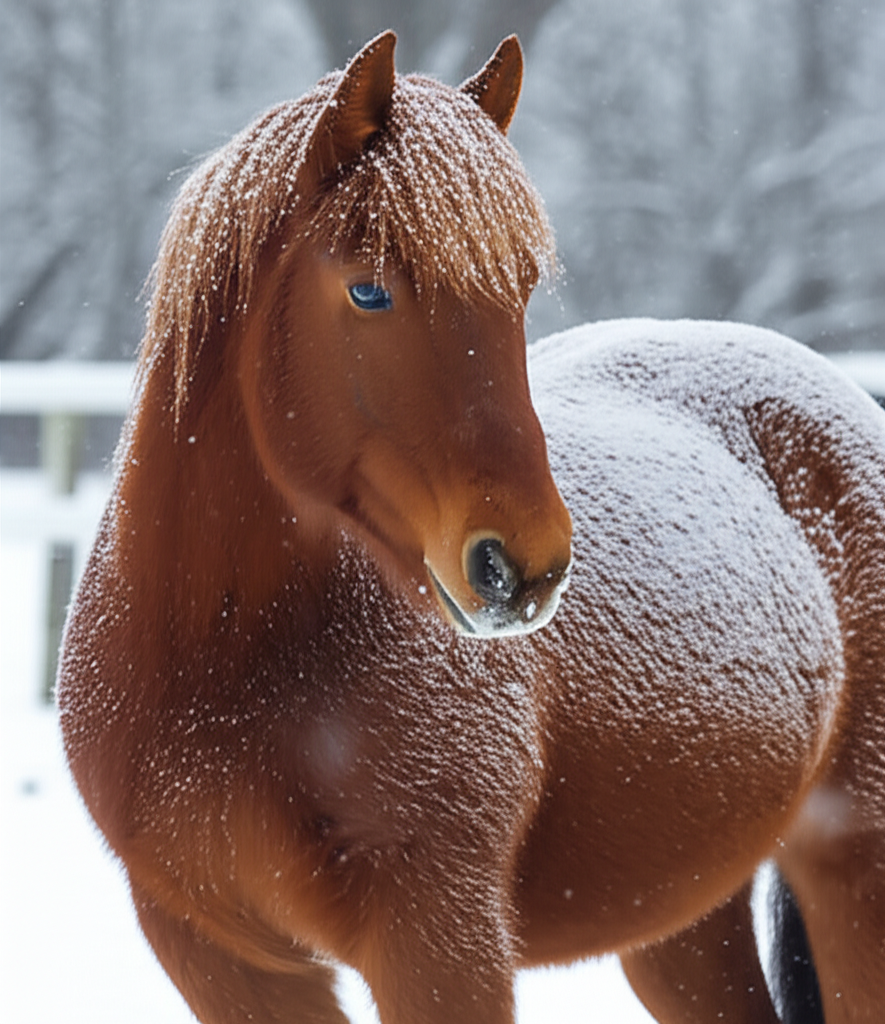
Horses are remarkably well-adapted to cold weather:
- Natural insulation: Winter coat traps air for warmth
- Thermoneutral zone: Horses are comfortable in 30-60°F
- Lower critical temperature: Healthy adult horses can handle 0°F or lower
- Hindgut fermentation: Digesting hay generates internal heat
Important: Horses handle cold far better than heat. A healthy horse with winter coat and shelter can thrive in temperatures that would be dangerous for humans.
The Blanket Debate
When to Blanket
- Clipped horses: Always need blankets in cold weather
- Elderly or ill horses: May need extra protection
- Thin-skinned breeds: Thoroughbreds, Arabians may need blankets
- Wet + wind + cold: This combination is dangerous
- No shelter available: Blanket provides protection
When NOT to Blanket
- Healthy horse with full winter coat: Let natural insulation work
- Adequate shelter available: Horse can get out of wind/rain
- Above 40°F: Most horses don’t need blankets
Blanket Fit
- Should not rub at shoulders or withers
- Adequate chest room
- Proper belly and leg straps
- Check daily for rubs or shifting
Blanket Weight Guide
| Temperature | Clipped Horse | Unclipped Horse |
|---|---|---|
| 40-50°F | Sheet or light blanket | None needed |
| 30-40°F | Medium weight | None or sheet |
| 20-30°F | Medium-heavy | Light blanket if needed |
| Below 20°F | Heavy weight | Medium if needed |
Water: The #1 Priority
Preventing Dehydration
Horses drink less in cold weather but still need 10-12 gallons daily. Dehydration leads to impaction colic—the most common winter emergency.
- Keep water 45-65°F: Horses drink more warm water
- Use tank heaters: Prevent freezing and maintain temperature
- Check twice daily: Ice can form quickly
- Multiple water sources: Backup if one freezes
Signs of Dehydration
- Skin tent test: Pinch skin on neck—should snap back quickly
- Tacky gums
- Reduced manure output
- Dark urine
Feeding for Warmth
Increase Hay, Not Grain
Digesting hay generates more internal heat than grain. For every 10°F below freezing:
- Increase hay by 2-4 lbs per day
- Provide hay before turnout in cold weather
- Free-choice hay helps horses stay warm overnight
Hay Quality Matters
- Good quality grass hay is ideal
- Avoid dusty or moldy hay
- Test hay if quality is questionable
Shelter Requirements
Minimum Shelter
- Three-sided run-in shed
- Back to prevailing wind
- 12×12 feet minimum per horse
- Dry footing inside
Ideal Features
- Good ventilation (no condensation)
- Dry bedding
- Protection from wind and precipitation
- Multiple openings if multiple horses (prevents trapping)
Hoof Care
Winter Hoof Issues
- Snowballing: Snow packs in hooves, creates dangerous stilts
- Ice: Extremely slippery for shod horses
- Wet-dry cycling: Can cause cracks and thrush
Solutions
- Snow pads: Prevent snowballing in shod horses
- Barefoot: Often safer in snow/ice
- Borium/studs: Add traction for icy conditions
- Regular trimming: Continue 6-8 week schedule
- Pick hooves daily: Especially important in freeze-thaw cycles
Exercise & Turnout
Safe Winter Exercise
- Extend warm-up: Cold muscles need longer to loosen
- Check footing: Avoid icy or hard-frozen ground
- Cool down properly: Don’t put away wet horse in cold weather
- Indoor arenas: May need watering to control dust
Turnout Considerations
- Horses still need turnout for mental and physical health
- Ice is the biggest danger—not cold
- Salt or sand high-traffic areas
- Check fences (snow can create escape routes)
Health Monitoring
Check Daily
- Appetite and water consumption
- Manure production (less = dehydration risk)
- Body condition (hidden under blankets and coat)
- Legs and hooves
Winter Health Risks
- Impaction colic: From dehydration—most common winter emergency
- Respiratory issues: From poor ventilation in closed barns
- Weight loss: Increased caloric needs not met
- Rain rot: From wet conditions under blankets
Quick Winter Checklist
- ☐ Water heater functioning
- ☐ Adequate hay supply
- ☐ Shelter available
- ☐ Blankets in good repair (if using)
- ☐ Farrier scheduled
- ☐ Emergency vet contact handy
- ☐ Safe footing in high-traffic areas
The Bottom Line
Horses are built for cold weather—their biggest winter enemies are lack of water, inadequate hay, and ice. Focus on hydration, increase forage, provide shelter from wind and rain, and let your horse’s natural coat do its job. With proper management, horses can thrive through even harsh winters.
Sources: American Association of Equine Practitioners, University of Minnesota Extension, Rutgers Equine Science Center

Leave a Reply