![What to Expect at Your First Riding Lesson [2026]](https://horsebesties.com/wp-content/uploads/sites/115/2026/01/beginner_lesson-1024x600.png)
Taking your first horseback riding lesson is exciting—and maybe a little nerve-wracking. Here’s what to expect and how to make the most of your introduction to riding.
Before Your First Lesson
What to Wear
- Boots: Closed-toe with a small heel (riding boots ideal, but sturdy boots work)
- Pants: Long pants that don’t bunch (jeans work but may chafe)
- Shirt: Fitted, not loose (won’t flap and spook horse)
- Hair: Tied back if long
- Jewelry: Remove dangling earrings, bracelets
What NOT to Wear
- Sandals or open-toed shoes
- Shorts
- Loose, flapping clothing
- Perfume (can bother horses)
Finding a Good Lesson Program
- Look for certified instructors (PATH, ARIA, BHS)
- Visit facility before booking
- Ask about lesson horse temperament
- Check reviews and reputation
- Ensure proper safety equipment provided
What Happens in Your First Lesson
Ground Skills (Usually First)
You’ll likely start with:
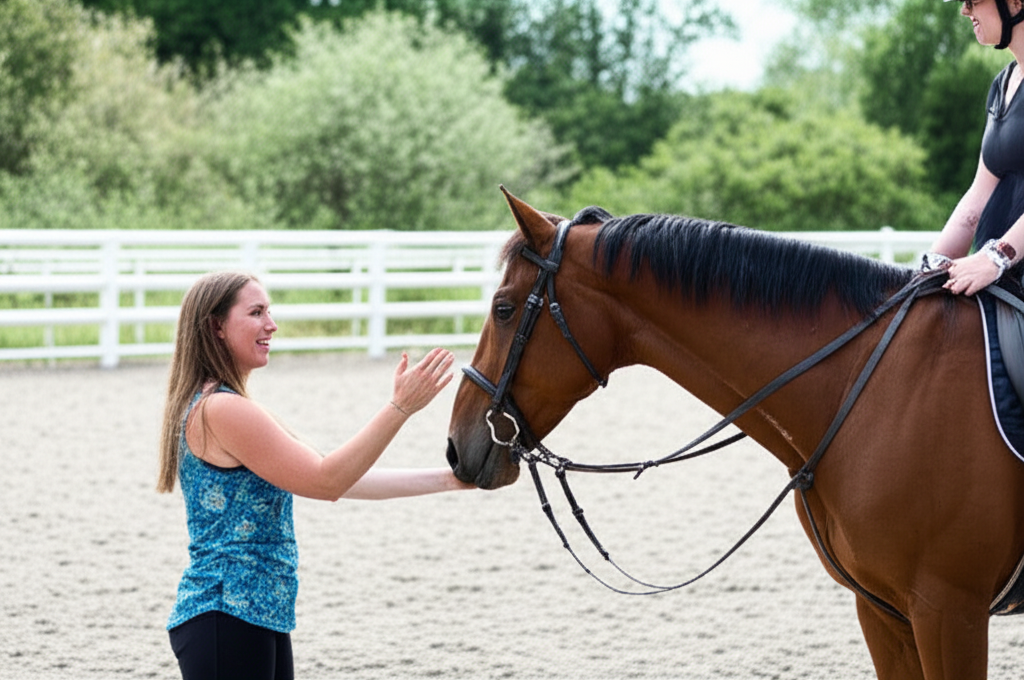
- Meeting your horse: Introduction and petting
- Grooming basics: Brushing, picking hooves
- Leading: Walking beside the horse
- Tacking up: Putting on saddle and bridle
Mounting
- Always mount from the left side
- Use a mounting block when available
- Put left foot in stirrup, swing right leg over
- Sit gently in saddle
Basic Position
Your instructor will teach you:
- Seat: Sit deep, weight in your seat bones
- Heels: Down, with weight in heels
- Legs: Gently against horse’s sides
- Hands: Soft, holding reins without tension
- Eyes: Look where you’re going
First Movements
- Walk: Gentle squeeze with legs
- Stop: Sit deep, close hands on reins
- Steering: Open rein in direction you want to go
Common Beginner Mistakes
Physical Mistakes
- Gripping with knees: Makes you pop out of saddle
- Leaning forward: Puts you off balance
- Toes down: Foot can slip through stirrup
- Holding breath: Tenses your whole body
- Death grip on reins: Hurts horse’s mouth
Mental Mistakes
- Expecting to be perfect immediately
- Comparing yourself to others
- Feeling embarrassed about being nervous
- Rushing the learning process
Safety Essentials
Always Wear a Helmet
- ASTM/SEI certified equestrian helmets
- Bicycle helmets are NOT suitable
- Proper fit is essential
- Replace after any fall
Basic Safety Rules
- Never walk behind a horse without warning them
- Always wear closed-toe shoes around horses
- Stay calm—horses sense your emotions
- Listen to your instructor
- Know where emergency exits are
Building Skills: What Comes Next
Typical Progression
| Stage | Skills |
|---|---|
| Lessons 1-5 | Walk, steering, stopping, position |
| Lessons 5-15 | Trot introduction, posting |
| Lessons 15-30 | Trot refinement, canter introduction |
| Lessons 30+ | Canter, jumping basics, advanced skills |
What to Expect After Your First Lesson
Physical Feelings
- Soreness: Inner thighs, core, back—completely normal
- Tiredness: Riding uses muscles you didn’t know you had
- Good soreness: Should fade within 2-3 days
Emotional Feelings
- Excitement to ride again
- Maybe frustration at difficulty
- Connection with the horse
- Desire to learn more
Choosing Your Path: English vs. Western
English Riding
- Smaller saddle, closer contact
- Two-handed rein contact
- Leads to: dressage, jumping, eventing
Western Riding
- Larger saddle with horn
- Often one-handed (neck reining)
- Leads to: trail riding, reining, ranch work
Which to Choose?
- Try both if possible
- Consider your goals
- What’s available locally?
- Both teach fundamental skills
Costs of Learning to Ride
| Expense | Cost Range |
|---|---|
| Private lesson (30-60 min) | $50 – $100 |
| Group lesson | $35 – $65 |
| Helmet (to purchase) | $50 – $200 |
| Riding boots | $75 – $300 |
The Bottom Line
Your first riding lesson is just the beginning of an amazing journey. Expect to feel awkward and out of balance—that’s completely normal. Focus on having fun, building a relationship with your lesson horse, and trusting your instructor. Riding takes years to master, but the connection with horses makes every lesson worth it.
Sources: United States Equestrian Federation, Certified Horsemanship Association

Leave a Reply