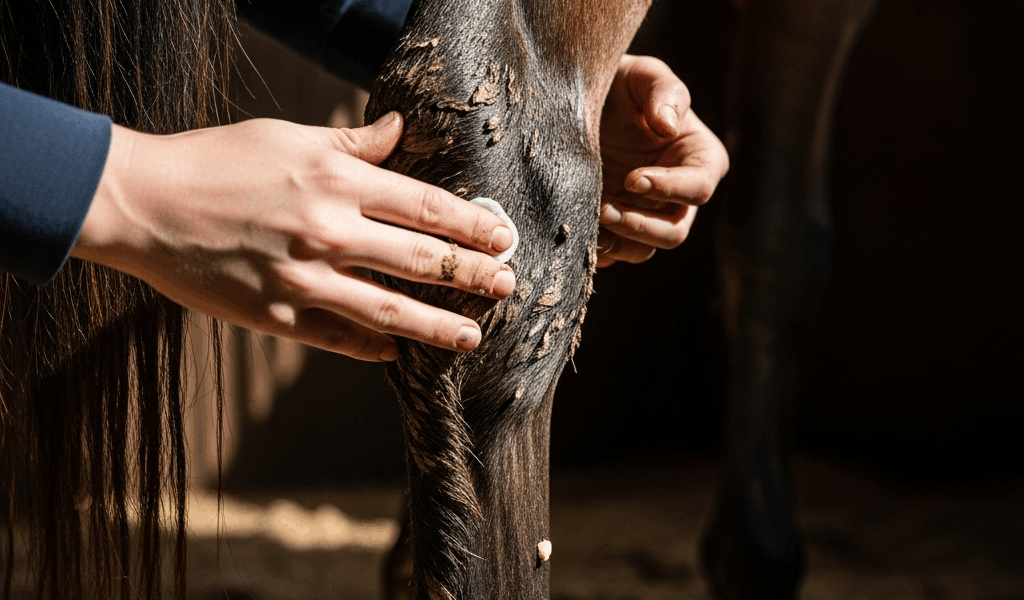
You pulled your horse in from turnout and noticed crusty, scabby patches on the back of the pasterns. The skin is red and weepy underneath, and your horse flinches when you touch the area. That is mud fever — also called scratches, greasy heel, or pastern dermatitis — and if you catch it early, you can treat it at the barn without a vet visit. Left alone, it gets worse fast.
What Mud Fever Actually Is
Mud fever is a bacterial and sometimes fungal skin infection that targets the pastern area — the soft skin between the fetlock and the hoof. It happens when prolonged exposure to wet, muddy conditions breaks down the skin’s natural barrier, letting bacteria (usually Dermatophilus congolensis) and fungi get in and set up shop.
Horses with white legs and pink skin are more susceptible because their skin is thinner and more sensitive to UV damage and moisture. Draft breeds with heavy feathering are also at higher risk because the long hair around the pasterns traps moisture against the skin. But any horse standing in mud for extended periods can develop it. Spring and fall are the worst seasons — wet ground, temperature swings, and horses going in and out of pasture through gate areas that turn into mud pits.
Spotting It Early
Run your hands down your horse’s legs every time you bring them in from turnout during wet season. You are feeling for heat, swelling, scabs, or any area where the horse reacts when you touch it. Early mud fever feels like small raised bumps or rough patches on the back of the pastern. The hair may be slightly matted or clumped.
Left untreated, those small bumps become crusty scabs with raw, weepy skin underneath. The area swells. The horse starts lifting the affected leg or shifting weight off it. In severe cases, the swelling extends up the cannon bone and the horse becomes visibly lame. Catching it at the bumpy, rough-patch stage saves you weeks of treatment and your horse a lot of discomfort.
Step-by-Step Treatment at the Barn
Step 1: Clip the hair. Using body clippers with a #10 blade, clip the hair away from the affected area and about an inch beyond it in every direction. The hair traps moisture and bacteria against the skin, and you cannot effectively clean or treat the area through a coat of hair. If the horse is sensitive about the area being clipped, have someone hold the opposite leg to keep them still.
Step 2: Soften and remove the scabs. Soak a clean cloth in warm water and hold it against the scabs for five minutes to soften them. Gently remove the scabs — do not rip them off dry. The bacteria live underneath the scabs, and you need to expose the skin to treat it effectively. This is the part your horse will object to. Be patient and work in small sections.
Step 3: Wash with antiseptic. Use a chlorhexidine scrub (like Hibiclens) or a diluted betadine solution. Lather it on, let it sit for ten minutes, then rinse gently with clean water. Do not scrub hard — the skin is already damaged and aggressive scrubbing makes it worse. One wash per day for seven to ten days, then reduce to two or three times per week as the skin heals.
Step 4: Dry completely. Pat the area dry with a clean towel. This step matters more than people think. Applying treatment to wet skin traps moisture underneath and creates exactly the environment the bacteria love. Let it air dry for a few minutes after toweling if the weather allows.
Step 5: Apply treatment. Options that work: Desitin (zinc oxide barrier cream), Corona ointment, or a veterinary-prescribed antibiotic cream. Apply a thin layer covering the entire affected area. The barrier cream serves two purposes — it treats the infection and protects the healing skin from further moisture exposure during turnout.
Repeat daily until the skin looks pink and healthy with new hair growth coming in. Most mild to moderate cases clear up in two to three weeks with consistent treatment.
When to Call the Vet
Home treatment covers the majority of mud fever cases. Call the vet when you see: swelling that extends above the fetlock and up the cannon bone, lameness that does not improve after three days of treatment, fever (temperature above 101.5 F), discharge that smells foul (could indicate a deeper infection), or no improvement after five to seven days of consistent home treatment.
The vet may prescribe systemic antibiotics (usually trimethoprim-sulfa), a stronger topical treatment, or anti-inflammatory medication to reduce swelling. In severe cases, the horse may need stall rest with bandaging to keep the area clean and dry while the infection clears.
Preventing It From Coming Back
Manage the mud. You cannot eliminate mud from a horse property, but you can control where it accumulates. Gravel pads around gates, water troughs, and high-traffic areas keep horses out of the worst spots. Sacrifice areas — designated turnout spaces that you accept will get muddy so the rest of the pasture stays intact — prevent the entire property from becoming a swamp.
Stop washing legs every day. This is counterintuitive, but hosing off muddy legs daily strips the natural oils from the skin and actually increases the risk of mud fever. Instead, let the mud dry on the legs and brush it off when it is dry. The dried mud falls away cleanly and the skin’s oil layer stays intact.
Apply barrier cream before turnout. During the wettest months, a thin layer of Desitin, petroleum jelly, or a commercial barrier product on the pasterns before the horse goes out creates a waterproof shield. Apply only to clean, dry skin — putting barrier cream over dirty skin traps the bacteria you are trying to keep out.
Check legs daily during wet season. A thirty-second feel of both hind pasterns when you bring your horse in is the single best prevention tool. Catching the first rough patch takes three days to treat. Missing it until the scabs and swelling appear takes three weeks.


Leave a Reply