![Can Horses Eat Peanut Butter? Surprising Answer [2026]](https://horsebesties.com/wp-content/uploads/sites/115/2026/01/horse-peanutbutter-1024x600.png)
Whether horses can eat peanut butter has gotten complicated with all the conflicting pet-food advice crossing over into the horse world.
Here’s how I found out: I was eating a PB sandwich at the barn one afternoon and my horse practically shoved his nose into my lunch. I let him lick a tiny bit off my finger, mostly out of curiosity. The face he made — pure bliss. Now peanut butter is my secret weapon for medication delivery and our go-to high-value training reward.
Is Peanut Butter Safe for Horses?
Short answer: yes. Plain, unsweetened peanut butter is totally safe for healthy horses when you don’t go crazy with the amounts. The main thing to watch is the calorie and fat content — this is a treat, not a food group.
Why it’s safe:
- Peanuts themselves are non-toxic to horses
- Horses handle fats and proteins just fine in moderate amounts
- Nothing in peanuts is harmful to equines
- The sticky texture is not a choking hazard — horses handle it way better than dogs do, actually
Choosing the Right Peanut Butter
Probably should have led with this section, honestly, because not all peanut butter is created equal when it comes to horses.
What to buy:
- Natural, unsweetened: The ingredient list should basically say “peanuts” and maybe salt. That’s it.
- Unsalted if you can find it: Better for horses, though a little salt won’t hurt
- No added sugar varieties: Horses don’t need the extra sweetness
What to avoid:
- Anything with xylitol: This artificial sweetener is toxic to dogs. The research on horses is limited, but why risk it?
- Chocolate peanut butter: Chocolate is genuinely toxic to horses. Hard no.
- Heavily sweetened varieties: All that added sugar is completely unnecessary
- Flavored or fancy varieties: Stick with plain. Unknown additives are not worth the gamble.
Nutritional Profile of Peanut Butter
It’s calorie-dense, no question. But there are some actual nutritional upsides when used as an occasional treat.
Protein
About 25% protein, which provides essential amino acids. Not that your horse needs peanut butter for protein — it’s just a bonus.
Healthy Fats
Mostly monounsaturated and polyunsaturated fats. In small amounts, these can actually benefit:
- Coat condition and shine — I noticed my horse’s coat looking glossier during the weeks I used PB for training
- Skin health
- Energy levels for working horses
Vitamins and Minerals
- Vitamin E: An antioxidant that supports muscle health
- Niacin (B3): Supports metabolic function
- Magnesium: Important for muscle and nerve function
- Phosphorus: Bone health support
How Much Peanut Butter Can a Horse Have?
This is where people get into trouble. Peanut butter is high in calories and fat, so it needs to stay in the “treat” category. I’ve seen people online talking about giving their horse half a jar. Please don’t do that.
What I recommend:
- Occasional treat: 1-2 tablespoons at a time
- Maximum per day: 2-3 tablespoons, and not every day
- Frequency: A few times per week at most
Why you need to limit it:
- About 100 calories per tablespoon — that adds up fast
- High fat content can cause digestive upset in large amounts
- Can contribute to weight gain if you’re too generous
- It should feel special, not routine
How to Feed Peanut Butter to Horses
Direct Feeding Methods
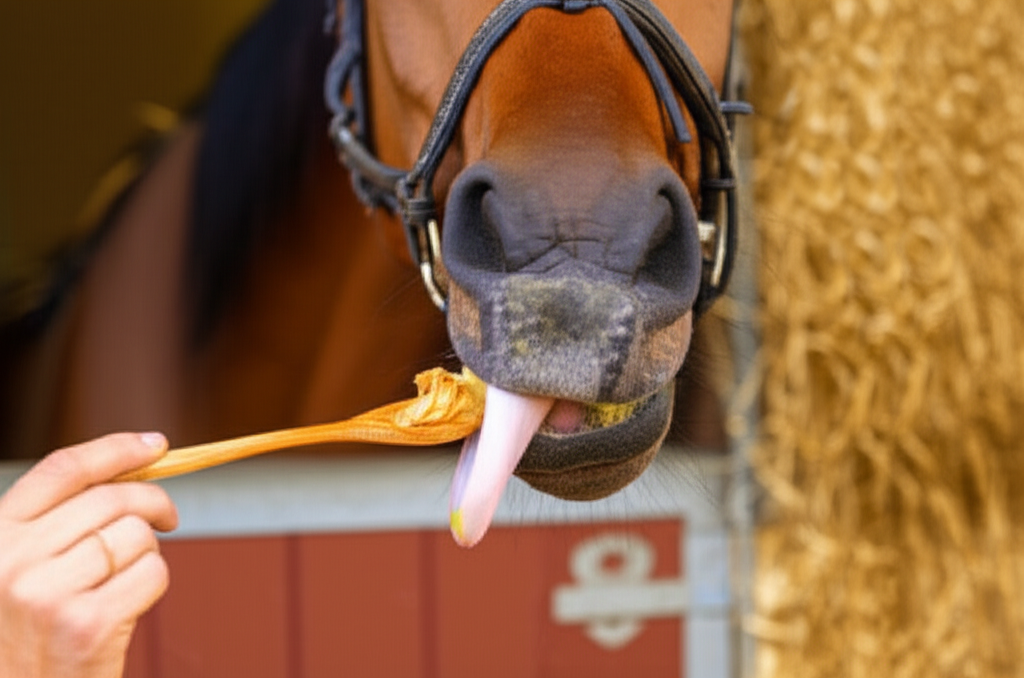
On a spoon or spatula: Just hold it out and let your horse lick. My gelding gets this dreamy, half-closed-eye look when he’s working on a spoonful of PB. It’s hilarious.
Smeared on other treats: Spread a thin layer on apple slices, carrot sticks, or celery stalks for a combo treat.
In an enrichment toy: Kong-style toys work for horses too. Packs them with something to work at for extended engagement.
On a small piece of bread: In small amounts only. This is more of an occasional thing.
Creative Uses
That’s what makes peanut butter endearing to us horse owners who deal with picky pill-takers — it solves problems nothing else can.
Medication delivery: This is the real game-changer. My mare spits out every medication known to man. But mix a crushed pill into a tablespoon of peanut butter? Gone. Every time. It masks the bitterness and the sticky texture makes it hard for them to sort out the medication.
Training rewards: A tiny dab on a treat or a lick from your palm works as a high-value reward for tough training moments.
Stuffed treats: Fill hollowed-out apple halves or celery stalks with PB for an engaging snack that takes some work to eat.

Horses Who Should Avoid Peanut Butter
Weight Issues
Given the calorie density, skip or severely limit PB for:
- Overweight horses already on restricted diets
- Easy keepers who gain weight just looking at food
- Horses prone to obesity
Metabolic Conditions
Talk to your vet before offering peanut butter to horses with:
- Equine Metabolic Syndrome (EMS)
- Insulin resistance
- Cushing’s disease (PPID)
Peanut Allergies
Rare in horses, but possible. If you notice any unusual reaction — hives, swelling, digestive upset — after feeding peanut butter, stop immediately and call your vet. I’ve never seen it happen personally, but it’s worth mentioning.
Can Horses Eat Peanuts?
Yep, whole peanuts are safe too:
- In the shell or shelled — either way
- Raw or roasted (unsalted is better)
- As an occasional treat only, same moderation rules apply
Some horses get a kick out of cracking open peanuts in the shell. It’s enrichment and a snack rolled into one. My gelding makes an absolute mess of it, but he’s clearly having fun.
Peanut Butter vs. Other High-Value Treats
| Treat | Calories | Best Use |
|---|---|---|
| Peanut Butter (1 tbsp) | ~100 | Medication hiding, high-value training rewards |
| Banana (1 medium) | ~100 | Post-exercise potassium, performance horses |
| Apple (1 medium) | ~95 | Everyday treating, universally loved |
| Carrot (1 large) | ~30 | Daily low-calorie treating |
Signs of Overconsumption
Keep an eye out for:
- Gradual weight gain over time
- Loose manure — the fat content can affect digestion if you overdo it
- Less interest in regular feed (because they’re holding out for the good stuff)
Frequently Asked Questions
Can foals eat peanut butter?
Tiny amounts are safe once they’re eating solid food, but honestly, there’s no reason to. Save it for when they’re older and you actually need it for medication or training.
Will peanut butter stick to my horse’s mouth?
Not really. Horses handle sticky textures way better than dogs. They’ve got no trouble eating it — lots of tongue action takes care of it quickly.
Can I use peanut butter every day to give medications?
For a short medication course, absolutely. For long-term daily meds, talk to your vet about alternatives so you’re not piling on unnecessary calories indefinitely.
Is almond butter or other nut butters safe?
Most plain nut butters — almond, cashew, sunflower seed — are fine in similar amounts. The one to avoid is macadamia nut products.
The Bottom Line
Peanut butter is a safe, high-value treat that most horses go absolutely nuts for (pun intended). Its sticky texture makes it unbeatable for hiding medications, and it works brilliantly as a special training reward. Just keep it occasional, buy the plain stuff, and remember that a little goes a long way. Your horse will think you’re the greatest human alive for introducing them to it.
Sources: Kentucky Equine Research, American Association of Equine Practitioners, Colorado State University Extension


Leave a Reply