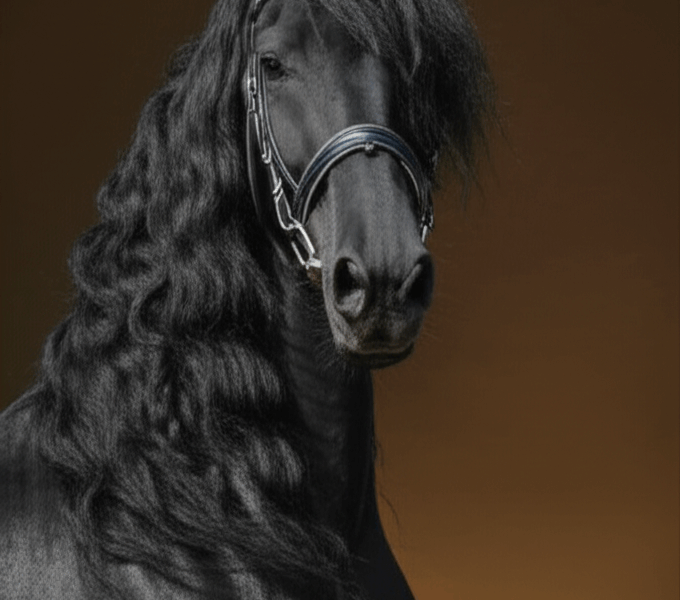
How much does a Friesian horse cost? In a July 2026 snapshot of publicly priced purebred Friesian listings on DreamHorse, visible asking prices ranged roughly from $10,000 to $45,000. Examples included broodmares, riding geldings, an imported horse and a trained dressage mare. These are asking prices from a small, changing classifieds sample—not verified sale prices or a national average.
A Friesian’s value depends on the individual horse’s age, health, training, registry status, inspection predicates, breeding record, import history and suitability for the buyer. Before paying a premium for a pedigree or title, verify the horse and documents through the Friesian Horse Association of North America (FHANA) and arrange an independent veterinary pre-purchase examination.
2026 Friesian Asking-Price Snapshot
| Visible listing example | Public asking price | Why context matters |
|---|---|---|
| 2015 broodmare advertised in foal | $10,000 | Breeding status, registry documents, reproductive history and veterinary findings require verification. |
| 2016 Friesian gelding | $15,000 | Temperament language in an ad is not a substitute for observing the horse. |
| 2012 purebred Friesian mare | $17,000 | Age, training and intended use affect comparability. |
| 2015 Star mare advertised in foal | $20,000 | Confirm predicate, ownership, pregnancy and breeding documentation. |
| 2020 riding and driving gelding | $29,000 | See the advertised skills performed and review training history. |
| 2020 imported gelding | $35,000 | Import status alone does not establish soundness or suitability. |
| 2021 dressage-bred and trained mare | $45,000 | Training claims should be demonstrated and independently evaluated. |
The DreamHorse page also included unpriced, sold, at-stud and Friesian Sport Horse listings. Those were not treated as equivalent price observations. Recheck current listings when you are ready to buy.
What Changes a Friesian’s Price?
Registry status and verified pedigree
FHANA is the KFPS representative for North America. Its registry guidance explains that KFPS registration has multiple books, status levels and predicates. A registration certificate confirms a recognized pedigree and registry entry; it does not guarantee health, temperament, breeding success or performance.
Ask the seller for the original registration document and current ownership information. Confirm the horse’s identity and markings, registration category, predicates, transfer requirements and any breeding restrictions directly with FHANA. Terms such as “Star,” “Model,” “Preferent,” “approved stallion” and different book designations have specific registry meanings and should not be accepted from an advertisement alone.
Training and demonstrated performance
A reliably trained riding or driving horse can be worth more than an unstarted prospect because the seller has invested time and professional work. Verify each advertised skill. If the horse is sold for dressage, see it ridden at the claimed level. If sold as a driver, observe safe harnessing, hitching and driving. “Amateur safe” or “bombproof” are subjective descriptions, not warranties.
Age, soundness and intended use
Compare horses that could actually do the same job. A broodmare, young prospect, pleasure gelding and competition horse are not interchangeable. Tell the veterinarian and trainer your intended use so they can evaluate the relevant risks, fitness and training.
Import history
Imported horses may carry transport, quarantine, agent and documentation costs, but “imported” is not a quality grade. Verify identity, ownership, registry transfer, medical records, travel history and any overseas examination. Do not use a generic internet shipping estimate; request current quotes for the exact route and process.
Breeding status
A mare advertised in foal requires confirmation of pregnancy, breeding date, sire, breeding contract, foal-registration eligibility and reproductive history. A stallion’s KFPS approval status and breeding privileges must be verified. FHANA notes that the chance of a colt eventually becoming an approved breeding stallion is small, so do not price a colt as though approval were assured.
Friesian Health and Genetic Testing
Health claims should be specific and documented. UC Davis identifies Friesian dwarfism as an autosomal recessive inherited condition with an available genetic test. A carrier is not the same as an affected horse, but breeding two carriers creates a risk of an affected foal. UC Davis also offers a Friesian health panel, and FHANA/KFPS maintain genetic-testing requirements for breeding programs.
Ask which tests were performed, by which laboratory, on which identified horse, and request the actual results. Testing for known variants does not make a horse “genetically clear of everything,” predict all future disease or replace a veterinary examination.
For any Friesian purchase, discuss with your veterinarian:
- the examination appropriate to riding, driving or breeding;
- cardiac and respiratory findings relevant to intended work;
- gait, hoof balance, lameness and previous injuries;
- skin beneath the feather and recurring pastern dermatitis;
- swallowing problems or a history of choke;
- medication, surgery and reproductive history; and
- which genetic tests are relevant to the horse and breeding plan.
A pre-purchase examination reduces uncertainty; it does not guarantee future soundness. Use your own veterinarian whenever possible and obtain permission for any additional imaging, blood storage or reproductive testing you need.
What Does a Friesian Cost to Maintain?
There is no defensible nationwide Friesian monthly total. Board, forage, farrier work, veterinary services, insurance and training vary sharply by location and horse. Long hair and feather require grooming time, but a breed label does not automatically multiply every cost.
Build the ownership budget from written local quotes:
- Board or property: suitable turnout, footing, shelter and storage.
- Feed: forage analysis and a plan based on body weight, workload and health.
- Farrier: the individual trim or shoeing plan and local schedule.
- Veterinary care: routine services, dentistry and an emergency reserve.
- Grooming: skin and feather care appropriate to climate and veterinarian guidance.
- Tack: professionally fitted saddle or harness rather than a generic “Friesian size.”
- Training: lessons or professional rides needed for your discipline.
- Insurance: current quotes based on purchase price, use and coverage.
Start with our monthly horse-cost worksheet, then replace the estimates with quotes for the actual Friesian.
How to Evaluate a Friesian for Sale
- Define the job. Decide whether you need a pleasure horse, dressage partner, driver or breeding animal.
- Verify identity and registry records. Match the horse to original documents and confirm status with FHANA.
- Observe ordinary handling. Watch catching, leading, tying, hoof handling and loading.
- See the advertised skills. Have the seller demonstrate before you ride or drive.
- Bring an independent professional. Use a trainer experienced with the intended discipline.
- Arrange a veterinary examination. Select the scope with your veterinarian.
- Review genetic results carefully. Confirm horse identity, laboratory and exact test.
- Use a written contract. Record identity, price, representations, included equipment and terms.
Purebred Friesian Versus Friesian Cross
A Friesian cross may be a good horse, but it is not a lower-priced substitute with predictable Friesian traits. Evaluate its individual pedigree, registry eligibility, health, conformation, training and behavior. Do not pay a purebred premium for vague wording such as “Friesian type” without documentation.
If you are comparing another feathered breed, see our Gypsy Vanner cost guide, which also uses a dated U.S. listing snapshot.
Friesian Cost FAQ
What is the average Friesian horse price?
No authoritative national average is available. In the July 2026 DreamHorse snapshot used here, visible purebred asking examples ranged roughly from $10,000 to $45,000. Asking prices are not completed-sale prices and the horses were not identical.
Why are some Friesians much cheaper?
Differences can reflect age, training, health, registry status, urgency, location or a crossbred horse. A low price is a reason to investigate, not proof of a problem; a high price is not proof of quality.
Does KFPS registration guarantee quality?
No. It documents recognized pedigree and registry status. Verify the specific book, predicates and records, then independently evaluate health, temperament and performance.
Should I import a Friesian?
Importing can expand selection but adds distance, documentation, transport and evaluation risk. Use experienced independent professionals in both countries and obtain current route-specific quotes.



Leave a Reply