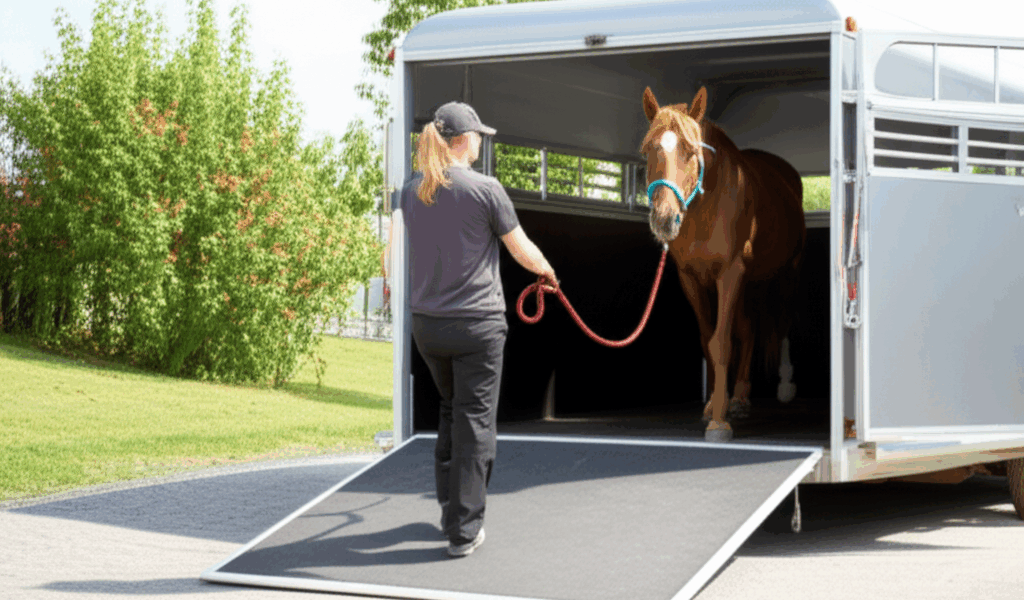
Horse trailering has gotten complicated with all the conflicting opinions flying around. If loading is the problem rather than the trip itself, follow our safe horse trailer-loading guide before travel day.
I still remember my first time loading a horse into a trailer. I was sweating more than the horse was. But after hundreds of hauls, I can tell you it becomes second nature — once you know what you’re doing.
Choosing a Horse Trailer
Trailer Types
You’ve got a few main options and each has its place:
- Bumper pull: Hooks to a ball hitch on your bumper. Works great for 1-2 horses and most half-ton trucks can handle them. This is what I started with and honestly, for casual hauling, it’s perfectly fine.
- Gooseneck: Mounts in the truck bed. Way more stable towing, and you can fit more horses. Once I switched to a gooseneck, I never looked back. The difference in how it pulls, especially in crosswinds, is night and day.
- Straight load: Horses face forward or backward. Simple design, easy to maintain.
- Slant load: Horses stand at an angle. Some horses load easier in these because the angle feels less confining.
Size Matters — A Lot
Probably should have led with this section, honestly. Standard trailers run about 7 feet tall and 6 feet wide. If you’ve got a warmblood or draft cross, you need extra height — 7’6″ at minimum. My 16.3 hand Thoroughbred looked absolutely miserable in a standard height trailer until I upgraded.
My rule of thumb: always buy bigger than you think you need. You’ll thank yourself later.
Pre-Trip Inspection
Trailer Checklist
I run through this every single time, no exceptions:
- Lights: Brake lights, turn signals, running lights — all of them need to be working. I’ve been pulled over for a burnt-out trailer light and it’s not fun.
- Tires: Check inflation, look at the tread, check for sidewall cracks. Trailer tire blowouts with a horse inside are terrifying.
- Floor: Get under there and look for rot, rust, or soft spots. This is where cheap trailers kill horses. I check mine every few months with a screwdriver, poking for weak spots.
- Hitch: Secure connection, safety chains crossed underneath. I double-check this one obsessively.
- Brakes: Test before the horse goes in, not after.
- Latches: All doors and dividers secure and functioning.
- Mats: Clean, in good shape, not slippery.
Tow Vehicle Checklist
- Make sure your truck actually has the towing capacity for a loaded trailer. A horse plus trailer plus gear adds up fast.
- Proper hitch height — trailer should ride level.
- Mirrors positioned so you can see the trailer sides.
- Full tank of gas. You do not want to stop at a tiny gas station with a horse trailer.
- Emergency kit in the cab.
Loading Your Horse
Before Loading
- Park the trailer level on firm ground. Gravel or pavement, not soft grass that’ll sink.
- Open every window and vent so the inside is bright. Dark trailers are scary trailers.
- Hang a hay net inside — gives them something positive to focus on.
- Clear any obstacles around the trailer entrance.
Safe Loading Steps
- Stay calm: Seriously, your horse can read you like a book. If you’re tense, they’re tense.
- Use a lead rope: And for the love of everything, never wrap it around your hand. If the horse bolts, you go with them.
- Walk with purpose: Confident energy, not rushed energy. There’s a difference.
- Let the horse look: Some need a minute to inspect the situation. That’s fine. Patience here saves you twenty minutes of fighting later.
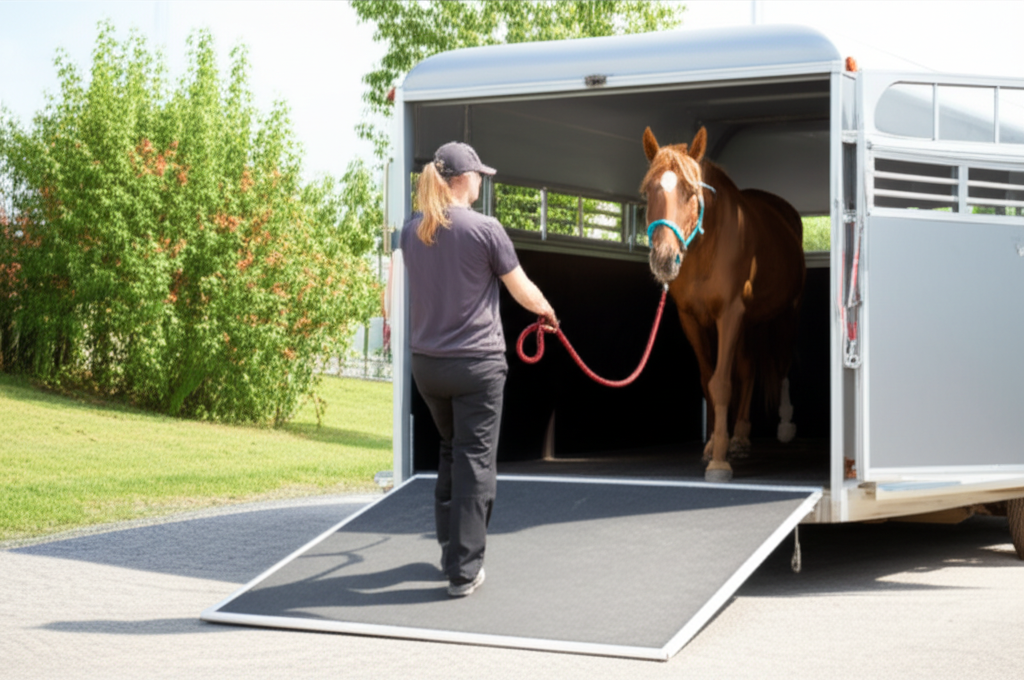
- Walk straight in: You can walk in beside them or stand to the side — whatever works for your horse.
- Secure the horse first: Tie them before closing the butt bar or door. Always.
Reluctant Loaders
Some horses just hate trailers. I’ve been there. Here’s what actually works:
- Patience: Rushing creates fear that lasts for years. One bad loading experience can ruin a horse.
- Practice at home: Load, stand, unload, repeat. Do it without going anywhere until it’s boring.
- Food motivation: A pan of grain at the front works wonders for most horses.
- Professional help: If your horse is genuinely dangerous about loading, get a trainer involved before someone gets hurt.
- Never, ever: Hit, whip, or chase a horse into a trailer. That’s how you create a horse that will never load willingly again.
Safe Driving
Driving Tips
Hauling a horse changes everything about how you drive. That’s what makes good trailer driving endearing to us horse people — it’s a skill you develop out of genuine care for the animal behind you.
- Accelerate slowly: Give your horse time to find their balance. Imagine standing on a bus that takes off — same idea.
- Brake gradually: Sudden stops throw the horse forward into the chest bar. I start braking way earlier than I would in just my truck.
- Wide turns: Your trailer tracks inside your turn. Clip a curb and you’ve got problems.
- Add following distance: Double or triple what you’d normally leave. I aim for at least 6-8 seconds behind the car in front.
- Smooth everything: No sudden lane changes, no swerving, no abrupt anything.
Speed Limits
- Some states have lower speed limits for trailers — check before you haul across state lines.
- Regardless of the legal limit, I keep it at 55-60 mph max. Your horse’s safety is worth the extra ten minutes.
- Slow down further in bad weather, on hills, or in heavy traffic. Common sense stuff, but worth saying.
Trip Planning
- Rest stops: Pull over every 3-4 hours maximum. Your horse needs a break even if you don’t.
- Water: Offer water at every single stop. Dehydration during hauling is a real risk.
- Check on the horse: Visual inspection each time you stop. Look for sweat, stress, injury.
- Avoid peak heat: In summer, travel early morning or evening. The inside of a trailer in July afternoon sun gets dangerously hot.
What to Pack
For the Horse
- Hay and grain for the trip length plus an extra day (breakdowns happen).
- Water from home — horses can refuse unfamiliar water and you cannot afford that during travel.
- Water buckets.
- Shipping boots or leg wraps to protect from bumps and scrambling.
- Fly sheet for summer hauling.
- Blanket in winter, if the weather calls for it.
- An extra halter and lead rope. I’ve had a halter break mid-trip and was very grateful for the backup.
For Emergencies
- First aid kit — both human and equine versions.
- Your vet’s phone number and a vet near your destination.
- Coggins and health certificate copies. Keep originals and copies separate.
- Flashlight with fresh batteries.
- Fire extinguisher rated for the trailer.
- Jack and spare tire specifically for the trailer (not your truck’s).
- Basic tools — wrenches, pliers, wire cutters, duct tape.
Unloading
Safe Unloading Steps
- Park in a safe, level area with room for the horse to step out.
- Open all doors and ramps before touching the horse.
- Untie the horse’s head first. Always head first, then butt bar.
- Then open the butt bar or divider.
- Let the horse back out calmly, or walk out if you’ve got a walk-through design.
- Keep hold of that lead rope the entire time. A loose horse in a parking lot is a disaster waiting to happen.
Common Mistakes People Make
- Opening the butt bar while the horse is still tied. This is how horses flip over backward in trailers. I’ve seen it happen and it is horrible.
- Letting the horse rush out. Control the exit.
- Standing directly behind the horse during unloading. One kick and you’re in the hospital.
Common Trailering Problems
Horse Won’t Load
- Work with a trainer on systematic desensitization. It takes time but it works.
- Practice regularly with positive reinforcement. Make the trailer a place where good things happen.
- Make sure the trailer itself is safe and inviting — good lighting, stable footing, clean interior.
- Rule out physical problems. Vision issues or pain can make loading terrifying for a horse.
Horse Scrambles or Panics
- Use shipping boots to prevent leg injuries from scrambling.
- Make sure the trailer is properly balanced and stable — check tire pressure and load distribution.
- Check the floor for slippery spots. Rubber mats with good grip make a huge difference.
- Some horses honestly do better facing backward. It’s worth trying if your trailer allows it.
Horse Won’t Back Out
- Give them time to figure out the step down. Don’t rush it.
- Practice at home where the stakes are low.
- Some horses are genuinely terrible at backing — consider a walk-through trailer design if this is a consistent problem.
Legal Requirements
Documentation
- Coggins test: Required for interstate travel. It’s a negative EIA (equine infectious anemia) test. Most states require one dated within the last 12 months.
- Health certificate: Often required for crossing state lines. Your vet issues this after an exam.
- Brand inspection: Required in some Western states. Check before you haul.
- Destination state requirements: Every state is different. Look this up before you leave, not at the state line.
Insurance
- Trailer insurance — this is separate from your auto policy. Make sure you have it.
- Mortality or loss insurance for the horse during transit.
- Liability coverage in case of an accident.
The Bottom Line
Safe trailering comes down to preparation, patience, and practice. A horse that loads and travels well makes your entire equestrian life easier — shows, trail rides, vet visits, everything runs smoother. Invest the time in training at home before you actually need to go somewhere. And always, always prioritize safety over schedule. Being late is way better than being reckless with a thousand-pound animal in tow.
Sources: American Association of Equine Practitioners, USDA APHIS, Equus Magazine



Leave a Reply