![Horse Dental Care Signs Every Owner Should Know [2026]](https://horsebesties.com/wp-content/uploads/sites/115/2026/01/dental_care-1024x600.png)
Horse dental care is often overlooked, but it’s essential for your horse’s comfort, nutrition, and overall health. Understanding equine dentistry can save you money and prevent serious problems.
Why Horse Dental Care Matters
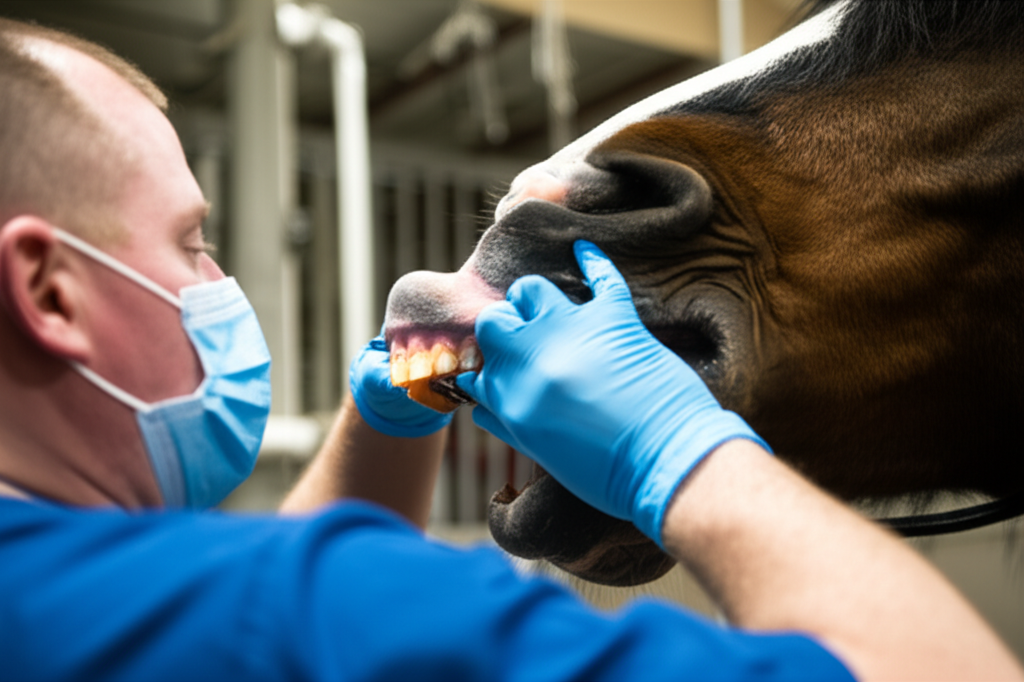
Horses’ teeth grow continuously throughout their lives—up to 2-3mm per year. Without proper care:
- Sharp points develop, cutting cheeks and tongue
- Uneven wear affects chewing and digestion
- Pain leads to eating problems
- Behavior issues under saddle
- Weight loss from poor nutrition
Understanding Horse Teeth
Types of Teeth
- Incisors (12): Front teeth for cutting grass
- Canines (4): Usually only in males (wolf teeth)
- Premolars & Molars (24): Back teeth for grinding
How Horses Chew
- Side-to-side grinding motion
- Upper jaw wider than lower jaw
- Creates sharp edges on outer upper teeth and inner lower teeth
- This is why regular floating is needed
Signs Your Horse Needs Dental Care
Eating Problems
- Dropping grain while eating (quidding)
- Eating slowly or reluctantly
- Whole grain in manure
- Weight loss despite adequate feed
- Head tilting while chewing
Behavioral Signs
- Head tossing under saddle
- Resistance to the bit
- One-sided stiffness
- Difficulty collecting or stopping
- Fighting the bridle
Physical Signs
- Bad breath
- Swelling on face or jaw
- Nasal discharge (one-sided)
- Cuts on cheeks or tongue
- Long, hay-like strands of partially chewed food
Common Dental Problems
Sharp Points/Enamel Edges
- Most common issue
- Develops on all horses
- Causes: ulcers on cheeks, tongue injuries
- Solution: Regular floating
Hooks and Ramps
- Overgrown areas on front or back of molars
- Affects jaw movement
- Can be painful under saddle
- Solution: Floating to remove excess
Wave Mouth
- Uneven grinding surface
- Teeth of different heights
- Affects chewing efficiency
- Solution: Multiple floating sessions over time
Wolf Teeth
- Small vestigial teeth in front of molars
- Can interfere with bit
- Often removed in riding horses
- Simple extraction procedure
Periodontal Disease
- Infection of gums and tooth roots
- Causes: food packing, bacteria
- Signs: bad breath, swelling
- Solution: Veterinary treatment
What Happens During a Dental Exam
The Process
- Sedation: Usually light sedation for safety
- Speculum: Device holds mouth open
- Examination: Visual and manual check of all teeth
- Floating: Filing down sharp points with rasp
- Extraction: If needed for damaged teeth
- Recovery: Usually 30-60 minutes
Power Float vs. Hand Float
- Power float: Electric tool, faster, more precise
- Hand float: Traditional rasp, quieter, requires more skill
- Both effective when done by qualified professional
Dental Care Schedule
| Age | Frequency | Notes |
|---|---|---|
| Birth – 5 years | Every 6 months | Baby teeth falling out, adult teeth coming in |
| 5-20 years | Annually | Maintenance floating |
| 20+ years | Every 6-12 months | Increased wear, missing teeth common |
Cost of Dental Care
| Service | Cost Range |
|---|---|
| Basic exam and float | $150 – $300 |
| Wolf teeth removal | $50 – $150 |
| Molar extraction | $200 – $500 |
| Complex extraction | $500 – $1,500 |
| Emergency dental work | $300 – $1,000+ |
Who Should Do Dental Work?
Qualified Options
- Equine Veterinarian: Full dental care, sedation, extractions
- Veterinary Dental Specialist: Complex cases
- Certified Equine Dentist: State regulations vary
What to Look For
- Proper training and certification
- Uses sedation (legal requirements vary)
- Full mouth examination
- Clear explanation of findings
- Good references
Senior Horse Dental Care
Older horses face unique dental challenges:
- Teeth wear down and may fall out
- Smooth mouth (worn teeth) affects chewing
- May need softer feeds—soaked hay, senior feeds
- More frequent exams recommended
- Missing teeth don’t necessarily need extraction
The Bottom Line
Regular dental care is essential for every horse. Annual exams and floating prevent painful problems, improve nutrition, and can resolve behavioral issues under saddle. Budget $150-300 per year for routine dental care—it’s one of the best investments you can make in your horse’s health and comfort.
Sources: American Association of Equine Practitioners, American Veterinary Dental College



Leave a Reply