Horse nutrition has gotten complicated with all the conflicting advice flying around. As someone who’s fed horses for years and dealt with the “can I give my horse this?” question countless times, I learned everything there is to know about what’s safe and what’s not. Today, I will share it all with you about orange peels specifically.
The Quick Answer
Yes, horses can eat orange peels. They’re not toxic. But whether you should feed them is another question entirely. The peels are tough, bitter, often covered in pesticides, and harder to digest than the fruit. Most horses will happily eat the orange segments and skip the peel if given a choice.
Honestly, orange peels fall into that gray zone where they won’t hurt your horse, but they’re not ideal either.
Why You’re Even Asking This Question
I get it. You’ve got oranges. Your horse is looking at you with those big eyes. The peel’s going in the trash anyway. Why waste it?
This is how most horse owners end up googling equine nutrition at midnight. We want to give our horses treats, we hate waste, and we assume if something’s okay for us, it’s probably okay for them.
The reality is more nuanced than a simple yes or no.
What’s Actually In Orange Peels
Orange peels contain polyphenols – essential oils that boost immune response, fight inflammation, and help prevent disease. They’ve also got limonene, a compound with anti-cancer properties that helps prevent tumors.
That sounds great, right? Horse owners love anything “immune-boosting” and “anti-inflammatory.”
The peels also pack vitamin C and fiber. On paper, nutritious. In practice, there are better ways to deliver these nutrients.
The Problems With Orange Peels
Pesticides and chemicals: Commercial oranges get sprayed with who-knows-what during growing and storage. Those chemicals concentrate on the peel. Even “washed” conventional oranges still carry residue. If you’re feeding peels, use organic oranges and wash them thoroughly. Otherwise, skip it.
Digestive irritation: Orange peels are highly acidic and fibrous. That combination can irritate your horse’s digestive system, especially in larger amounts. Horses have sensitive stomachs – colic isn’t worth the risk of feeding food scraps.
Texture and palatability: The peel is tough and bitter. Some horses will eat anything you hand them (we’ve all known that horse). Others are picky and will spit it out. The toughness makes it harder to chew and digest properly.
Sugar content: This applies to oranges generally, not just peels, but it matters. Oranges are sugary. The peel has less sugar than the fruit, but if you’re feeding whole oranges including peel, that sugar adds up. Horses with insulin resistance, equine metabolic syndrome (EMS), or Cushing’s disease should avoid oranges entirely.
The Smart Way To Feed Oranges (If You Do)
If you’re going to give your horse oranges, follow these guidelines:
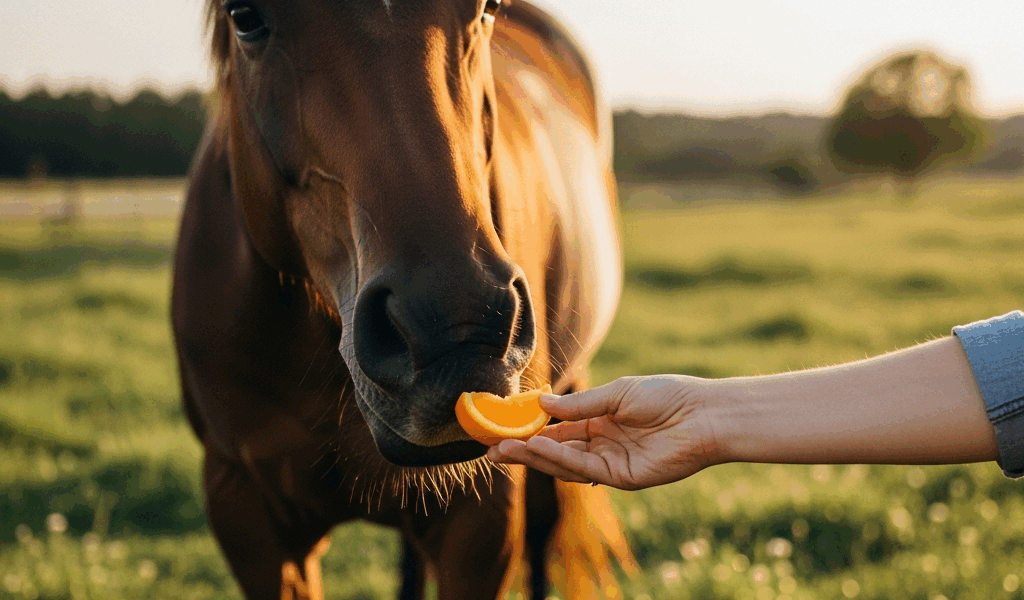
Skip the peel entirely. Peel the orange, feed the segments. The fruit has the vitamin C and the sweet taste horses actually enjoy, without the pesticides and digestive concerns of the peel.
Use organic oranges if you insist on including peel. Conventional oranges aren’t worth the pesticide risk. Pay the extra $2 for organic if the peel matters to you.
Remove all seeds. Orange seeds contain compounds that can be toxic in larger quantities. They’re also a choking hazard. Deseed any orange you give your horse.
Limit portions. One or two orange segments, a couple times per week. That’s a treat, not a dietary staple. Horses don’t need citrus fruits to be healthy.
Introduce gradually. If your horse has never had oranges, start with a single small piece. Wait 24 hours. Watch for any digestive upset, loose manure, or behavioral changes. Some horses handle citrus fine. Others don’t.
Cut into appropriate sizes. Don’t hand your horse a whole orange. Cut it into manageable pieces that can’t get stuck in their throat. Choking is real and terrifying.
What About Other Citrus?
The same logic applies to tangerines, clementines, grapefruit, lemons, and limes.
Lemons and limes? Most horses won’t touch them anyway – too sour. But they’re not toxic if your weirdo horse happens to like them.
Grapefruit can interact with certain medications in humans. I haven’t seen definitive research on grapefruit-drug interactions in horses, but I wouldn’t risk it if your horse is on medication.
Tangerines and clementines are basically small oranges. Same rules apply.
Better Treat Options Than Orange Peels
If you’re looking for healthy treats your horse will actually enjoy:
Apples: Classic for a reason. Cut into slices (never feed whole – choking hazard). Remove seeds if you’re paranoid about cyanide compounds, though the amount in a few apple seeds won’t hurt a horse.
Carrots: Horses love them. Cut lengthwise, not into rounds (rounds can get stuck). Yes, carrots have sugar too, so don’t feed five pounds of them daily.
Bananas: Surprisingly popular with horses. Some eat them with the peel, some don’t. Banana peels are safer than orange peels from a pesticide standpoint.
Watermelon: Hydrating, refreshing, horses generally like it. Remove seeds. Feed in moderation because, again, sugar.
Pears: Similar to apples. Cut them up, remove the core, feed as an occasional treat.
All of these are easier to digest and less acidic than oranges while still providing variety and enrichment.
Signs Your Horse Shouldn’t Have Citrus
Metabolic conditions: If your horse has insulin resistance, EMS, PSSM, or Cushing’s, citrus is off the table. The sugar content makes these fruits inappropriate.
Digestive sensitivity: If your horse gets colicky easily, has a history of ulcers, or shows sensitivity to diet changes, skip the oranges entirely.
Allergies: Rare, but possible. If you notice hives, excessive scratching, or swelling after feeding oranges, that’s an allergic reaction. Stop feeding citrus immediately and call your vet if symptoms are severe.
The Verdict On Orange Peels
Can horses eat orange peels? Yes, technically. They’re not toxic.
Should you feed them? Probably not. The risks (pesticides, digestive irritation, choking from tough texture) outweigh the minimal benefits.
If you want to give your horse oranges, peel them first and feed just the segments in small amounts. That gives your horse the vitamin C and the treat experience without the downsides of the peel.
And honestly? Your horse will be just as happy with an apple or carrot. Save yourself the worry and stick with treats that don’t require lengthy internet research to feel confident about.
What Actually Matters For Horse Nutrition
Orange peels – and treats generally – are a tiny fraction of your horse’s diet. What really matters:
Quality hay or pasture: The foundation of equine nutrition.
Appropriate grain or concentrate: If your horse needs it based on workload and body condition.
Fresh water: Always available, always clean.
Salt and minerals: Free-choice salt block and balanced minerals.
Regular veterinary care: Including dental work and parasite management.
Get those basics right and your horse will thrive. Feed them orange peels or don’t – it barely moves the needle either way.
Treats are for bonding and enrichment, not nutrition. Choose ones that are safe, easy to prepare, and that your horse enjoys. If that’s orange segments without the peel, great. If it’s carrots and apples, equally great.
The Bottom Line
Orange peels won’t kill your horse, but they’re not the best treat option. If you’re going to feed oranges:
- Use organic fruit
- Remove the peel and seeds
- Cut into small pieces
- Feed sparingly (1-2 segments, a few times per week max)
- Avoid entirely for horses with metabolic issues
Better yet, stick with apples, carrots, and other traditional horse treats that don’t come with pesticide concerns or digestive question marks.
Your horse doesn’t know what they’re missing. They just know you showed up with something yummy. Make it something you feel good about feeding.
Sources:
– BayeQuest: Can Horses Have Oranges
– Equine Institute: Can Horses Eat Oranges – Benefits, Risks, and Tips
– The Horse: Can Horses Eat Citrus
– Strathorn Farm: Can Horses Eat Oranges
– eHorses Magazine: Fruits & Vegetables for Horses
Leave a Reply