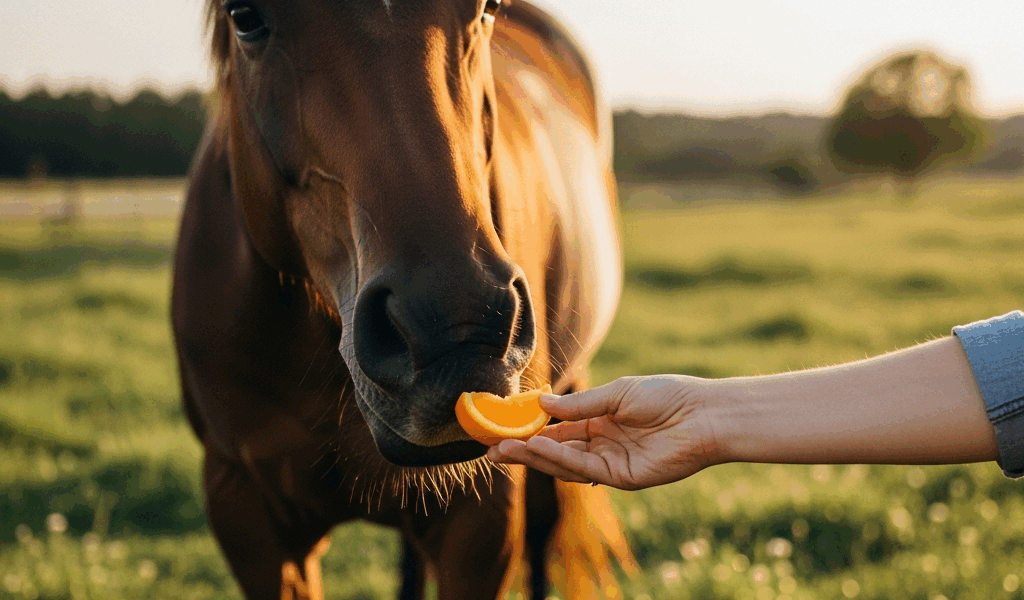
Orange peels are not toxic to horses. Every part of an orange — fruit, juice, peel — is safe for them to eat. That said, there are two things worth knowing before you toss one over the fence.
Are Orange Peels Safe for Horses?
Yes. Nothing in an orange peel is harmful to horses — no toxins, no compounds that cause a reaction. The fruit has always been a safe treat, and the peel is in the same category.
Two caveats worth knowing, though. Store-bought oranges are almost always sprayed with pesticides, and a lot of that residue ends up concentrated on the peel — not the fruit inside. And peels are fibrous and more acidic than the fruit, so some horses handle them without any issue, while others can get a little digestive upset if they eat a big pile at once.
Neither of these makes the peel dangerous. A bit of prep and some moderation handles both.
The Pesticide Problem
The real-world concern here isn’t the peel — it’s what’s sitting on the outside of it. Conventionally grown citrus is routinely treated with fungicides and wax coatings after harvest. That coating sits right on the surface you’re handing to your horse.
The fix is genuinely simple: wash the orange before you peel it. Scrub the outside under running water for 20–30 seconds. No special produce wash needed — just water and friction is enough to remove surface residue. Organic oranges are cleaner to start with, but for most people, washing conventional ones is more than adequate.
One note: if you’re just feeding the fruit without the peel, pesticide residue is much less of an issue — most of it stays on the outer surface. It’s specifically the peel where washing counts.
How to Feed Orange Peels to Horses
Once washed, the approach is pretty straightforward:
- Cut it into pieces first. A full peel in one long strip is awkward for a horse to manage — it curls as they chew and can create a mouthful they have to work at. Cut or break it into 2–3 inch sections before feeding.
- Go slow the first time. If your horse hasn’t had orange peel before, offer a piece or two and see how they respond over the next day. Some horses have touchier digestion than others, and the acidity and fiber can cause mild loose stool when given in bulk.
- Keep the amount reasonable. A few pieces from one orange, once or twice a week, is a sensible amount. It’s a treat, not a dietary staple. The sugar content is lower than the fruit itself, but it adds up if you get generous.
- Skip it for horses with ulcer history. Citrus acidity can be irritating for horses with known gastric sensitivity. Plenty of other safe options exist for those horses.
What If My Horse Won’t Eat the Peel?
That’s pretty normal. Orange peel is a lot more bitter than the fruit, and horses have pretty firm opinions about bitter flavors. Some go for it right away; others will sniff it, maybe lick it once, and decide it’s not for them.
If your horse turns down the peel but still enjoys the orange itself, just feed the fruit and skip the peel. It’s not adding anything nutritionally critical — horses synthesize their own vitamin C, so the citrus isn’t doing the work you might think. It’s just a treat, and treats work best when the horse actually wants them.
And if they ignore both? Carrots and apple slices are usually a safer bet for horses that don’t love citrus.



Leave a Reply