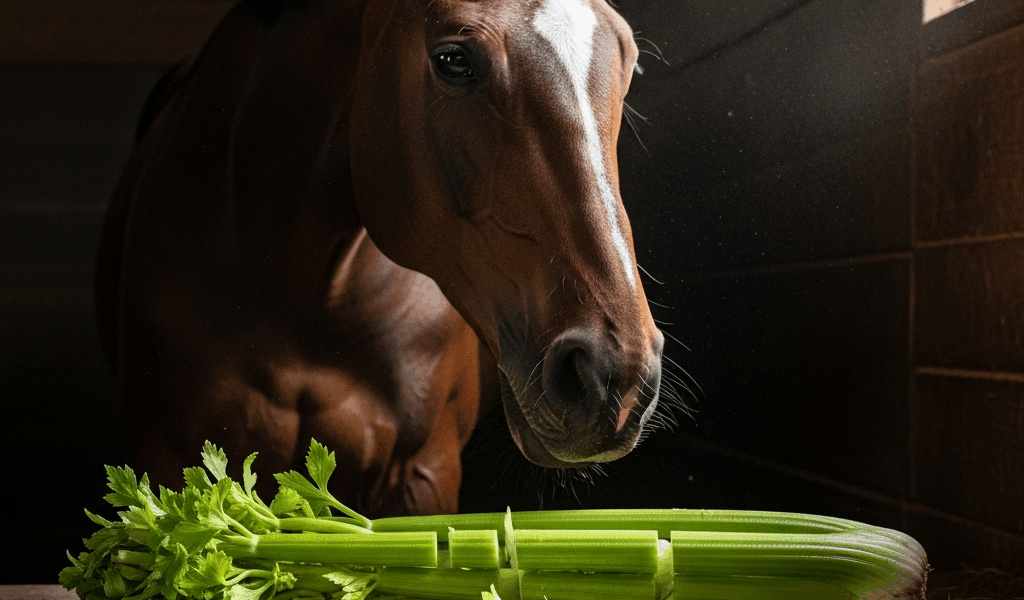
Celery looks like the safest treat you could give a horse. It’s mostly water, it’s not toxic, and it’s cheap. But there’s a way most people feed it that creates a real choking hazard — and once you know it, you can’t unsee it.
Is Celery Safe for Horses?
Celery is not toxic to horses. Nothing in it — the stalk, the leaves, the seeds — causes any harmful reaction. It’s been used as a horse treat for a long time, and it holds up well in that role.
It’s also one of the more sensible low-calorie options you can offer. Celery is about 95% water, which makes it a smart treat choice during warmer months when you want some variety without the sugar load. Horses on restricted diets can have it without much concern.
The Step Most Owners Skip
Here’s what most people don’t think about: the long stringy fibers that run through a celery stalk — the same ones that get stuck in your teeth — behave the same way in a horse’s throat. If a horse tries to swallow a long piece without fully chewing it, those fibers can bunch together and block the esophagus.
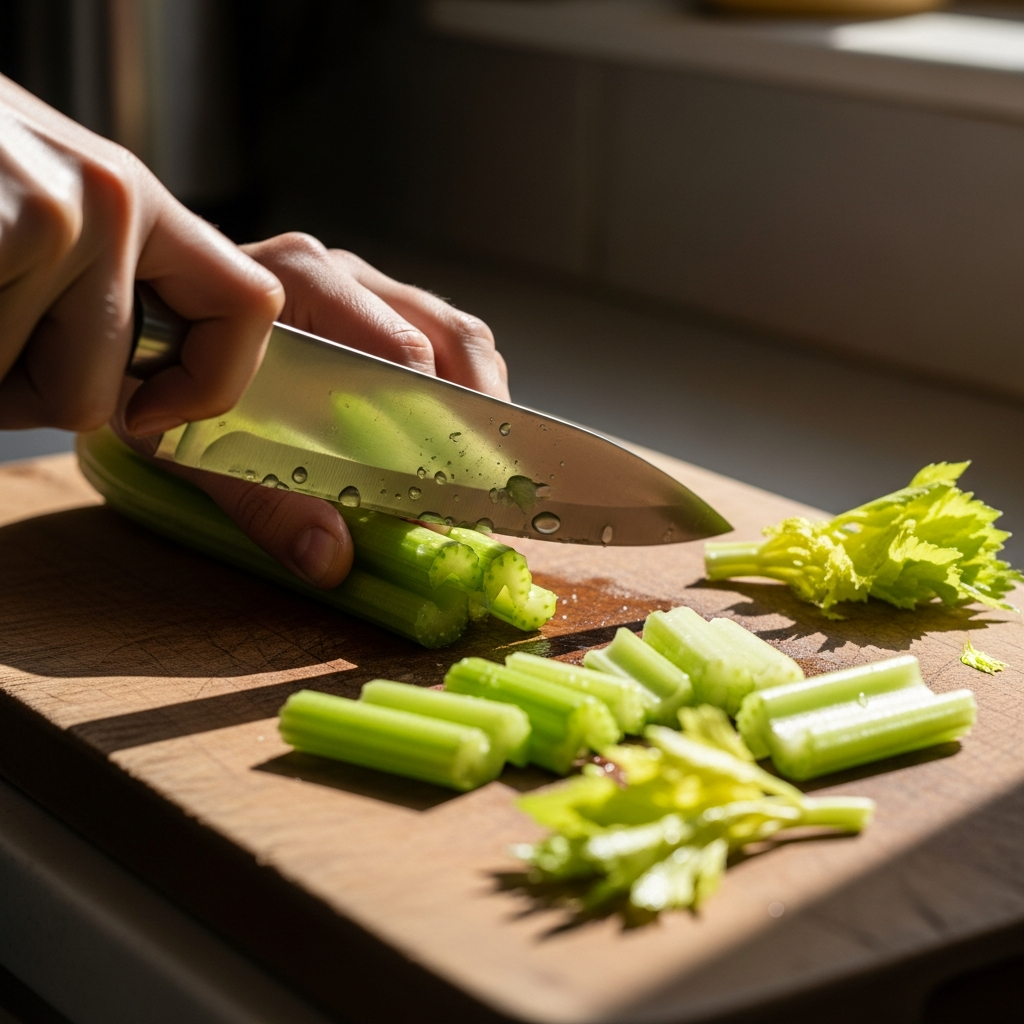
The fix is simple, but it matters: cut the stalk into 2–3 inch pieces before feeding. At that size, the strands don’t have the length to cause problems, and most horses crunch right through them without issue. Same logic as cutting a large apple or carrot — the food isn’t the problem, a long piece going down wrong is.
Thirty seconds with a knife. Don’t skip it.
How Much Celery Can a Horse Have?
A few stalks at a time, a few times a week. There’s no significant sugar load to worry about, and normal quantities won’t cause digestive issues — so you don’t need to be strict about it.
It’s still a treat, not a roughage replacement. A horse’s diet runs on hay and pasture grass, and a handful of celery per session is fine. A bucket of it daily is overkill and unnecessary.
The leafy tops are safe too if your bunch comes with them attached. Some horses go for the leaves first; others ignore them entirely. Either way, no concern.
Other Vegetables Horses Can Eat
Celery’s a good starting point, but here are a few other vegetables that work well as horse treats:
- Carrots — the classic for a reason. Cut large ones lengthwise to prevent choking.
- Cucumber — mild, high water content, no issues.
- Pumpkin — seeds included. Easy to source in fall.
- Squash — raw or cooked, both fine.
- Beets — horses tend to like them. The red-tinted manure afterward is normal.
What to avoid: onions, garlic, and the nightshade family — tomatoes, raw potatoes, peppers. Those cause real problems. Everything on the list above is solidly safe.




Leave a Reply