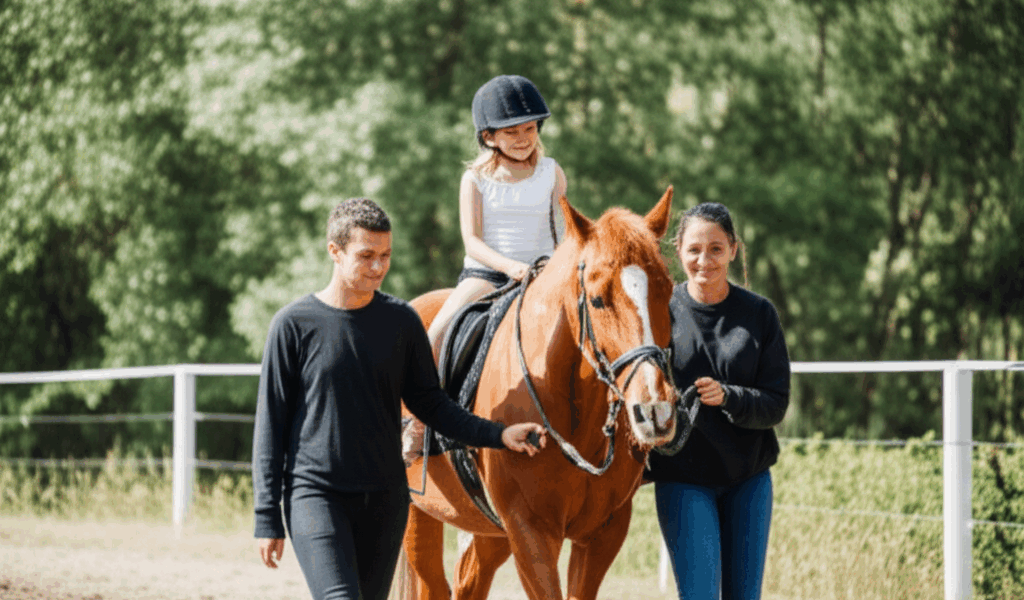
Therapeutic riding has gotten complicated with all the different programs and terminology floating around. As someone who has volunteered at a therapeutic riding center for several years and watched the transformations firsthand, I learned everything there is to know about how horses help people heal. Today, I will share it all with you.
The first time I saw a child who couldn’t walk independently sit tall on a horse and grin from ear to ear, I was done. Completely hooked. There’s something about the horse-human connection in a therapeutic setting that goes beyond what I can put into words.
What Is Therapeutic Riding?
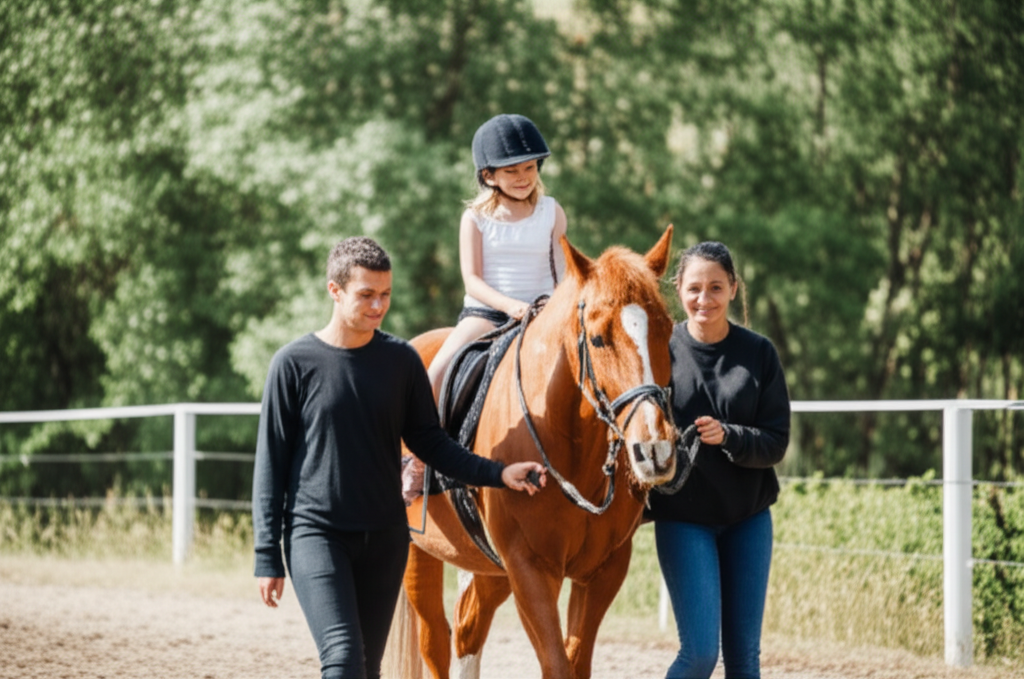
At its core, therapeutic riding uses horseback riding and horse-related activities to improve the lives of people with disabilities. It’s not about teaching someone to compete at dressage. It’s about using the horse’s unique movement and the barn environment to hit therapeutic goals that might be impossible to reach any other way.
Types of Equine-Assisted Activities
This is where the terminology gets confusing, so let me break it down simply:
- Hippotherapy: This is actual physical, occupational, or speech therapy that happens to use horse movement as the tool. A licensed therapist directs the session. It’s clinical, it’s structured, and insurance sometimes covers it.
- Therapeutic Riding: Adapted riding lessons for people with disabilities. The focus is on riding skills, but the physical and emotional benefits are massive side effects.
- Equine-Assisted Learning: Educational programs that use horses. Think teamwork exercises, problem-solving, confidence building.
- Equine-Assisted Psychotherapy: Mental health therapy that involves horses. A licensed mental health professional runs the show. This has been incredible for PTSD treatment especially.
Who Benefits from Therapeutic Riding?
Probably should have led with this section, honestly. The range of people who benefit is staggering.
Physical Conditions
I’ve seen riders with all of these conditions make meaningful progress:
- Cerebral palsy
- Multiple sclerosis
- Spinal cord injuries
- Stroke recovery
- Traumatic brain injury
- Muscular dystrophy
- Spina bifida
Cognitive and Developmental
- Autism spectrum disorder — this is probably where I’ve seen the most dramatic breakthroughs
- Down syndrome
- Learning disabilities
- ADHD
- Intellectual disabilities
Emotional and Psychological
- PTSD, especially in veterans — the results here are remarkable
- Anxiety and depression
- Behavioral disorders
- At-risk youth
- Trauma survivors
How Does It Actually Work?
The Magic of Horse Movement
Here’s the science that blew my mind when I first learned it: a horse’s walk creates a three-dimensional movement pattern that closely mimics the human pelvis during walking. For someone who can’t walk independently, sitting on a walking horse gives their body the sensory experience of walking. That’s wild when you think about it.
This movement does some incredible things:
- Activates core muscles that don’t fire during wheelchair use or other seated activities
- Improves balance and coordination in ways that transfer to daily life
- Develops motor planning skills that the rider starts using off the horse too
- Provides full-body sensory input that’s impossible to replicate in a therapy gym
Psychological Benefits
That’s what makes the emotional component endearing to us volunteers — we watch confidence bloom in real time.
- Empowerment: A kid who gets pushed around in a wheelchair all day is suddenly directing a 1,000-pound animal. The shift in self-perception is incredible.
- Non-judgmental connection: Horses don’t care about your diagnosis. They respond to how you act, how you carry yourself, how you breathe. That kind of acceptance is healing in itself.
- Present-moment focus: You cannot be worrying about tomorrow when you’re on a horse. They demand your attention right now.
- Emotional regulation: Horses are mirrors. If you’re anxious, they get anxious. Riders learn to manage their emotions because the horse gives immediate, honest feedback.
What to Expect at a Session
First Visit
Your first visit is mostly about getting acquainted and making sure it’s a good fit:
- An intake interview where they learn about the rider’s abilities, goals, and any concerns
- Meeting the horses — usually from the ground first
- Safety orientation covering the basics
- Possibly a brief ride if the rider is comfortable and ready
Typical Session Structure
Most sessions follow a pattern something like this:
- Grooming: Building the relationship with the horse while working on fine motor skills. Even just brushing a horse requires grip strength, arm coordination, and bilateral movement.
- Mounting: Using a ramp or lift if needed. Some riders mount from a wheelchair. The logistics are impressive.
- Riding: Usually 20-45 minutes with trained side walkers on each side and a horse leader up front. Activities during the ride target specific therapeutic goals.
- Dismounting and cool-down: Saying goodbye to the horse. This part matters more than you’d think — it teaches closure and emotional processing.
Safety Measures
Safety is built into every aspect:
- Certified instructors who understand both horses and disabilities
- Trained volunteers who know exactly where to position themselves
- Specially selected therapy horses that are bombproof in the truest sense
- Helmets required, no exceptions
- Specialized mounting equipment designed for accessibility
Finding a Program
Look for Certification
Not all programs are created equal. Look for these credentials:
- PATH International: The Professional Association of Therapeutic Horsemanship. This is the gold standard in North America. If a center is PATH certified, they’ve met rigorous standards.
- EAGALA: Equine Assisted Growth and Learning Association. They focus on mental health applications.
- AHA: American Hippotherapy Association. This is the medical therapy side — hippotherapy specifically.
Questions to Ask
Before committing to a program, ask these:
- What certifications do your instructors hold?
- What’s the horse-to-volunteer ratio? (More volunteers generally means safer sessions.)
- How do you select and train your therapy horses?
- What disabilities or conditions do you specialize in?
- Can you accommodate specific physical needs like lifts or specialized saddles?
Costs
Let me be honest about the financial side, because it matters:
| Service | Typical Cost |
|---|---|
| Therapeutic riding lesson | $50 – $100/session |
| Hippotherapy (with therapist) | $100 – $200/session |
| Equine-assisted psychotherapy | $100 – $250/session |
Financial Assistance
Don’t let cost stop you from looking into this. There’s help available:
- Many programs offer scholarships or sliding scale fees based on income
- Some insurance plans cover hippotherapy when prescribed by a doctor
- Organizations like PATH offer grants to help families afford sessions
- Veterans programs are often free through the VA system
Therapy Horses
What Makes a Good Therapy Horse?
Not just any horse can do this work. The ones that thrive in therapeutic settings are special animals:
- Calm, patient temperament — the kind of horse that barely blinks at unexpected noises or movements
- Steady, rhythmic gaits that provide consistent therapeutic movement
- Tolerant of unusual sounds, movements, and equipment
- Reliable and predictable day after day, session after session
- Comfortable with mounting ramps, lifts, and adaptive equipment
Common Breeds
You see a lot of these breeds in therapy programs:
- Quarter Horses — steady, sensible, versatile
- Draft crosses — big, gentle, smooth gaits
- Norwegian Fjords — practically born for this work
- Haflingers — sturdy, friendly, unflappable
- Older, experienced horses of all breeds who’ve seen enough of life to not get rattled
Volunteer Opportunities
Therapeutic riding programs run on volunteer power. And here’s the best part — you don’t need any horse experience to help. Programs train you on everything.
Volunteer Roles
- Side walker: Walk beside the rider for safety and support. This is where most people start and it’s incredibly rewarding.
- Horse leader: Lead the horse during lessons. Requires some horse experience or training.
- Barn help: Grooming, tacking up, feeding, mucking stalls. The glamorous stuff.
- Administrative: Office work, fundraising, event coordination. Every program needs this help desperately.
The Bottom Line
Therapeutic riding taps into something that no gym, no therapy office, no classroom can replicate. The combination of the horse’s movement, the emotional bond, and the empowerment of directing a large animal creates breakthroughs that change lives. I’ve watched it happen over and over, and it still gets me every time.
Whether you’re looking for therapy for yourself, a family member, or you just want to volunteer and witness some genuinely beautiful moments, therapeutic riding programs exist in most communities. The bond between humans and horses has always been special — therapeutic riding just channels it for healing.
Sources: PATH International, American Hippotherapy Association, EAGALA

Leave a Reply