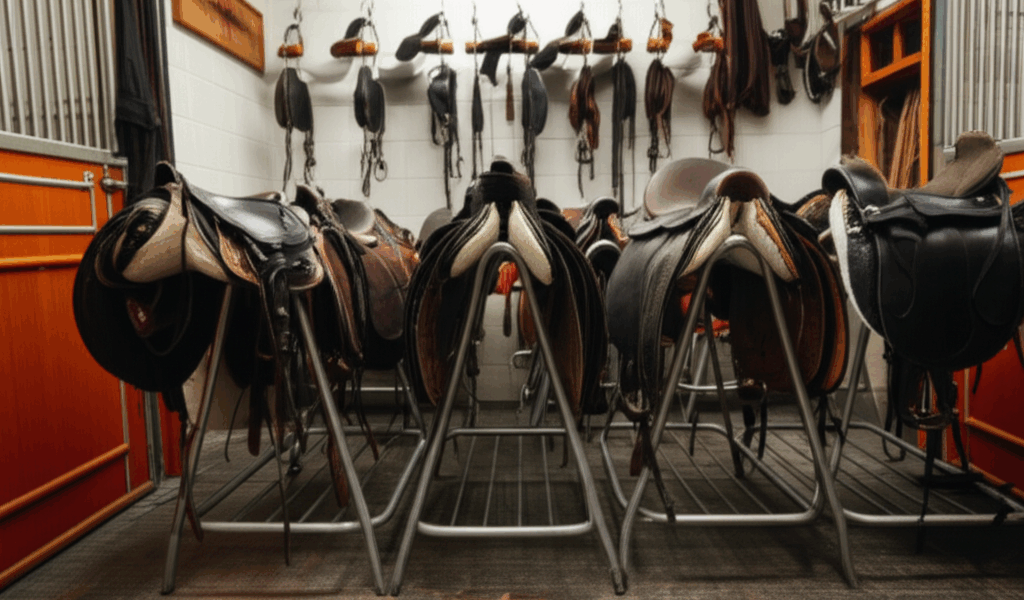
Choosing the right saddle is one of the most important decisions you’ll make as a rider. The wrong saddle affects your position, your horse’s comfort, and your ability to communicate effectively. Here’s your guide to every major saddle type.
English vs. Western: The Basics
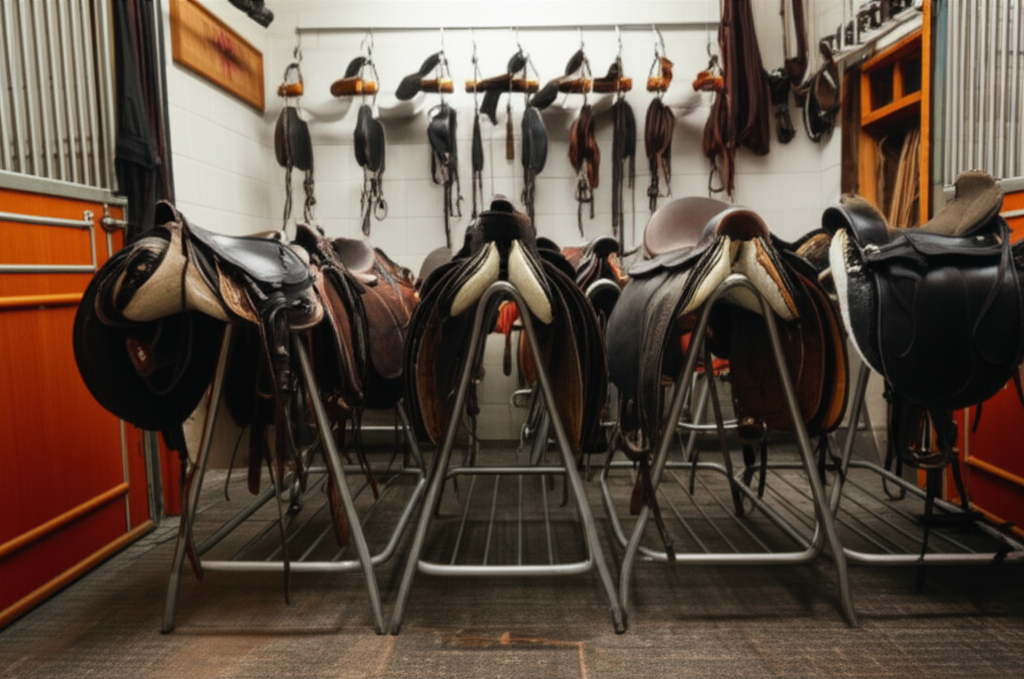
English Saddles
- Lighter weight (10-20 lbs)
- Closer contact with horse
- No horn
- Used for: dressage, jumping, eventing, hunters
Western Saddles
- Heavier (25-50 lbs)
- More leather, larger seat
- Horn for roping/security
- Used for: ranch work, trail, Western sports
English Saddle Types
All-Purpose Saddle
The most versatile English saddle—good for beginners and those who do multiple disciplines.
- Best for: General riding, light jumping, flatwork
- Features: Moderate flap, balanced seat
- Not ideal for: Specialized work at higher levels
- Price range: $300-$3,000
Dressage Saddle
Designed to allow deep seat and long leg position for classical riding.
- Best for: Dressage, flatwork
- Features: Long, straight flap, deep seat, knee blocks
- Not ideal for: Jumping (flap angle wrong)
- Price range: $500-$8,000+
Close Contact/Jumping Saddle
Designed for jumping—allows rider to stay in balance over fences.
- Best for: Hunter/jumper, show jumping
- Features: Forward flap, flat seat, knee rolls
- Not ideal for: Long trail rides, dressage
- Price range: $500-$6,000+
Eventing Saddle
Combines features for all three phases of eventing.
- Best for: Eventing, versatile riders
- Features: Moderate flap angle, secure seat, works for flat and jump
- Price range: $800-$5,000+
Saddle Seat Saddle
Designed for American Saddlebreds, Arabians, and similar breeds.
- Best for: Saddle seat showing, gaited breeds
- Features: Flat seat, cutback pommel, places rider further back
- Not for: Other disciplines
- Price range: $500-$4,000
Western Saddle Types
Trail/Pleasure Saddle
Designed for comfortable long-distance riding.
- Best for: Trail riding, pleasure riding
- Features: Comfortable seat, good padding, secure fit
- Weight: 25-35 lbs
- Price range: $400-$3,000
Roping Saddle
Built strong to handle the stress of roping cattle.
- Best for: Roping, ranch work
- Features: Heavy-duty horn, sturdy tree, low cantle
- Weight: 40-50 lbs
- Price range: $1,000-$5,000+
Barrel Racing Saddle
Lightweight for speed, with features to help rider stay secure through turns.
- Best for: Barrel racing, speed events
- Features: Lightweight, deep seat, high cantle, forward-set stirrups
- Weight: 20-30 lbs
- Price range: $500-$4,000
Reining Saddle
Allows close contact and free movement for the athletic demands of reining.
- Best for: Reining, ranch versatility
- Features: Close contact, lower horn, flat seat
- Price range: $800-$5,000+
Cutting Saddle
Designed to help rider stay with the horse’s quick movements.
- Best for: Cutting, cow work
- Features: Flat seat, tall horn for stability
- Price range: $1,000-$6,000+
Show Saddle
Western saddle designed for appearance in show ring.
- Best for: Western pleasure, showmanship
- Features: Silver trim, elaborate tooling, equitation seat
- Price range: $1,500-$10,000+
Specialty Saddles
Endurance Saddle
- Best for: Long-distance riding
- Features: Lightweight, balanced, comfortable for hours
- Styles: English and Western versions available
- Price range: $500-$3,000
Australian Stock Saddle
- Best for: Trail riding, ranch work
- Features: Poleys (knee pads), comfortable for long rides
- Price range: $400-$2,500
Treeless Saddle
- Best for: Horses with fitting issues, close contact feel
- Features: Flexible, conforms to horse’s back
- Controversy: Some debate about pressure distribution
- Price range: $300-$2,000
Saddle Fit Basics
For the Horse
- Gullet clearance: 2-3 fingers between withers and saddle
- Even contact: Saddle should sit evenly, no bridging
- No pinching: Shoulders should move freely
- Proper length: Shouldn’t extend past last rib
For the Rider
- Seat size: About 4″ between body and cantle
- Thigh length: Flaps should cover your leg
- Balance: Should naturally sit in center of saddle
Signs of Poor Fit
- White hairs (pressure points)
- Dry spots in sweaty areas
- Sore back muscles
- Behavior changes under saddle
- Rider constantly sliding forward/backward
New vs. Used Saddles
Buying Used
Pros:
- Significant cost savings (often 50%+ off)
- Quality saddles hold value well
- Already broken in
Cons:
- Unknown history
- May need repairs
- Can’t customize
What to Check on Used Saddles
- Tree integrity (flex test)
- Stitching condition
- Leather quality
- Billets/rigging
- Overall balance
The Bottom Line
The right saddle depends on your discipline, your horse’s conformation, and your body type. When in doubt, work with a professional saddle fitter—a poorly fitting saddle can cause serious problems for both horse and rider. Invest in quality, prioritize fit over looks, and remember that the most expensive saddle isn’t always the best choice for you.
Sources: Master Saddlers Association, Society of Master Saddlers, American Saddlery Association



Leave a Reply