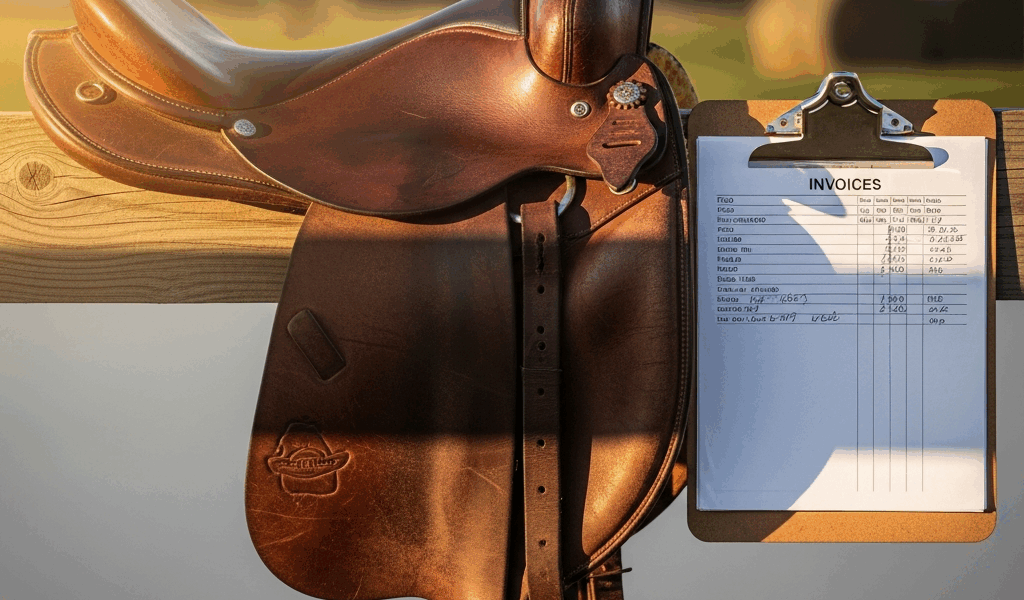
What a Horse Actually Costs in 2026 — Real Numbers
Horse pricing has gotten complicated with all the misinformation flying around. Most articles throw out ranges like “$500 to $50,000” and call it a day. That’s useless. Completely useless — especially if you’re standing in an actual barn trying to figure out whether $6,500 for a Quarter Horse is reasonable or whether someone’s taking you for a ride.
Seven years ago I paid cash for a “project” horse based almost entirely on the sticker price. Spent the next two years understanding why cheap horses end up costing the most money.
What Beginners and Trail Riders Should Budget
Plan on $3,000 to $8,000 if you’re new to ownership or just want a solid trail companion. That range buys you a grade horse — no registry papers required — or an older registered Quarter Horse or Morgan with genuine miles on it. The kind of horse that’s been someone’s actual riding horse for a decade. Not a project. Not a maybe.
But what is a “broke” horse, really? In essence, it’s a horse that has been trained to a reliable standard under saddle. But it’s much more than that — it’s temperament, manners, predictability, and years of real-world miles that no amount of sticker price can fake.
Here’s where people consistently get it wrong. Going below $2,500 is almost always penny-wise, pound-foolish. A $1,200 horse sounds appealing until the pre-purchase vet exam surfaces a lameness issue — maybe $4,000 to correct, maybe more. Or you inherit a behavioral problem that burns six months of your life and $3,000 in trainer fees. A friend of mine bought an $800 “steal” at auction. Vet bills and retraining hit $7,000 inside four months. Don’t make my mistake.
The sweet spot is a horse between 10 and 16 years old. Yes, older than you probably expected. A well-trained 10-year-old is not ancient — it’s proven. Temperament is stable, the job is known, and you’re not personally funding its education. Younger horses look cheaper on paper. They aren’t. Training fees run $35 to $75 per day, and green horses need a lot of days.
What happened between 2021 and 2023 still matters here. Pandemic-era buying created genuine price inflation across the board. A beginner’s horse that sold for $4,500 in 2020 was moving at $7,000 two years later. By 2026 the market has corrected somewhat, but quality broke horses have held their value — demand never actually went away. A sound, well-mannered 12-year-old Quarter Horse gelding still fetches $4,500 to $6,500 in most regions. That’s 2026 honest pricing.
What a Show or Competition Horse Will Run You
Everything changes the moment you add the word “competition.”
Western pleasure horses with documented show mileage run $15,000 to $35,000. Barrel horses with verifiable times and wins start at $20,000 — easily $50,000 or more for anything proven at high levels. Hunter/jumpers sit at the premium end: credible A-circuit experience under saddle starts around $30,000 and climbs into six figures if bloodlines and records align.
Dressage lands somewhere in the middle. $20,000 to $60,000 depending on level and training history. A horse trained to Third or Fourth Level with a credible trainer behind it carries real money — that’s non-negotiable, because the training itself is non-negotiable. You simply cannot cut corners in dressage and expect anything resembling results.
Here’s the number that should genuinely terrify you: the purchase price of a competition horse is often the smallest amount you’ll spend in year one. Training sessions at $50 each, entry fees between $25 and $150 per class, shoeing at $120 to $200 every six weeks, hauling costs, incidentals — annual competition expenses run $15,000 to $40,000 depending on ambition. I watched a friend budget $25,000 for a barrel horse and spend nearly that again in her first season on entry fees, diesel, and coaching alone.
The rule is simple. Buy a competition horse only if the purchase price sits comfortably within your annual discretionary spending. If $30,000 represents 80% of your horse budget, you’re stretched thin before you’ve entered a single class.
Young Horses and Prospects — Where the Math Gets Tricky
Probably should have opened with this section, honestly.
A weanling or yearling looks like a deal at $1,500 to $5,000. It isn’t. You’re paying low money for two to three years of carrying costs before the horse is even rideable — much less broke, safe, and useful.
A 2-year-old with 30 days of backing adds $2,000 to $4,000 to the asking price because someone invested real time and absorbed real liability. Running a prospect through to broke costs money across the full picture — farrier trims every eight weeks at $40 to $80, feed and hay, monthly training at $35 to $75 per day, and a veterinary pre-purchase workup running $500 to $1,200 with radiographs.
Prospects are not cheaper than broke horses. That’s the myth. The broke horse costs $5,000 upfront. The prospect costs $2,000 upfront, plus roughly $1,500 annually in carrying costs across 24 months, plus $4,000 in training. You’re near $9,000 by the time it’s reliably safe — and that’s assuming nothing goes sideways during physical development. It sometimes does.
Prospects make sense for experienced owners with an existing facility, existing support, and genuine patience. For first-time buyers, this path is genuinely risky. That’s not negotiable.
Hidden Costs That Change the Real Price
The purchase price is not the cost of owning a horse. It’s the entry fee. Those are different things.
Hay in 2026 runs $15 to $22 per bale across most regions — drought conditions and fuel costs have kept prices elevated. A typical horse eats roughly 45 to 50 pounds daily, approximately two bales, which lands you at $10,950 to $16,060 annually on hay alone. Board runs $400 to $1,200 monthly depending on whether you’re at a basic pasture operation or a full-service facility near a metro area — $4,800 to $14,400 per year.
Farrier work every eight weeks costs $40 to $200 per visit depending on your region and whether your horse needs shoes or just trims. Routine veterinary care — vaccines, Coggins tests, annual dental floating — averages $800 to $2,000 per year for a healthy horse with no existing lameness issues.
The pre-purchase exam before you buy runs $300 to $700 with radiographs. Skipping it is one of the most expensive decisions you can make. I skipped it once. That was a $4,000 lesson. I’m apparently someone who learns things the hard way, and skipping the PPE works for exactly no one while cutting that corner never ends well.
Total first-year ownership cost for a healthy horse at modest board: your purchase price, plus $16,000 to $24,000 in carrying costs at minimum. That is the real number. Everything else is optimism.
Where to Buy and How Price Changes by Source
Source matters more than most buyers realize — at least if you care about what you’re actually getting.
Private sales through word-of-mouth or online listings offer maximum transparency. You talk to the actual owner, see riding history firsthand, assess temperament in context, and negotiate directly. Prices reflect real value because there’s no middleman markup built in.
Auction horses swing wildly. A $500 auction horse is $500 for documented reasons — trauma history, behavioral issues, health problems you genuinely cannot diagnose in a ring environment in under three minutes. Occasionally good value surfaces at auction. Most of the time you find expensive problems wearing a cheap price tag. That’s what makes auction buying endearing to gamblers specifically, and risky for everyone else.
Trainer sales carry a 10% to 20% markup over private sale value — but you’re typically getting veterinary documentation, training records, and a short trial period. That costs more. It also transfers risk toward the seller, which has real monetary value when you’re new and don’t know what you don’t know.
Rescue adoptions run $500 to $2,500 with histories that range from fully documented to essentially unknown. Some rescues are tremendous deals. Some carry behavioral or physical baggage that requires professional help to unpack. So, without further ado, here’s the honest bottom line on sourcing: for most first-time buyers, a private sale is the right answer — specifically a horse you can ride before buying, with a documented history from an owner who has no financial incentive to conceal problems. Add a pre-purchase exam with x-rays. Pay more upfront. Spend less overall.
For a breed-specific example of separating purchase price from delivered and ongoing cost, see our Andalusian and PRE price guide.

Leave a Reply