Why Tail Rubbing Happens — The Short Diagnosis List
Tail rubbing has gotten complicated with all the conflicting advice flying around. The real culprit was smegma buildup in her sheath the whole time.
But what is tail rubbing, really? In essence, it’s your horse’s response to localized irritation. But it’s much more than that — it’s a symptom pointing at five very different causes, and treating the wrong one wastes your money and your horse’s comfort.
Here are the five causes ranked by how often I actually see them, with quick visual clues for each:
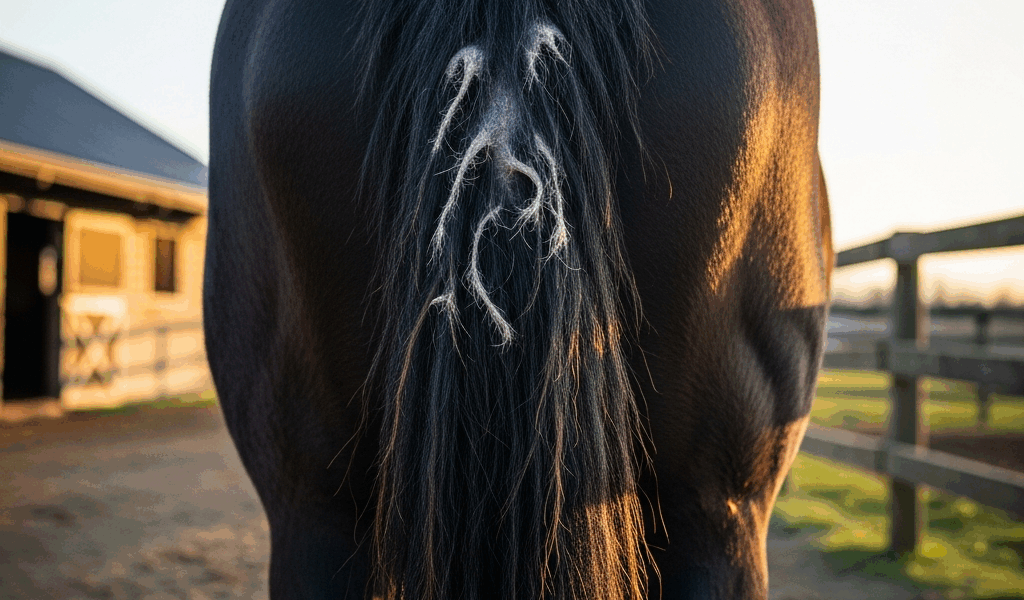
- Pinworms — Yellowish, crusty residue around the tail base and dock. Rubbing gets worse at night. Some horses rub until bare patches appear.
- Dirty or smegma-clogged dock — Black, waxy crust under the tail. Strong smell. Hits geldings harder, but mares aren’t immune.
- Sweet itch (Culicoides midge allergy) — Seasonal rubbing, May through September. Mane gets hit too. Worst at dawn and dusk.
- Fungal or bacterial skin infection — Raw, scabby patches at the tailhead. Similar spots may show up elsewhere on the body.
- Internal parasite overload — Rare. Usually comes with poor body condition, dull coat, and other symptoms beyond just the tail.
Read the section matching your horse’s symptoms. Skip the rest.
How to Tell Pinworms Are the Culprit
Pinworms — Oxyuris equi, if you want to get technical — live in your horse’s large intestine. The females crawl out at night and deposit eggs around the dock area. Those eggs dry into a yellowish, crusty residue that itches intensely. Genuinely unpleasant for everyone involved.
Here’s the catch most people don’t know. Standard fecal egg counts miss pinworms almost every time. The eggs aren’t in the manure — they’re on the skin. A tape test is far more reliable. Press clear sticky tape to the dock area first thing in the morning, before your horse has had a chance to roll. Stick it to a glass slide and take it to your vet. Under magnification, the tiny oval eggs are easy to spot if they’re there.
If your horse has that classic yellowish crust around the tail base and is clearly miserable after dark, treat for pinworms anyway — even without a positive tape test. The evidence is right in front of you.
Dewormer choices that actually work
Use oxibendazole or fenbendazole. Not ivermectin — at least not as your first choice anymore. Resistance has spread significantly, and plenty of horses simply don’t respond to it now. Oxibendazole is the current gold standard. A single oral dose at 10 mg/kg. Brand name Anthelcide EQ is widely available, along with several generics. Budget around $20 to $40 depending on your horse’s weight and supplier.
Repeat the dose two weeks later. One treatment almost never clears it completely.
Treat every horse on the property. Pinworms move through contaminated soil and pasture faster than most people expect.
Cleaning the Dock and Sheath — Step by Step
Probably should have opened with this section, honestly. Most horses stop rubbing within three to five days of a proper cleaning. This is the fix owners skip most — and it costs almost nothing.
The buildup causing the itch is smegma — dead skin cells mixed with sebaceous secretions — plus environmental dirt, dried sweat, and manure residue. It hardens into a dark, waxy crust that packs into every crease and fold under the tail dock. In geldings, the same material accumulates heavily in the sheath.
What you need
- Warm water — not hot
- A soft sponge or washcloth
- Mild horse-safe soap — Betadine scrub or plain glycerin soap both work well. Skip the human products.
- A small bucket or hose
- Gloves — optional, but I’m apparently particular about this and they work for me while bare hands never quite feel right
- A clean towel
The process
Tie your horse securely first. Lift the tail and soak the dock area with warm water for a minute or two — this softens the buildup enough to actually move it. Use your sponge with a small amount of soap and gently scrub the underside of the dock. Work into the base, the creases where hair meets skin, and as far up as your horse tolerates. Go gently. That skin has been covered and irritated for potentially months or years.
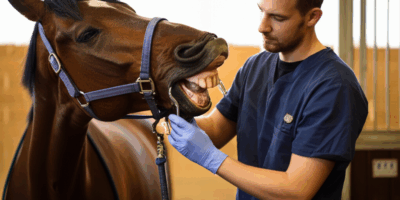
For geldings, clean the sheath area too. That’s where smegma builds up most visibly. Same warm soapy water, same sponge. The bean — a hardened secretion inside the urethral opening — usually needs manual removal. Your vet can walk you through it, or many vets handle it during routine exams. It’s not painful when done correctly, but the first time is awkward. Don’t make my mistake and skip this step thinking it’s optional.
For mares, focus on the underside of the tail and the dock region. Same debris accumulation, same solution.
Rinse thoroughly with clean warm water. Towel dry or let air dry completely.
Repeat every two to four weeks during heavy sweat seasons — roughly June through August — and monthly the rest of the year. Once you establish the routine, tail rubbing stops and tends to stay stopped.
Sweet Itch — Seasonal Rubbing From Insect Bites
Culicoides midges cause some horses serious misery. These are tiny biting insects — no-see-ums is what most people call them — and in sensitive horses they trigger a severe allergic response. Intense itching, rubbing, and hair loss along the neck, mane, withers, tail, and croup. That’s what makes sweet itch so recognizable to us horse owners who’ve dealt with it — the pattern is almost unmistakable once you’ve seen it.
The midges are most active at dawn and dusk. They breed in wet, boggy ground near standing water. Horses kept outside during those hours take the worst hits.
If your horse rubs its tail and mane primarily between May and September, and the rubbing eases when temperatures drop or when you stable during peak midge hours, that’s your diagnosis.
Fixes for sweet itch
- Fly sheets with belly coverage — Standard fly sheets miss the belly entirely, which is a problem. Rambo and Horseware both make belly-coverage options worth the investment. Budget $150 to $300.
- Stable during peak hours — Inside from around 5 p.m. to 8 a.m. through June, July, and August. Midges can’t penetrate stable walls. Simple and effective.
- Permethrin-based repellent spray — Applied every few days directly to the horse. Pyranha and Farnam both make solid options — roughly $12 to $20 per bottle at most tack stores.
- Antihistamines or corticosteroids — For severe cases, your vet can prescribe these to manage the allergic response while you handle the environmental side.
Sweet itch doesn’t go away. It requires ongoing management, not a one-time fix. That’s what makes it the most demanding item on this list.
When the Rubbing Does Not Stop — Next Steps
So, without further ado, let’s say you’ve ruled out pinworms, done a thorough cleaning, and adjusted for seasonal midge exposure. Horse is still rubbing. Call your vet.
At that point, you’re likely looking at fungal infection — ringworm most commonly — bacterial skin infection from secondary trauma at the rubbing site, contact dermatitis from a new blanket or fly spray, or in rare cases, a neurological issue affecting the tail region. Your vet will do a physical exam and may take a skin scraping, fungal culture, or biopsy depending on what they find.
Antifungal or antibiotic treatment resolves most of these cases within two to four weeks. Fast, once you have the right diagnosis.
Tail rubbing is fixable — almost always. Start with diagnosis, not treatment. That’s the mistake I made with my mare, and it cost me three weeks and about $90 in unnecessary dewormer. Don’t make my mistake.



Leave a Reply