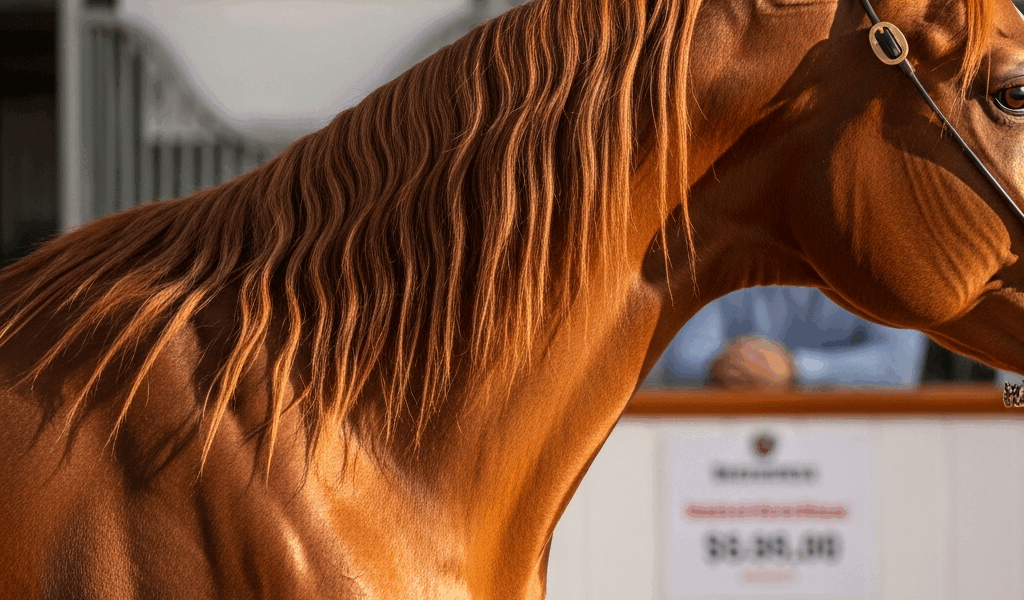
Arabian Horse Price Ranges by Type
Arabian horse pricing has gotten complicated with all the outdated listings and contradictory advice flying around.
A single number tells you almost nothing. The market splits cleanly into four categories — and knowing which one you’re shopping in changes everything.
| Type | Price Range | What You Get |
|---|---|---|
| Show Quality | $25,000 — $150,000+ | Competition records, recognized bloodlines, extensive training history |
| Breeding Stock | $5,000 — $50,000 | Registered pedigree, genetic testing available, breeding record or potential |
| Pleasure Riding | $3,000 — $15,000 | Rideable, registered, no show record necessary |
| Rescue/Adoption | $500 — $3,000 | Variable condition, may need rehabilitation, organizations handle placement |
Show quality horses occupy a different universe entirely. These are the ones you see in halter classes at nationals — polished, pedigreed, priced accordingly. A five-year-old Arabian mare carrying a Grand Championship title and impeccable Egyptian bloodlines? You’re looking at $80,000 minimum. I watched one sell for $135,000 in 2024 at the All American Arabian Horse Futurity. That was not an outlier.
Breeding stock sits in the middle ground. Not every registered Arabian makes a show horse, but most can produce good foals. A well-conformed mare with a clean genetic panel might fetch $12,000 to $25,000. Stallions command premium prices — proven sires run $15,000 to $40,000, sometimes higher depending on foal crop reputation.
Pleasure horses. This is where most everyday riders actually shop. Rideable, registered, sound for light work. Prices cluster between $4,000 and $10,000. I’m apparently someone who assumed age determined price within each category — and that assumption cost me time. Condition and training history matter far more than how many years the horse has lived. Don’t make my mistake.
What Drives Arabian Horse Prices Up
But what is an Arabian horse’s value really based on? In essence, it’s bloodline. But it’s much more than that.
The most coveted lines trace back to Egyptian breeding programs. A horse carrying Ansata Ibn Halim genetics or Moniet El Nefous bloodlines automatically costs more — sometimes 30% more than comparable horses without those connections. Breeders pay for this. Predictable type, temperament, and bone density make it worth the premium.
Show records create value you can actually quantify. A mare with back-to-back regional champion titles in halter adds $15,000 to $25,000 to her baseline price. Wins in English or Western pleasure events add maybe $8,000 to $12,000. I’ve watched trainers pass on otherwise identical horses simply because one had ribbon history and one didn’t. That’s what makes documented performance so endearing to us buyers.
Age matters unevenly — and this surprises people. A five-year-old in training peak often costs less than a fully mature nine-year-old with established show records. A two-year-old with good conformation might outprice an eight-year-old at pasture. The young one carries potential value that hasn’t expired yet. Once horses hit fifteen, prices drop unless exceptional show pedigree or breeding history justifies otherwise.
Training creates obvious stratification. A horse with basic groundwork might run $4,000. That same horse after 120 days of professional work under saddle? $8,500. Training reduces buyer risk — and sellers price that reduction accordingly.
Color influences pricing more than people admit publicly. Gray Arabians sell faster and carry slight premiums. Chestnut and bay move predictably. Palomino and cremello trigger real interest from hobby breeders willing to overpay. I’ve documented color premiums as high as $2,000 on otherwise identical horses. Frustrating? Yes. Real? Absolutely.
Specific high-value lines worth knowing: Ansata Ibn Halim descendants dominate the upper market. Moniet El Nefous crosses perform consistently at auction. Czech Arabians — from Eastern European breeding programs — command premiums for sport horse traits. Russian lines like Arax produce predictable bone and movement. These aren’t just names on paper. They’re genetic packages with measurable influence on how a horse develops.
Hidden Costs Beyond the Purchase Price
Probably should have opened with this section, honestly. The purchase price is just the starting line. So, without further ado, let’s dive in.
Board runs $400 to $900 monthly depending on region and facility quality. Basic pasture board in rural Kentucky costs around $350. A stall with daily turnout at a decent facility in California runs $750. Premium facilities — arenas, grooming areas, grain included — hit $1,200 or more. Over twelve months, you’re banking on $5,000 minimum for a modest setup.
Vet care is non-negotiable. One annual wellness exam with vaccinations and dental work runs $350 to $600. Emergency calls run $150 to $300 per visit. Colic. Lameness. Respiratory flare-ups. Every Arabian owner I know spends $1,500 to $3,000 annually on routine work alone — and one unexpected surgery can obliterate an entire year’s budget.
Farrier services run $120 to $200 every eight weeks. Roughly $900 to $1,500 yearly. Arabians need consistent hoof care — neglect it and you’ll pay far more fixing the downstream problems.
Insurance might be the best option, as horse ownership requires protection against catastrophic loss. That is because a mortality and major medical policy costs $600 to $1,200 annually — far less than absorbing a $30,000 emergency colic surgery without coverage. Most people skip it. Most people also can’t cover that bill out of pocket.
Tack, equipment, and supplies add $500 to $2,000 in year one. Saddle, bridle, halters, lead ropes, grooming kit. Starting completely fresh costs real money — at least if you don’t already own any of it.
First-year total for a pleasure Arabian: $4,000 purchase + $6,000 board + $2,500 vet care + $1,200 farrier + $800 supplies = $14,500. That assumes zero emergencies, no serious training, no competition entry fees. Add any of those and you’re pushing $18,000 to $22,000 in year one alone. These numbers matter. A $5,000 horse becomes an $8,000 annual commitment after purchase. Only a fraction of buyers realize this before signing paperwork.
Where to Find Arabians for Sale in 2026
While you won’t need to attend every major auction circuit, you will need a handful of reliable channels — and knowing which ones to trust matters.
First, you should check breed registries — at least if you want verified bloodlines. The Arabian Horse Association maintains breeder directories and sales listings. Transparency varies. Some breeders list extensively on the AHA website; others only advertise through private networks. The registry verifies registration, not sales — but breeders using the platform tend toward moderate transparency.
Auctions represent the most concentrated buying opportunity. The All American Arabian Horse Futurity — held in Albuquerque, New Mexico every October — moves 300-plus horses in three days. Prices range from $1,500 for young prospects to $180,000 for finished show horses. The Scottsdale Arabian Horse Show auction in February attracts serious money. Both events carry serious commission costs — expect 10% to 15% buyer’s fee on top of the hammer price.
Private sales dominate the market, honestly. Most Arabians move directly from breeder to buyer through word-of-mouth, trainer connections, or private listings on Equine.com, Facebook groups, and breed-specific websites. No middleman means no auction fee — but you’re navigating individual negotiations without institutional oversight.
Rescue organizations save horses from slaughter auctions and neglect situations. Groups like Arabian Horse Rescue, Foster, and Placement (AHRFP) operate across multiple states. Costs typically run $500 to $2,500 and include basic health evaluation. Many horses need rehabilitation. The honest truth: rescue horses sometimes carry physical or behavioral issues that require real management — issues ownership didn’t cause but does inherit.
Local trainers maintain informal networks. Frustrated by searching public listings with limited results, I eventually just started building relationships with established trainers — and that’s how I found my current horse. Not through any official channel. Through a trainer who knew exactly what I needed and called me before the listing ever went public. That access is genuinely valuable.
Online marketplaces cast the widest net but require careful vetting. Equine.com, Craigslist, Facebook Marketplace, and breed forums host both legitimate sellers and people actively concealing problems. Meet in person. Video call first. Get a pre-purchase vet exam — every time. Don’t wire money to strangers. I’m apparently someone who had to learn this the almost-hard-way, and every experienced buyer I know has a story. Don’t make my mistake.
International imports from Egypt, Russia, and Poland carry premiums that ripple through domestic pricing. A Russian-imported mare costs more than a domestic mare with similar conformation — and that pressure affects mid-range pricing across the board.
The Arabian horse price you’ll actually pay in 2026 depends entirely on type, bloodline, training, and where you buy. Shop informed. Get pre-purchase exams. Account for annual costs before you fall in love with a horse you can’t sustain. The difference between a smart decision and a costly one usually comes down to understanding these variables before any money changes hands.

Leave a Reply