Why Horses Buck Under Saddle — Pain vs. Attitude
Bucking has gotten complicated with all the conflicting advice flying around. Every trainer seems to have a hot take. Ride through it. Lunge it out. Check the saddle. Check your position. Meanwhile, you’re just trying to figure out why your horse keeps launching you toward the arena dirt.
Here’s the short version: every buck means something. That something falls into one of two categories — physical pain or behavioral. The order you investigate them matters more than almost anything else you’ll do. Pain first. Always pain first. A horse in discomfort that gets punished for communicating that discomfort doesn’t stop bucking. It just stops trusting you.
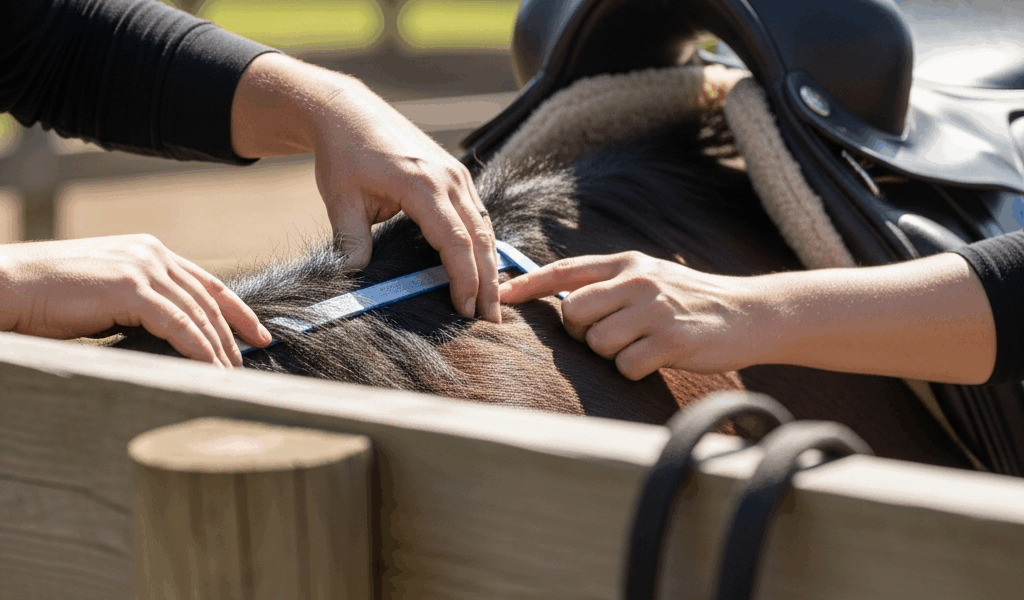
My mare was a 12-year-old Quarter Horse. Spring rides, fresh off winter pasture, suddenly explosive in the first ten minutes. I lunged her harder, rode her more forward, got frustrated when nothing changed. Three months of that before a saddle fitter put her hands on either side of the tree and said, “This is pinching her shoulders every time she takes a stride.” Swapped the saddle. Bucking stopped. Completely. That was a $340 fitting appointment and a used saddle off EquineNow for $650. Don’t make my mistake.
So, without further ado, let’s dive in.
Check These Physical Causes First
Saddle Fit — The Most Overlooked Culprit
But what is a saddle fit problem, really? In essence, it’s a pressure issue — concentrated force on specific points of the horse’s back during movement. But it’s much more than that. It’s cumulative. It builds. The horse tolerates it for weeks, sometimes months, before the bucket fills and it starts bucking to get relief.
Push down on your pommel, then your cantle. Does the saddle rock? It shouldn’t. A tree that’s too wide sinks and drives the panels into the horse’s ribs. Too narrow, and you get pinching at the withers — both ends of that spectrum hurt. Run your hand under the panels after tacking up, before you even swing a leg over. Flat contact along the full panel length is what you want. Gaps mean bridging. Bridging means your 160 pounds is pressing down on two small contact points instead of distributing across the whole panel. That’s what makes bucking endearing to us as a “mystery” — it seems explosive and sudden, but the horse has usually been hinting for a while.
Girth-related bucking gets misread constantly. A pinching girth, a girth placed a half-inch too far forward, or actual girth galls — raw, chafed skin in the girth groove — will produce bucking that looks like attitude. It isn’t. Check the groove itself with your fingers before and after rides. Some horses develop serious sensitivity there even without visible damage. Fleece-lined girths run about $45–$80 at most tack shops. Sometimes that’s the entire fix.
Professional saddle fitting costs $150–$400 depending on your region. A replacement saddle in good fit, bought used, runs $400–$1,200. Call a certified saddle fitter — not a tack shop employee, an actual credentialed fitter. The Society of Master Saddlers has a directory. Start there.
Gastric Ulcers and Hind End Pain
Ulcers are sneaky. The horse starts a ride fine, then becomes reactive and girthy about ten minutes in — right around when stomach acid production ramps up with movement. You can’t confirm ulcers without a vet scope, but the pattern is recognizable: sudden behavior shift mid-ride, cinchiness during tacking, dull coat, fussy eating, bucking that worsens with collection or contact work.
Kissing spines are another one. Impinging dorsal spinous processes — the vertical bones along the spine making painful contact — tend to produce bucking that gets worse at canter, worse when the horse is asked to round and push from behind. Vet ultrasound or radiographs confirm it. Treatment ranges from saddle adjustment and correct flatwork all the way to injections or a rest period. Depends on severity.
A vet exam is not optional when bucking appears suddenly or escalates ride to ride. Mention the bucking specifically — lameness exams sometimes miss back pain unless you flag it. Ask for back palpation and full hind-end flexion tests while you’re there.
Back Soreness and Muscle Tension
A horse with genuine back soreness will buck at transitions — specifically when the rider’s weight shifts or when the horse is asked to step under and engage. Watch your horse move at liberty first. Stiffness through the topline, asymmetry side to side, reluctance to stretch down — those are signals. Bucking that feels desperate rather than defiant, like the horse is trying to dislodge something rather than protest something, points hard toward pain. That distinction matters.
Is It a Specific Trigger — Canter, Girth Tightening, or a Certain Spot?
The trigger narrows the diagnosis fast.
Bucking only at canter: Classic hind end pain pattern. Could also mean the saddle fits acceptably at walk and trot but shifts when the horse has to engage more. Vet exam first, then saddle evaluation specifically at the canter — ideally with a fitter watching from the ground.
Bucking when the girth tightens: Stop cranking the girth up all at once. Does the bucking happen during tacking, or only once you mount and add weight? Ulcers, girth galls, or sensitivity from old pressure points are all possibilities here. A vet scope plus a softer girth is the starting point. I’m apparently a fleece-girth convert now and Professionals Choice works for me while traditional leather never solved the problem for my mare. Small thing. Real difference.
Bucking in one specific arena location: Usually behavioral — anticipatory pattern, gate-sourness, or an association with something unpleasant that happened there. Worth noting, but not the urgent concern.
Bucking right out of the gate every time: Fresh horse, excess grain, insufficient warm-up. Not a red flag. Predictable, manageable.
Sudden onset bucking with no obvious trigger: Red flag. Something changed physically. Stop riding and call the vet.
Behavioral Bucking — What It Looks Like and How to Fix It
Probably should have opened with this section, honestly — the riding fix is simpler than the diagnostic work. But it’s completely useless if you skip the physical checklist first.
Behavioral bucking has a different texture. It’s rhythmic sometimes, even a little playful. The horse bucks and spins, or bucks and bolts, or throws in a protest buck during a specific ask — sitting trot, a downward transition, a lateral movement. It feels defiant. Annoyed. Not desperate.
Three flavors worth knowing:
- Learned bucking. The horse figured out that bucking works. It bucks, the rider gets unbalanced, the horse gets a few free strides. That feedback loop reinforces it. These horses get more deliberate over time, not less.
- Green horse testing. Young or recently started horses exploring consequences. They haven’t learned what “no” feels like from a rider yet. One firm, clear response usually ends it fast.
- Fresh or overly energetic. Too much energy, not enough outlet — common in spring or after rest days. These horses buck from exuberance. The fix is more turnout, less grain, more consistent work schedule.
Fix starts on the ground. Fifteen minutes of longe work — not to tire the horse out, but to establish forward from a light aid and relaxation into a rhythm. That resets the conversation before you get on.
Under saddle, the instinct is to pull back during a buck. That’s the wrong move — you’ll lose your balance and the horse learns you’re vulnerable. Instead, drive forward hard. Leg on, push into the next stride aggressively. Most horses can’t sustain bucking while genuinely moving out. It’s mechanically harder. That’s what makes forward riding endearing to us trainers as the standard answer — it actually works, when pain isn’t the issue.
When to Stop Riding and Get Help
Be direct with yourself about these.
- Sudden onset. Never bucked before and suddenly does. Stop riding. Call the vet. Something changed.
- Escalating intensity. Each ride gets bigger, harder, more frequent. That’s pain worsening, not behavior settling. Stop.
- Bucking with neurological signs. Uncoordinated movement, stumbling, confusion alongside bucking. Urgent. Vet same day.
- Visible injury or gall. Saddle sore, girth raw spot, swelling anywhere along the back or girth groove. The horse needs a break. Riding through it embeds the pain association deeper.
Call a vet, a certified saddle fitter, or an equine chiropractor — whichever the pattern points toward. This is not optional. This is the difference between solving the problem in two weeks and spending three months destroying your horse’s trust the way I did.
Most bucking resolves once you find the actual root. Pain clears with the right intervention. Behavior corrects with clear, consistent riding. The frustration almost always comes from conflating the two — treating a pain problem like an attitude problem, or vice versa. Separate them. The rest follows from there.

Leave a Reply