Why Coughing While Eating Is Different From Regular Coughing
Horse health has gotten complicated with all the conflicting advice flying around. But coughing during meals? That one actually narrows things down fast — at least if you know what to look for.
The timing here is everything. A cough during a trail ride lives in one category. Dusty pasture — another. But a cough timed specifically to feeding tells you exactly where to look first. That’s what makes this particular symptom so useful to us horse owners. It’s practically doing half the diagnostic work for you.
This article focuses exclusively on that feeding-time cough. If your horse coughs during work but eats fine, or coughs in his stall but not at meals, that’s a different conversation with your vet. This one targets the exact moment food enters his mouth and trouble starts. So, without further ado, let’s dive in.
Choke — The One You Cannot Afford to Miss
Choke in horses looks nothing like choking in humans. Misunderstanding this costs critical minutes. Don’t make my mistake.
But what is equine choke? In essence, it’s a feed blockage in the esophagus — not the airway. But it’s much more than that. The horse can still technically breathe, but he cannot swallow, and the distress signals are unmistakable once you know them.
Here’s what you’ll see: eyes widening, neck extending abnormally long and rigid. Food — actual chewed grain or hay — coming from the nostrils. That image alone tells you everything. Repeated swallowing attempts, gagging motions, saliva dripping from the mouth. Some horses panic outright. Others go eerily still.
This is the moment you stop everything else and call your veterinarian. Not in ten minutes. Not after a home remedy. Now.
While you wait — and expect them within 30 to 60 minutes if you’re within an hour of a clinic — pull every feed source immediately. Hay, grain, water, all of it gone. Do not try forcing anything down his throat or aggressively massaging his neck. Keep him calm. Walk him slowly if he wants to move. Many horses resolve a mild choke once the panic subsides, but others need sedation or nasogastric tube passage to clear the blockage safely. Your vet decides which.
The good news: caught early, choke rarely turns life-threatening. Horses don’t aspirate food into their lungs the way humans do — their airway architecture is built differently. But it still demands immediate professional attention, full stop.
Dusty or Moldy Hay Is the Most Common Culprit
After choke, this is probably what you’re dealing with. Low-quality hay triggers feeding-time coughs far more often than most owners realize — and the cough usually starts the moment eating begins.
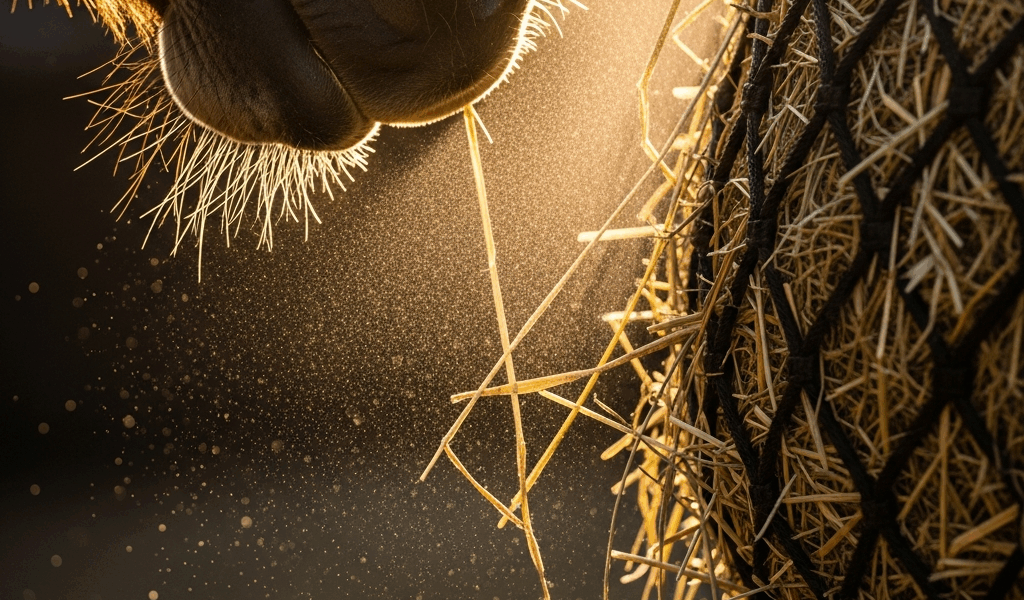
Pay attention to what it sounds like. A dry, hacking cough repeated throughout a meal often signals hay dust or mold particles hitting the airways. Sometimes it’s just a brief clearing sound. Other times it’s four or five coughs in a row, every few minutes, for the entire meal. A wet or productive-sounding cough — where the horse seems to be clearing mucus — points toward heaves or equine asthma, an allergic airway condition that worsens considerably with dust exposure.
Here’s what works. Soaking hay for 10 to 15 minutes before feeding dramatically cuts dust levels. Haylage — fermented hay, sold in plastic-wrapped bales — produces virtually zero dust and runs about 20 to 40 percent more than dry hay depending on your region. Steamed hay is another option. A handful of commercial steamers exist — Haygain being the most recognized brand — though they run $400 to $800 upfront. Expensive, yes. But genuinely effective.
Environmental changes matter too. Feed in well-ventilated areas, not closed stall corners where dust settles and concentrates. Shavings over straw for bedding, windows or fans for airflow, no hay storage directly above the living space.
Older horses are more prone to this. Stall-kept horses see worse symptoms than horses with regular turnout. I’m apparently sensitive to barn dust myself and immediately notice the difference between a well-ventilated run-in and a closed stall — my horses seem to feel the same way. Switching hay types alone almost always produces noticeable improvement within two weeks.
Dental Problems Can Cause Coughing at Meals
Probably should have opened with this section, honestly. It connects directly to how horses process food, and it’s the one owners most consistently overlook.
Sharp molar points, missing teeth, general mouth pain — any of these cause poor chewing. Unchewed boluses of hay or grain go down in chunks that irritate the throat and trigger coughing as the body tries to clear them. Not choke in the classic sense, but alarming to watch either way.
Look for quidding — that’s when your horse chews, then drops balls of partially processed hay from his mouth. Head tilting to one side mid-meal. Taking twice as long to finish. Eating with unusual delicacy instead of his normal style. These all point to dental discomfort.
A dental float fixes this. Frustrated by my mare’s intermittent coughing for nearly two years, I finally called in a vet to float her teeth — using a standard motorized rasp, sedation, and about forty minutes of work. The relief was immediate. She ate her next meal without a single cough.
Horses need a dental check every 6 to 12 months. Many owners skip it entirely — I did, and paid for it with two years of unnecessary worry. A float runs $150 to $300 depending on location and whether sedation is required. That’s probably the highest-ROI veterinary investment you can make for a horse with feeding issues.
What To Do Right Now — Quick Triage Checklist
Call your vet immediately if:
- Feed or water is visibly coming from your horse’s nostrils
- Your horse appears panicked, distressed, or unable to swallow
- Coughing doesn’t stop after 10 minutes or keeps worsening
- Breathing difficulty accompanies the cough
Monitor at home and adjust if:
- Your horse coughs occasionally during meals but shows zero distress
- The cough tracks directly to hay quality or visible dust
- Eating normally, maintaining weight, no secondary symptoms
- No nasal discharge, fever, or lethargy present
Three immediate at-home steps while you assess:
- Soak hay for 15 minutes before the next meal — observe whether coughing drops off
- Schedule a dental float as both a fix and a diagnostic check
- Move feeding to a well-ventilated area and pull any moldy or dusty hay from the premises entirely
Catching feeding-related coughs early almost always leads somewhere manageable. Most situations resolve within days once you find and address the actual source. That’s what makes this particular problem — frustrating as it feels at 6 a.m. with a coughing horse — genuinely solvable.

Leave a Reply