How to Tell If Your Horse Is Actually Dehydrated
Horse hydration has gotten complicated with all the conflicting advice flying around. And honestly, the very first thing you need to figure out isn’t why your horse won’t drink — it’s whether they’re actually dehydrated right now or just being annoyingly selective about water quality. That distinction matters more than most people realize. I’ve watched owners spiral into full panic over a horse that skipped one bucket while a perfectly good water trough sat thirty feet away, completely full.
So, without further ado, let’s dive in.
The pinch test is your fastest assessment tool. Grab a fold of skin on the neck or shoulder — the neck works fine — and pull it upward gently. Snaps back flat immediately? Hydration’s good. Stays tented for even a second or two? You’re looking at dehydration. Dehydrated skin loses elasticity. Simple as that.
Next, check the gums. Lift the upper lip and look at the tissue above the teeth. Pink means good. Pale or white means reduced blood circulation — that’s serious dehydration territory. Press your thumb against the gum for one second, then release. Color should return within one to two seconds. Takes longer than that? Call your vet. Don’t wait.
That thumb-press check has an actual name: capillary refill time. It tells you whether your horse’s cardiovascular system is compensating for fluid loss. A delay of three seconds or more isn’t a hydration preference problem anymore — it’s a medical emergency. Full stop.
But if the pinch test looks normal and the gums are pink with a quick refill? Your horse isn’t in acute danger. Refusing water is still worth addressing, but you can work through causes methodically instead of racing to the emergency clinic at 11 p.m.
The Most Common Reasons Horses Refuse Water
Water Temperature — Often Overlooked in Winter
Horses prefer water somewhere between 45 and 65 degrees Fahrenheit. In January, a bucket left outside overnight is neither of those things. I learned this the hard way when my mare refused her trough for three straight days while I convinced myself something neurological was happening. The water temperature was 34 degrees. She wasn’t being difficult — she was being a horse with an entirely reasonable preference.
Ice-cold water triggers something that reads as an aversion signal to certain horses. They’ll take a mouthful, spit it out, walk away. Not because they aren’t thirsty. Because something feels wrong to them. On the other end, water above 70 degrees tastes stale — less appealing during hot weather or long trailer hauls. That’s what makes water temperature so endearing to us horse owners — it’s simultaneously obvious and easy to forget.
The Water Source Smells or Tastes Foreign
Take your horse to a show, a clinic, a friend’s barn — the water tastes different. Different minerals, different chlorine levels, sometimes tannins or algae from the local supply. A horse that drinks without hesitation at home might refuse the first three buckets at a new location entirely.
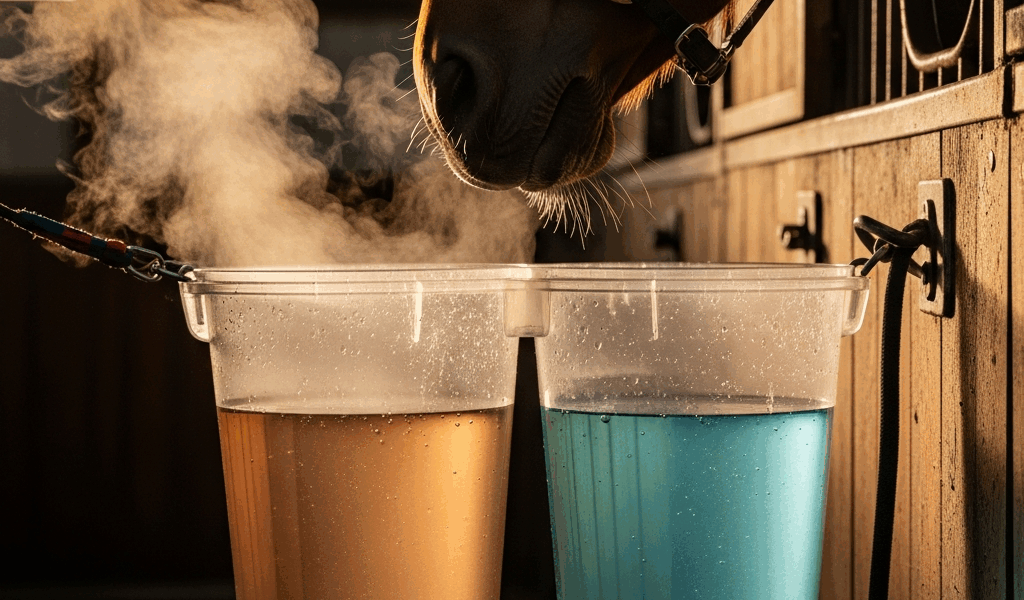
Bucket material matters more than people think. Rubber buckets absorb odors over time — older ones especially. Plastic leaches chemicals. A white residue on the inside signals mineral buildup, and even visually clean water tastes off if the bucket itself hasn’t been scrubbed properly. I switched to stainless steel years ago and noticed a difference almost immediately.
Bit Residue and Metallic Taste
This one surprises almost everyone. After a ride, residue from the bit — steel particles, copper, occasionally rust — lingers in the horse’s mouth. Water tastes metallic. Some horses are dramatically more sensitive to this than others. I’m apparently one of those people with a horse on the sensitive end of that spectrum, and rinsing her mouth before offering water after a ride made a noticeable difference. Don’t make my mistake of assuming they’re just being stubborn post-workout.
Algae, Debris, or Contaminated Troughs
A green trough in August isn’t just unsightly. It tastes like pond water. Because it essentially is pond water. Floating debris, dead insects, pollen — horses notice all of it. Their standards for cleanliness aren’t far from ours, honestly. Maybe higher.
Step-by-Step Fix for Each Cause
- If water temperature is the problem: In winter, bring water to at least 45 degrees before offering it. A roughly 1:3 ratio of warm water to cold water gets you into the acceptable range without overshooting. During travel, let a cold bucket sit in direct sun for 20 minutes before offering — it won’t be warm, but it won’t feel like snowmelt either.
- If the water source is unfamiliar: Add a splash of apple juice or a small pinch of salt to mask unfamiliar minerals. Start with around 2 ounces of unsweetened apple juice per bucket — enough to shift the flavor profile without making it weird. I travel with a gallon jug of apple juice specifically for horse shows. Sounds odd. Works every time.
- If the bucket is the culprit: Switch to stainless steel — at least if you want a container that won’t leach anything into the water over time. A solid 20-quart stainless bucket runs $40 to $60 depending on the brand. Worth every dollar if your horse has been refusing rubber or plastic. Clean it daily with hot water and a stiff brush, no soap residue. If you’re stuck using rubber temporarily, scrub it down with white vinegar first.
- If bit residue is the issue: Rinse the horse’s mouth with clean water before offering a bucket after riding. A spray bottle works. A hose works better. After a quick rinse, most horses drink normally. Especially important after work with a copper bit — copper leaves a stronger metallic taste than plain steel.
- If the trough is contaminated: Empty it completely. Scrub with a stiff brush, no chemicals. Refill. Do this weekly during warm months — more often if algae returns within a few days, which means the trough is in too much direct sun. Move it to shade or cover it between uses. For travel, bring your own bucket rather than relying on facility troughs you have no control over.
When Refusing Water Is a Health Red Flag
Probably should have opened with this section, honestly. Some refusals are medical. Those need a vet, not a bucket swap.
Choke — food lodged in the esophagus — often causes a horse to refuse water entirely, or drink and immediately spit it back out. Watch for mucus or food particles around the nostrils. Call your vet immediately. Choke escalates fast and can cause aspiration pneumonia if liquids reach the lungs.
Mouth ulcers and dental pain make drinking uncomfortable. If your horse is wincing, dropping feed, or chewing noticeably on one side, check the mouth for white spots or bleeding on the tongue and gums. That warrants a dental float and a proper vet exam — not just a bucket change.
Gastric ulcers might be the best explanation when a horse consistently refuses water around feeding time, as ulcers create sensitivity in the digestive tract that makes drinking feel worse rather than better. That is because an ulcerated stomach reacts to changes in fluid and acid levels. Horses with ulcers sometimes pace, seem anxious, or lose weight despite eating normally. A vet can confirm with an endoscope.
Call your vet today if your horse shows any signs of choke, has visible mouth sores, is refusing all food and water together, or is showing dehydration signs — delayed capillary refill, pale gums, skin that stays tented. Monitor and reassess in 24 hours if your horse is simply fussy about temperature or bucket type but otherwise bright, eating normally, and passing manure without issue.
How to Get a Stubborn Horse to Drink More Every Day
Multiple water sources make a real difference. Give a horse choices and they’ll generally drink more. If you have both an automatic waterer and a bucket available — use both. Some horses strongly prefer the waterer. Others won’t touch it. Let them tell you which camp they’re in.
Automatic waterers are convenient right up until they freeze in January, develop mineral crust inside the bowl, or malfunction quietly for two days before you notice. Buckets need manual refilling, but they give you daily visibility into actual intake. Ideally, run both and check each one every day.
Electrolytes encourage drinking — but specifically after intense exercise or in heat, not as a daily baseline. A standard electrolyte packet costs somewhere between $8 and $15 and lasts several days. Add to one bucket, not all of them, or your horse may start expecting that flavor and refuse plain water when you’re away from home.
Soaking hay before feeding works surprisingly well in winter or for horses prone to dehydration. Two gallons of water per flake is a reasonable starting point. The wet hay adds hydration through feed rather than the water bucket, and the softened texture helps horses dealing with dental discomfort actually chew and swallow it properly.
Once you pinpoint the actual cause — temperature, bucket material, travel stress, medical issue — most horses return to normal drinking within a day or two. The fix has to match the cause precisely. Guessing wastes time, and with dehydration, time isn’t something you have in unlimited supply.

Leave a Reply