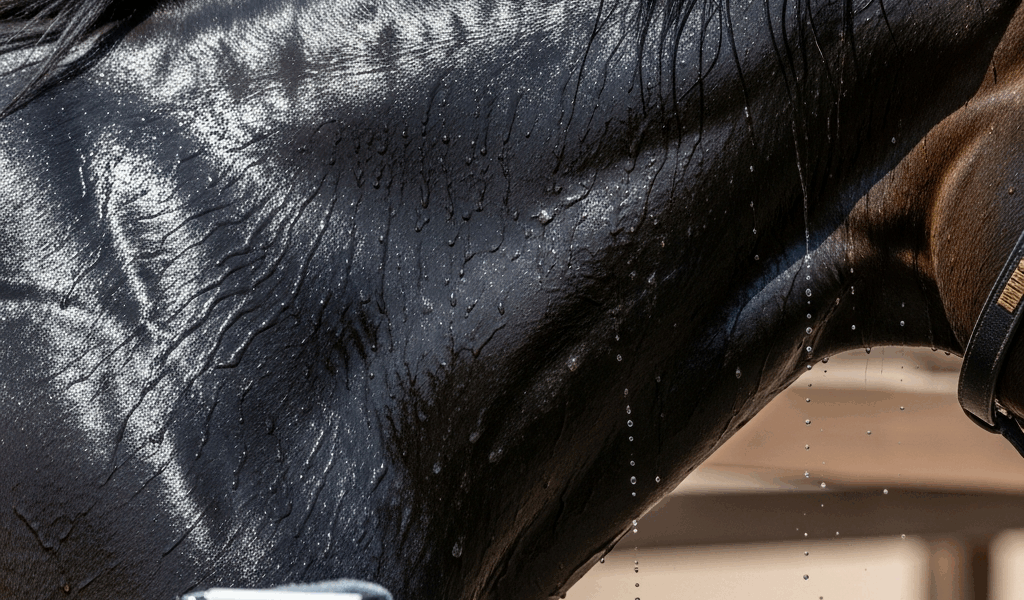
Horse Keeps Sweating Excessively — What Causes It
Sweating can be a normal response to exercise, heat, humidity or stress, but heavy sweating at rest or sweating accompanied by weakness, abnormal breathing, pain, fever, colic signs or poor recovery needs prompt veterinary assessment. Evaluate the horse’s workload, environment and other symptoms rather than using sweat volume alone.
The primary query “horse keeps sweating excessively what causes it” deserves a real answer. Not generic vet-speak. Actual diagnostic steps you can take right now to figure out whether your horse needs a vet visit or just better management.
Why Your Horse Sweats More Than Others
Before we talk about what’s wrong, let’s establish what’s right.
Different horses sweat at wildly different rates. I have a Thoroughbred cross who sweats buckets during a moderate trail ride, and a Quarter Horse who barely glistens after the same workout. Breed matters enormously — hot-blooded horses like Thoroughbreds, Arabians, and Warmbloods sweat more readily than cold-blooded drafts. It’s literally how their physiology evolved.
Fitness level changes everything too. An unfit horse working at moderate intensity will sweat far more than a fit horse at the same effort. Their cardiovascular system hasn’t adapted yet, so they’re working harder to do the same job. I learned this the hard way when I brought a pasture-potato back into work and thought he was dying after twenty minutes of trotting.
Individual metabolism plays a role I rarely see discussed. Some horses simply have higher resting sweat rates. Age factors in — young horses often sweat more as their systems regulate themselves. Temperament matters: anxious horses sweat even at rest, while calm types barely produce moisture during stressful situations.
Set your baseline now. Watch your horse’s normal sweat pattern during routine activities. Note where sweat appears first (usually the neck and shoulders), how long it takes to dry, and whether it appears after excitement or only after exertion. This baseline becomes your diagnostic reference point.
6 Real Reasons Behind Excessive Sweating
Heat and Humidity
This is the most obvious culprit, but I’m mentioning it because owners often overlook how dramatically humidity amplifies sweat production. A 75-degree day with 90% humidity creates a sweating response that a 90-degree dry day won’t match.
Your diagnostic question: Does the sweating happen only during work or turnout? Does it stop within 20-30 minutes of cooling down in shade? If yes to both, heat is likely your only issue.
Dehydration intensifies heat-related sweating, so ensure your horse has constant water access — I’m talking multiple sources if possible. Some horses prefer certain water locations.
Anxiety and Stress
Horses sweat from emotion like humans do. A horse heading to a competition, new environment, or trailer ride can produce stress sweat completely independent of physical work.
Look for these signs: Does your horse sweat excessively before the trailer even starts moving? Sweat appears on the neck and flanks even at rest? Dry patches where tack or pressure exists, with sweating around those areas?
This sweat is typically cold and clammy, not warm like exertion sweat. I noticed this first with a young horse I retrained — she’d be completely lathered before we even mounted.
Pain or Lameness
This is the one that keeps me awake. Horses in pain sweat. A lot. But it’s usually localized or accompanied by other obvious signs.
Ask yourself these questions: Does the sweating correlate with movement? Does it happen when the horse is moving on a particular leg? Are you seeing head bobbing, shifting weight, or reluctance to move? Is sweat heavier on one side of the body?
Probably should have opened with this section, honestly. Pain-related sweating is worth taking seriously because it’s your horse’s way of communicating physical distress that won’t improve without intervention.
Metabolic Disorders — Cushing’s Disease and Insulin Resistance
Older horses and overweight horses can develop excessive sweating from metabolic imbalances. Cushing’s disease (pituitary pars intermedia dysfunction) causes inappropriate sweating even in cool weather. Insulin resistance creates similar patterns.
Red flags to watch for: Is your horse sweating in winter or temperate weather without exertion? Has the sweating appeared recently without lifestyle changes? Does your horse have a long, shaggy coat that won’t shed? Weight gain despite normal feed? Excessive thirst and urination?
A vet can test for these with straightforward bloodwork. Don’t guess on metabolic issues — they require professional confirmation.
Infection or Fever
Viral or bacterial infections trigger fever sweats. These sweats often come and go in cycles, accompanied by lethargy, loss of appetite, or elevated temperature.
Diagnostic check: Take your horse’s temperature with a thermometer. Normal is 99-101°F. Anything above 101.5°F during rest suggests infection. Does your horse seem depressed or less interested in food? Are the sweats accompanied by discharge from the nose or eyes?
Medication Side Effects
Certain medications — particularly some joint supplements, steroids, or NSAIDs at high doses — can trigger excessive sweating in sensitive horses. The timeline matters here. Did the sweating start shortly after introducing a new supplement or medication?
Talk to your vet about when the product was introduced and whether switching or stopping it might resolve the issue.
How to Tell If Sweating Is Normal or a Red Flag
The location and texture of sweat tells you almost everything.
Normal exertion sweat: Appears on the neck, shoulders, flanks, and between the hind legs during or immediately after work. Warm to the touch. Dries within 30-60 minutes in moderate conditions. Doesn’t appear at rest or during light activity.
Abnormal sweating: Appears unprompted during rest. Cold and clammy rather than warm. Persists for hours after the horse stops moving. Concentrated in specific areas (suggesting pain) or generalized across the entire body with no apparent trigger.
I use this simple checklist:
- Is the horse sweating right now without having moved recently?
- Does the sweat feel cold rather than warm?
- Can you identify a trigger (work, heat, anxiety, pain)?
- Are there other symptoms (fever, lameness, weight loss, behavioral changes)?
- Has the sweating pattern changed from the horse’s normal baseline?
If you answered “yes” to sweating at rest, “cold” sweat, no identifiable trigger, or presence of other symptoms — you’re looking at something beyond normal thermoregulation.
What You Can Do Right Now at Home
Not every sweat problem requires immediate veterinary intervention. Here’s what actually moves the needle.
Hydration first. A dehydrated horse sweats less efficiently and struggles with heat regulation. Ensure water is always available. Add electrolytes during hot weather or after sweating episodes — I use brands like SmartPak or Redmond, at roughly $20-40 per month depending on intensity.
Cooling protocol. Cold water over hot sweating areas genuinely helps. Scrape sweat off, apply water (yes, the “never cold water on a hot horse” myth is outdated), scrape again. This prevents sweat from trapping heat. Fans accelerate evaporative cooling.
Check tack fit obsessively. Ill-fitting saddles cause localized sweating and pain. Run your hand under the saddle after riding — if the sweat pattern doesn’t match the saddle contact, you might have a fit issue. I discovered a saddle fit problem this way that was causing my horse’s excessive neck sweating.
Reduce stress triggers. If anxiety is the culprit, desensitization helps more than you’d expect. Quiet groundwork, consistent routines, familiar handlers — these decrease stress-related sweating within weeks.
Adjust exercise timing. Work early morning or evening during hot weather. A 6 a.m. ride versus a 2 p.m. ride literally changes sweat volume by 40%.
When to Call Your Vet Immediately
Some sweating situations aren’t wait-and-see territory.
Fever plus sweating. Temperature above 102°F combined with sweating, especially if the horse seems depressed or won’t eat, signals infection. Call today, not tomorrow.
Lameness with sweating. A horse favoring a leg while sweating excessively is in pain. This needs professional assessment before the injury worsens.
Behavioral changes alongside sweating. Sudden aggression, panic, withdrawal, or personality shifts accompanying excessive sweat suggest neurological or systemic issues requiring immediate evaluation.
Rapid weight loss or loss of appetite with sweating. Multiple systems are failing when these appear together. Don’t delay.
Sweating episodes with apparent stumbling, disorientation, or collapse. This is an emergency. Veterinary support needed now.
Excessive horse sweating is almost never a mystery if you’re willing to observe closely and ask the right questions. Most cases resolve with simple management changes once you identify the actual cause. But the ones that don’t — those need professional eyes.
Trust your baseline knowledge of your individual horse. You know them better than any vet sees them in a fifteen-minute exam. When something feels genuinely wrong, it usually is.

Leave a Reply