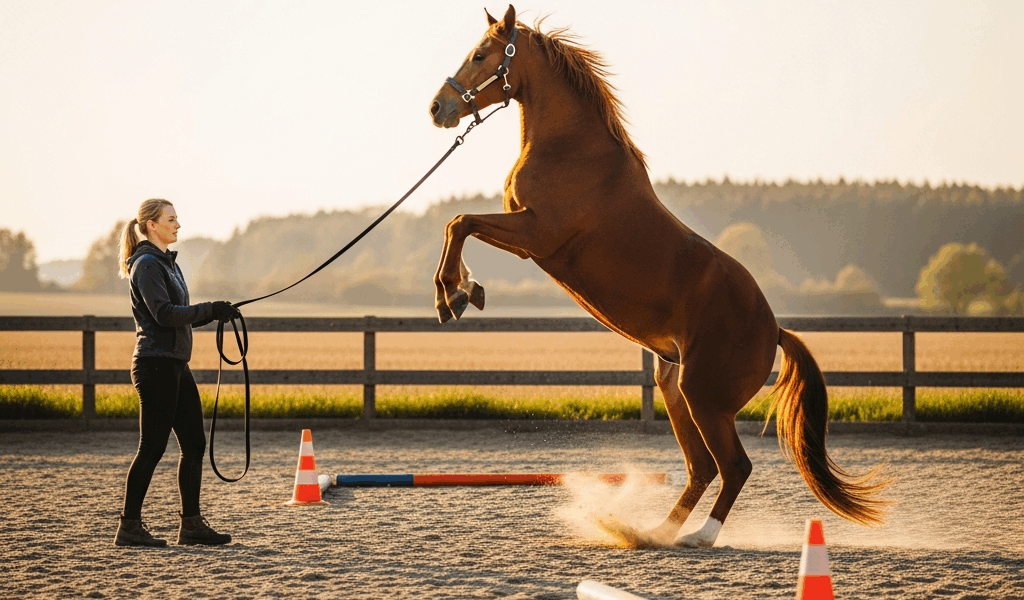
Why Your Horse Rears and What It Really Means
Horse rearing has gotten complicated with all the conflicting advice flying around. But here’s what actually matters: your horse is rearing for one of three reasons — fear, dominance or frustration, or physical pain. The distinction matters enormously because treating them identically will backfire spectacularly.
Fear-based rearing looks obvious once you know what to watch. The back hollows, eyes widen, and the rear happens fast — almost reflexive. There’s panic in the movement. I watched my neighbor’s mare do this for months before realizing her saddle was pinching her withers. That was driving me absolutely crazy, honestly. The moment we switched to a properly fitted Western saddle — cost about $1,200, worth every penny — the rearing stopped in two weeks flat.
Dominance or frustration rearing plays out differently. Ears pinned back. The horse controls the height and timing, sometimes using it as a negotiation tactic. “I don’t want to go forward” becomes a rear. These horses often rear during transitions or when asked to leave their herd. The behavior feels calculated, not panicked. You can almost see them thinking through it.
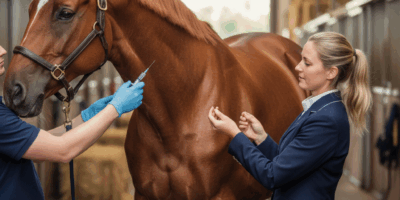
Pain is the third diagnosis, and it’s the one people skip too often. A horse rearing plus showing lameness, sensitivity to girth pressure, or flinching during mounting needs veterinary attention before any retraining happens. Saddle fit, ulcers, and hock issues are common culprits here. Don’t skip this possibility.
When to Call a Vet or Trainer Immediately
Some rearing situations are emergency flags. Get professional eyes on the problem if any of these apply.
- Rearing during lunge work with no saddle. This suggests the horse isn’t testing you — something physical is wrong. A vet visit comes first.
- Rearing that escalates over weeks. If the behavior is getting higher, more frequent, or more violent, you’re not managing it; it’s getting worse. A trainer should evaluate before injury happens.
- Rearing paired with lameness, stiffness, or sensitivity. Pain plus rearing equals veterinary diagnostic. Ultrasound, flexion tests, saddle fit assessment — the whole workup.
- Rearing combined with aggression toward you on the ground. This crosses into safety territory fast. A training professional needs to assess whether this is a learned behavior or a sign of deeper behavioral issues.
I’m not saying this to scare you. I’m saying it because I watched someone spend six months retraining a horse for rearing when the real problem was a $300 saddle adjustment. Protect your investment by getting diagnosis right the first time.
Ground Work Exercises That Stop Rearing Before You Ride
These drills rebuild trust, establish ground respect, and address the specific roots of rearing. Do these for two weeks minimum before returning to saddle work. That’s the baseline.
Yielding Hindquarters Drill
This one fixes dominance rearing directly. It teaches the horse that the hindquarters move away from pressure — not upward. Set up in a round pen or 60-foot arena space. Stand beside the horse’s shoulder, facing the hip. Apply steady pressure on the barrel with your hand or lead rope. The moment the hindquarters move away from pressure, release. Repeat 10 times, then switch sides. Do this daily.
Why it works: A rearing horse hasn’t learned that moving forward and sideways is easier than rearing. This drill embeds that lesson directly into their movement patterns.
Forward-Focus Lungeing
For fear-based rearing, this desensitizes the horse to arena work. Lunge at walk and trot only — no cantering yet. Let the horse dictate pace. If it rears, don’t react; simply disengage the lunge and walk away. Restart only when calm. Session length: 15 minutes maximum. Repeat four times weekly.
Why it works: Rearing loses its power to get attention when you respond with indifference, not struggle. The horse figures out pretty quickly that it’s not worth the effort.
Backing Drills
Backing is the ultimate respect builder and a physical reset for horses mid-anxiety. From the ground, using a lead rope, cue the horse to back 5–10 steps. Release immediately after. Do this 3–4 times per session. Backing engages the hindquarters in a forward-thinking way and interrupts the rearing pattern neurologically.
Desensitization to Pressure Cues
Some horses rear because they’re hypersensitive to saddle pressure or leg cues — I’m apparently one of those riders and my Arabian was apparently one of those horses. Desensitize by applying light pressure on the shoulder, barrel, and hip with your hand. Increase pressure slowly over 10 sessions. The goal is a calm response to firm contact, not panic. Use a 1–5 scale; start at 1, never exceed 3 during this phase.
Probably should have opened with this section, honestly — because I’ve seen more horses fixed by identifying pressure sensitivity early than almost any other single factor. Don’t make my mistake.
Saddle Time Fixes When Returning to Riding
Only return to riding after two weeks of consistent ground work without rearing. When you do mount, be strategic about setup.
Start in a smaller arena or round pen. Use a mounting block — never force the horse to stand while mounting if it’s anxious. Walk for 10 minutes before asking anything more complex. This isn’t lost time; it’s establishing a calm baseline that actually matters.
During the ride, use soft, consistent rein pressure. If the horse begins to rear, don’t jerk backward — that accelerates the behavior. Instead, release rein pressure completely and drive forward with your seat and legs. Sounds counterintuitive? It works because you’re removing the stimulus (rein pressure) while creating a forward outlet. The horse learns: rearing stops being productive.
Watch for regression signs. If the horse gets tense during trotting, drop back to walking. If it plants its feet at the arena entrance, spend five minutes there doing nothing, then leave calmly. Small regressions are normal. Consistent regressions mean you’ve returned to riding too soon.
Arena layout matters, honestly. Some horses rear more near gates or specific corners. Identify those spots and approach them last in the ride, when the horse is warmed up and mentally settled.
What Not to Do When Your Horse Rears
- Don’t punish after the fact. A horse reared five minutes ago doesn’t connect punishment to the behavior. You’ll only build resentment and unpredictability.
- Don’t yank hard on the reins mid-rear. This destabilizes the horse’s balance further and can cause it to flip backward. It’s genuinely dangerous.
- Don’t ask for increased performance immediately after a minor rear. No extended trotting or jumping right after. Walk, reset, then proceed at the same level.
- Don’t ignore pain signals. Sensitivity to girth, reluctance to move forward, or flinching at saddle contact all need investigation before retraining.
- Don’t skip the ground work phase because you’re impatient. I get it — you want to ride. But skipping diagnosis and groundwork is how rearing escalates into a truly dangerous problem.
- Don’t assume the horse is “bad.” Rearing is communication. The horse is telling you something is wrong, scary, or unclear. Listen to that message instead of fighting it.
This is solvable. Most rearing issues resolve within 4–8 weeks of consistent, correct handling. Get the root cause right, stick to the ground work, and bring the saddle back in gradually. Your horse will stop rearing, and you’ll ride safer for understanding why it started.

Leave a Reply