Why Your Horse Stops and Won’t Move Forward
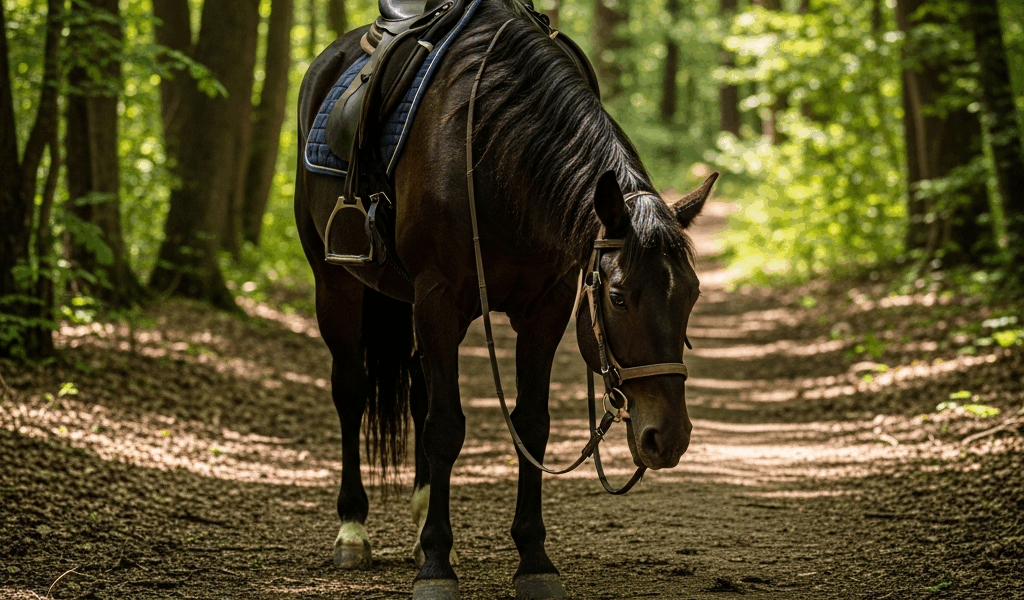
My horse Maverick used to stop dead in his tracks during our afternoon rides. Just completely plant himself in the middle of the arena — I’d kick, cluck, use my crop, nothing. He’d stand there like a statue for thirty seconds, then suddenly decide he was ready to move again. It drove me absolutely insane until I realized I was chasing the wrong problem entirely.
When a horse keeps stopping mid-ride, riders usually panic and assume it’s a training issue. But that’s rarely the whole story. What you’re seeing might actually be pain, fatigue, or genuine behavioral resistance — and the fix depends entirely on which one you’re dealing with. Apply the wrong solution, and everything gets worse.
I learned this the hard way. Three months of extra leg pressure training did nothing because Maverick’s saddle didn’t fit. Once I had a saddle fitter out, his stopping disappeared within two weeks. That was a turning point for how I diagnose problems now.
Here are the three root causes that get confused constantly:
- Behavioral refusal — Your horse is testing boundaries, has learned that stopping works, or lacks confidence in the direction you’re asking
- Pain or physical discomfort — Something hurts: saddle fit, lameness, ulcers, joint soreness, girth pressure, or back tension
- Fatigue — Your horse isn’t conditioned for the work you’re asking, and stopping is his way of saying he’s exhausted
Each one feels different under saddle. Each one requires a completely different response.
How to Tell If It’s Refusal vs Pain vs Fatigue
Probably should have opened with this section, honestly. Most riders skip diagnosis and jump straight to fixing, which is why problems drag on for months.
Use this decision tree. Look for these specific signs:
Behavioral Refusal
- Ears are forward or neutral, not pinned back consistently
- Horse stops at the same location repeatedly — gate, exit, scary corner — or when asked to move away from buddies
- He responds to escalating leg pressure eventually; stops are brief, maybe five to fifteen seconds
- Tail swishing is present but not drenched sweat
- He plants his feet firmly with no shifting weight or lameness when he does move forward
- Behavior changed recently or only happens under saddle with specific requests
A refused horse is making a choice. He’s saying no to your request, not because he can’t, but because he thinks he shouldn’t have to. This is where most training interventions actually work.
Pain or Discomfort
- Ears pin back consistently or swivel behind when you ask for forward motion
- Horse sweats excessively at the girth line, or shows wet patches in patterns that don’t match exertion level
- He stops unpredictably, not at a specific location — might do it twice in one ride, then three times the next
- Mild girthing issues: pulling away from the saddle when you tighten, reluctance at walk too, not just trotting and cantering
- Lameness is visible when he does move — shortened stride on one leg, hitching at a particular gait
- He doesn’t respond to leg pressure at all, or responds but moves stiffly
- Behavior change happened suddenly after a hard ride, new saddle, or jumping phase
A horse in pain stops and stays stopped. He’s not testing you. He’s protecting himself. Kicking a horse through pain doesn’t train him — it teaches him you don’t listen.
Fatigue
- Stops happen later in the ride, not at the beginning
- Breathing is heavy and takes a long time to normalize
- Horse responds to forward aids but seems reluctant, sluggish, heavy in your hand
- Ears droop slightly; overall attitude is flat and dull, not anxious or resistant
- Stopping happens during transitions or upward gaits specifically — trotting or cantering, not walk
- He never had issues with this work before, but you’ve recently increased duration or intensity
- Body condition is fine; this isn’t about nutrition or health
Fatigue feels like weight in the saddle. Everything gets heavier. Your horse still wants to cooperate, but he’s running on empty.
What NOT to do: Don’t apply maximum leg pressure to a horse in pain. Don’t assume a horse refusing the mounting block has behavioral issues if he’s lame. Don’t jump straight to a saddle fitting if he’s simply tired from being worked four days in a row without conditioning.
Quick Fixes for Behavioral Stopping
Once you’ve ruled out pain and fatigue, this is where groundwork matters.
Start on the ground. Longe your horse for five minutes at a walk and trot with light contact — nothing forced. Then practice leading him through the obstacle or direction where he usually stops. Walk forward yourself with confidence. Let him follow. Do this for three days before riding.
In the saddle, here’s the sequence: Use your leg aid at the girth — not a kick, a squeeze. Expect a response within two strides. If he doesn’t move, add a second leg aid, slightly firmer. If he still doesn’t move, use a dressage whip lightly on the shoulder, then immediately soften all aids and let him move.
The key is consistency. Same cue every time. Same escalation. Same release the second he steps forward. Most stopping habits persist because riders are inconsistent — nagging, then ignoring, then suddenly kicking hard. Horses need clarity.
When he stops at a specific location, turn and redirect before you reach it. Approach from a different angle. Break the pattern he’s created. This works because you’re not fighting the stop itself — you’re preventing it through a route change. Do this for three rides. Then try the direct route again.
Common mistake: Spinning your horse around and galloping back when he stops. This trains him that stopping leads to excitement and speed, which actually reinforces the behavior. Walk back quietly instead. Keep it boring.
Another mistake: Using spurs when you haven’t already established clear leg cues. Spurs amplify your aids; they don’t replace teaching them. Make sure your horse understands a regular leg squeeze first.
When to Call the Vet or Saddle Fitter
Red flags for pain — call your vet immediately if you see these:
- Lameness that persists at walk or visible shortness of stride
- Girthing issues that have appeared or worsened recently
- Behavior change that happened suddenly over days, not weeks or months
- Sweating patterns that don’t match your work intensity or ambient temperature
- Reluctance to move forward starting at walk, not just gaits
- Weight loss or attitude change paired with stopping
Red flags for saddle fit — call a saddle fitter if:
- Your saddle is more than eight years old or has been jumped heavily
- White hair patches appear on the withers or along the sides
- Saddle sits uneven — one side higher than the other
- You can fit more than two fingers under the saddle at the withers when mounted
- Horse is girthy or sweats excessively at the girth line
- Stopping started after you changed saddles or began jumping
Ruling out pain first isn’t just humane — it protects your credibility as a rider. Training a horse you think is refusing when he’s actually lame is the fastest way to ruin his trust and your reputation with other riders.
Building Confidence and Forward Motion Again
Once you know what you’re treating, here’s a realistic two-to-three-week plan:
Week One: Walk only. No trotting. Longe work on the ground three times. Lead him through the problem area on foot once daily. The goal is zero stops, even if it means riding in circles away from the scary spot. Build momentum slowly.
Week Two: Add trotting on days when walk-only rides felt confident. Still no cantering. One mounted work-through of the problem area — turn and redirect before he stops. Ground longing continues three times. Increase the complexity of your turns and lateral work at walk to rebuild engagement.
Week Three: Introduce cantering if walk and trot feel solid. Practice transitions. Approach the problem area from multiple angles. If stopping resurfaces, drop back to Week Two for another three days.
Timeline reality: Behavioral stopping usually resolves in two to four weeks of consistent, correct work. Pain-related stopping takes longer — six to eight weeks minimum, often paired with vet treatment or saddle refitting. Fatigue stops the moment you reduce volume and build conditioning properly.
Maverick was back to solid forward motion within two weeks of the new saddle. No training required. That taught me everything about diagnosis.
Your horse isn’t stopping to be difficult. He’s stopping because something doesn’t fit — literally or emotionally. Figure out which problem you’re solving, then solve it the right way. The stopping will disappear faster than you expect.

Leave a Reply