Is Your Horse Just Napping or Showing Signs of Trouble
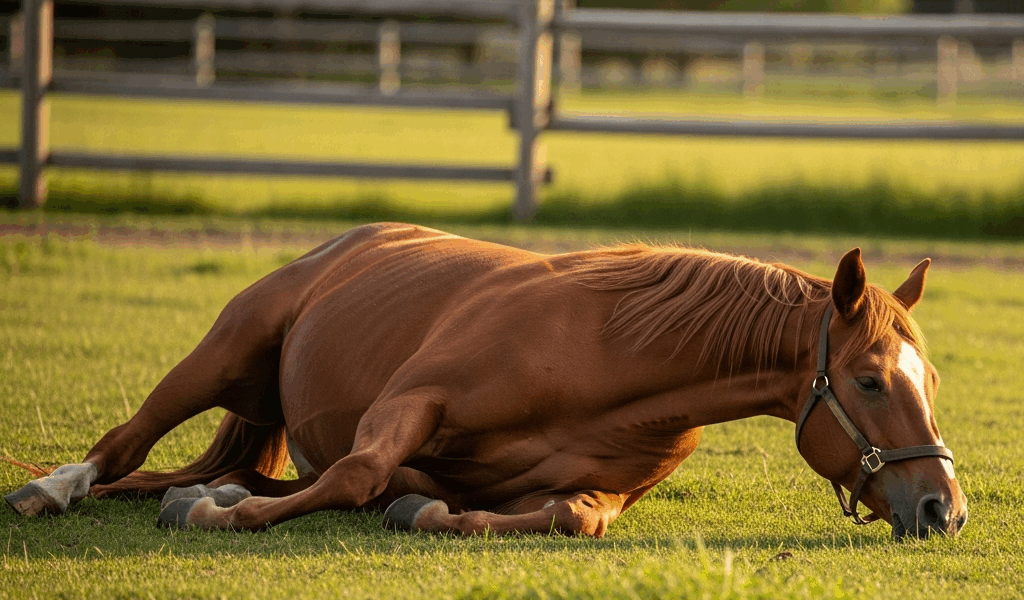
Horse ownership has gotten complicated with all the worry flying around. I’ve had horses for fourteen years, and the first time my gelding stretched out completely flat in the pasture during a summer afternoon, I panicked. Completely panicked. My stomach dropped, and I was already mentally rehearsing the vet call. Then he picked his head up, yawned, and went back to sleep.
Horses lay down. A lot. They need roughly 3 to 4 hours of sleep daily, and unlike humans or dogs, they can’t get all their rest standing up. They genuinely need to lie flat on their side to enter REM sleep. On any given day, your horse might spend 30 to 60 minutes total sprawled across the pasture — in chunks of 10 to 20 minutes each.
But here’s where I almost made a serious mistake: I confused normal behavior with distress signals.
The red flags aren’t subtle once you know what to watch for. Thrashing is the big one — violent rolling or struggling, not just peaceful resting. Sweating when it’s cool outside. Heavy, labored breathing that doesn’t calm down within a minute. Unresponsiveness when you call or approach. Repeated attempts to stand that fail or result in obvious pain. A belly that looks bloated or distended. Gums that look pale instead of pink. These aren’t subtle whispers. Your horse’s body broadcasts them loud and clear.
Normal rest looks peaceful. The horse is relaxed, breathing steadily, ears loose. Abnormal rest? That’s when you notice the difference.
Quick Health Check You Can Do Right Now
Before you panic — or before you dismiss it as nothing — run through this assessment yourself. You won’t need fancy equipment, just patience and basic knowledge of what normal looks like for your horse.
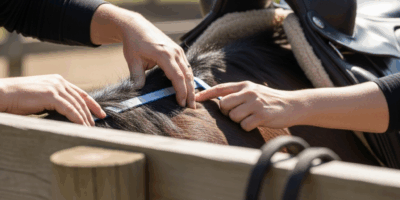
Check the pulse and heart rate. Find the pulse on the inside of the lower jaw, running your fingers along the groove until you feel it. Count the beats for 15 seconds, then multiply by four. Normal for an adult horse sits between 28 to 44 beats per minute. A horse in pain or distress will have an elevated heart rate. Anything above 50 bpm when your horse is at rest — at least if you want to catch problems early — is worth noting and documenting.
Look at the gum color. Lift the horse’s upper lip and look at the gum tissue. Pink is what you’re after. Pale or white means poor circulation, which signals a real problem. Bright red or dark red gums suggest inflammation or severe distress. This one’s easy to check and tells you volumes.
Check capillary refill time. Press your thumb against the gum tissue for two seconds, then release. The blanched white spot should turn pink again within two seconds. If it takes longer than three seconds, circulation is compromised. That’s a vet call waiting to happen.
Take the temperature if you have a thermometer. A digital rectal thermometer works fine. Normal sits at 98 to 101 degrees Fahrenheit. Anything above 102 indicates fever.
Listen for gut sounds. Put your ear against the barrel of the horse’s body, or use a stethoscope if you have one — I keep a basic $12 one in the barn. You should hear gurgling, rumbling sounds every 10 to 30 seconds. Silence or very faint sounds are concerning and suggest colic.
Observe movement. If the horse can stand and walk without obvious stiffness or hesitation, that’s a good sign. Staggering, dragging feet, or reluctance to put weight on a limb narrows down the possibilities significantly.
Write these observations down. Seriously. When you call the vet, exact timing and specific details make the difference between “probably nothing” and “get here now.” I’m apparently the type who remembers details obsessively and my vet appreciates it while other people’s vague descriptions never help anyone.
Common Reasons Horses Lay Down Too Much
Colic. This is the scary one, and probably what you’re thinking about. Colic is abdominal pain, and it ranges from mild — your horse looks uncomfortable but eats — to severe where rolling, sweating, and complete refusal to stand takes over. The lying down itself isn’t the problem. It’s a symptom. Red flags: repeated rolling and getting up, sweating heavily, lack of gut sounds, elevated heart rate, little to no interest in food, or a distended belly. Colic requires veterinary intervention, sometimes urgently.
Fatigue and heat stress. On hot days, especially if your horse worked hard or the weather shifted suddenly, he might just be exhausted and seeking relief. Horses cool down partially by lying down and increasing air exposure to the belly. If the horse is responsive, breathing slowly returns to normal within a few minutes, gum color is normal, and he has no sweating or other distress signals — that’s probably just recovery. Don’t make my mistake of assuming the worst immediately.
Arthritis and joint pain. Older horses or those with previous injuries lie down more frequently because standing puts pressure on painful joints. You’ll notice this pattern over time — the horse isn’t in acute distress, but he spends more time down than he used to. This isn’t an emergency, but it’s worth discussing with your vet about pain management or turnout modifications.
Neurological issues. Conditions like EPM (equine protozoal myeloencephalitis) or stringhalt can make lying down a positioning strategy to relieve nerve pain. Usually there are other signs — difficulty walking, asymmetrical movement, dragging toes. If you’re noticing excessive lying down plus coordination problems, the vet needs to know immediately.
Skin irritation. Frustrated by flies, mud caked on sensitive areas, or dermatitis, your horse might seek relief by lying down and staying still. He’s trying to ease itching or discomfort. Check for rubbed areas, insect bites, or mud that needs cleaning. This isn’t medical in the traditional sense, but addressing the irritation solves the problem.
When to Call the Vet and What to Tell Them
Stop reading and call the vet immediately if any of these are true.
- Your horse is thrashing or rolling violently and repeatedly failing to stand smoothly.
- The abdomen looks noticeably bloated or distended.
- Your horse is sweating profusely and breathing heavily, and it doesn’t calm down.
- The gum tissue is pale, white, or unusually dark red.
- Heart rate stays above 50 bpm at rest, or you can’t find a pulse.
- There are zero gut sounds or only faint sounds after listening for a full minute.
- The horse shows no interest in food or water for more than four hours.
- The horse is unresponsive or acting drunk.
If you’re calling, have this information ready: How long has the horse been down? When did this behavior start? Has the horse eaten recently, and if so, what? Any recent changes to diet, activity level, or pasture access? Is the horse currently on any medications? Any previous history of colic or similar episodes? What is the horse’s temperature, heart rate, and gum color right now?
You don’t need a diagnosis from yourself. “My horse has been lying down for 45 minutes, seems restless, heart rate is 58, and I heard gut sounds but they’re quiet” is infinitely more useful than “my horse is acting weird.” Specific beats vague every single time.
How to Help Your Horse Until the Vet Arrives
Faced with a situation where your horse is showing mild concerning signs but can’t get emergency care immediately, focus on keeping the horse calm and monitoring constantly.
Keep the horse calm. Don’t run around frantically or encourage movement if the horse is showing pain signals. Keep your own energy level steady. Horses sense panic — they pick up on it faster than you’d think.
Offer water freely, but hold food. If you suspect colic, the last thing your horse needs is more food moving through an already upset digestive system. Water is fine and may help. That’s the best option, as digestive upset requires careful management. That is because additional feed complicates an already compromised system.
Monitor and document. Check heart rate, gum color, and gut sounds every 15 to 20 minutes. Write it down. Take photos or short videos of concerning behavior. This is gold when the vet arrives and saves precious time during diagnosis.
Don’t force movement. If the horse wants to stand, let him. If he wants to lie down, let him. Aggressive handling or forcing a painful horse to move causes more stress and potential injury. That was a lesson learned the hard way.
Don’t administer drugs or supplements without vet approval. I get it — you want to help. But giving pain medication or anything else without knowing the underlying issue can mask symptoms or complicate diagnosis. I’m apparently the person who wants to solve everything immediately, but holding back here matters.
Stay nearby. Your presence is calming, and you need to catch any sudden changes.
Probably should have opened with this section, honestly: most of the time, a horse lying down in the pasture is exactly what it looks like — rest. The panic isn’t wasted energy though. Learning what normal behavior looks like for your horse and what the real warning signs are keeps you from missing something genuinely serious. That gelding who scared me? Still out there napping happily at 3 p.m. on any sunny day. But I know exactly what I’d be watching for if things changed.


Leave a Reply